Odongo naApiyo kwa tungire mositata kumwe noguhyawo. Awo kwa haferere epato. Kapisi morwa yeeyi asi sure kwa pete, nye morwa kwa zire va ka dingure ozinyakurwawo wovakadi. Ozinyakurwawo kwa tungire momukunda omu mwa kara ediva lyenene lya kara nonomfi.
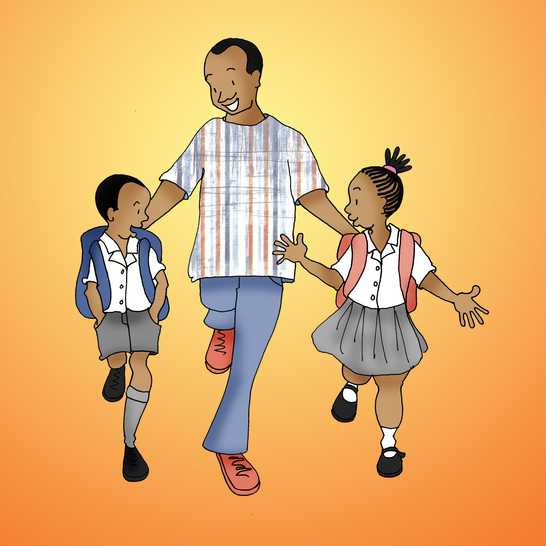
Odongo and Apiyo lived in the city with their father.
They looked forward to the holidays. Not just because school was closed, but because they went to visit their grandmother. She lived in a fishing village near a large lake.
Odongo naApiyo kwa hefe unene, morwa siruwo soku ka dingura hena ozinyakurwawo. Komeho ga sike ogo masiku, kwa rongerere nondjato dawo va liwapaikire rugendo oro rorure rokuza komukunda gozinyakurwawo. Awo kapi va vhulire kurara ntani kwa kere tava uyunga masiku mudima kuhamena epwizumuko.
Odongo and Apiyo were excited because it was time to visit their grandmother again.
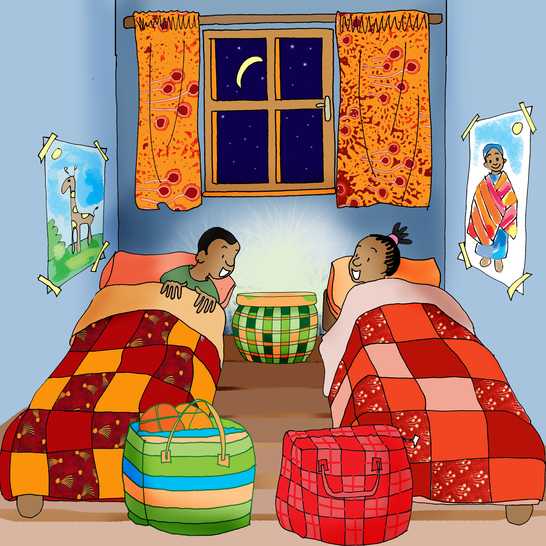
The night before, they packed their bags and got ready for the long journey to her village. They could not sleep and talked the whole night about the holiday.
Ngurangura zokukwama ko, makura tava zi komukunda metuwa lyoguhyawo. Awo kwa pitire nzira zonondundu, tava mono yikorama yomowiza ntani yimeno yote. Awo kwa varwire matuwa nokudimba nonsumo.
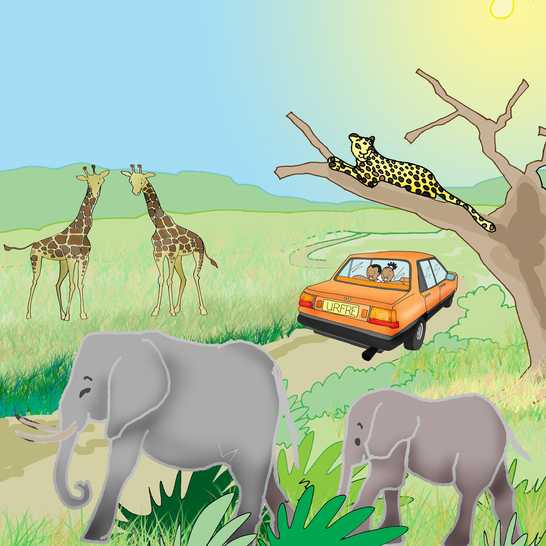
Early the next morning, they left for the village in their father’s car.
They drove past mountains, wild animals and tea plantations. They counted cars and sang songs.
Konyima zosiruwo, vanona kwa ya rorokere makura tava rara.
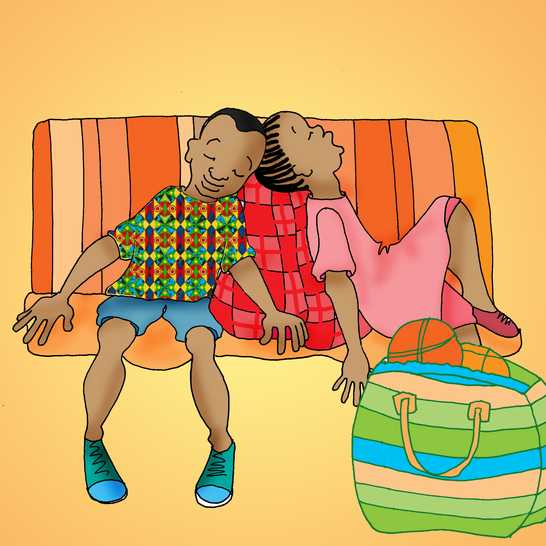
After a while, the children were tired and fell asleep.
Oguhyawo kwa pindwire Ondogo naApiyo asi vana ya siki momukunda. Awo kwa ya gwene Nyar-Kanyada, zinyakurwawo gomukadi, age ana rara monda zositji perwarwa. Nyar-Kanyada moLuo, kutanta asi ‘mukadona govatungimo wokoKanyada.’ Age kwa kere mukadona gononkondo ntani gomuwa.
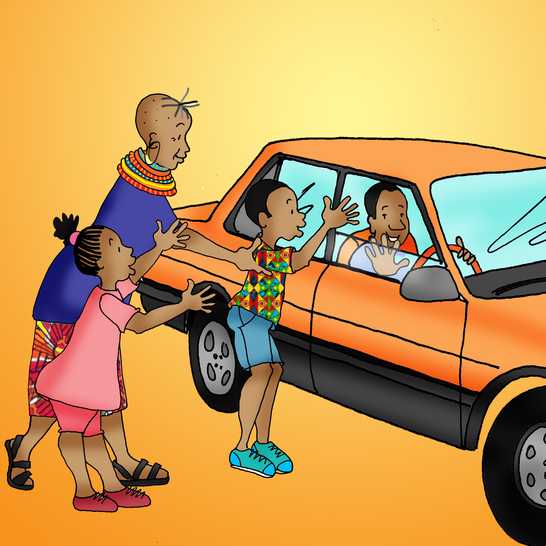
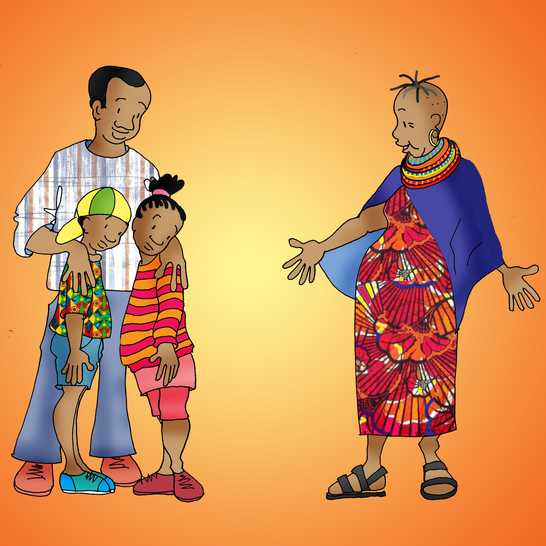
Father woke up Odongo and Apiyo as they arrived in the village.
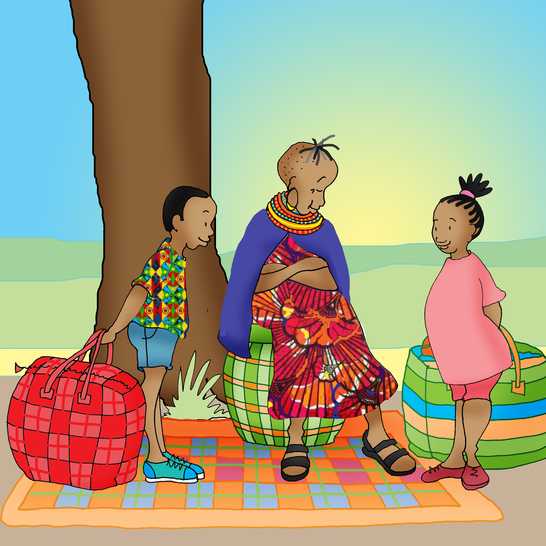
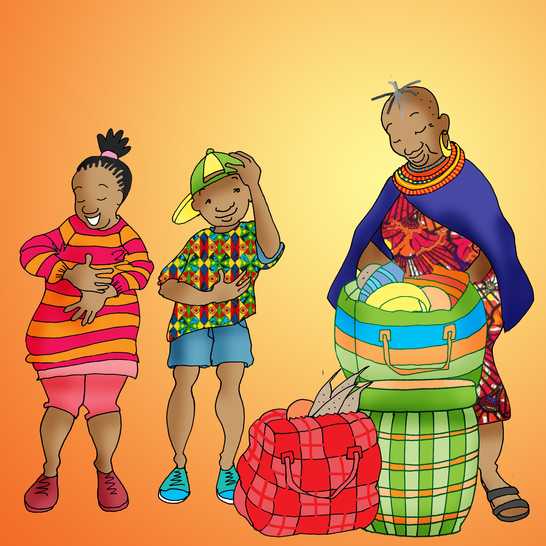
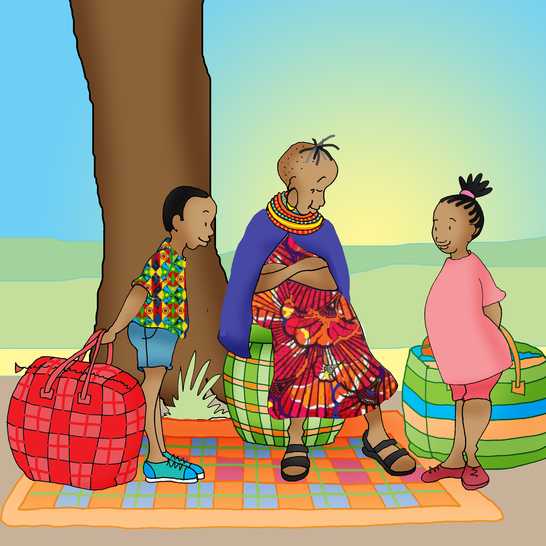
They found Nyar-Kanyada, their grandmother, resting on a mat under a tree.
Nyar-Kanyada in Luo, means ‘daughter of the people of Kanyada’. She was a strong and beautiful woman.
Nyar-Kanyada kwa va tambwire membo, ntani tava dana oku tava dimbi noruhafo monzugo. Vatekuru vendi kwa hefe unene apa va mu pere mauhwi aga va rende kositata. “Pomuhowo paturureni uhwi wange,” yimo ga uyungire Odongo. “Hawe, uhwi wange na u hova!” yimo ga uyungire Apiyo.
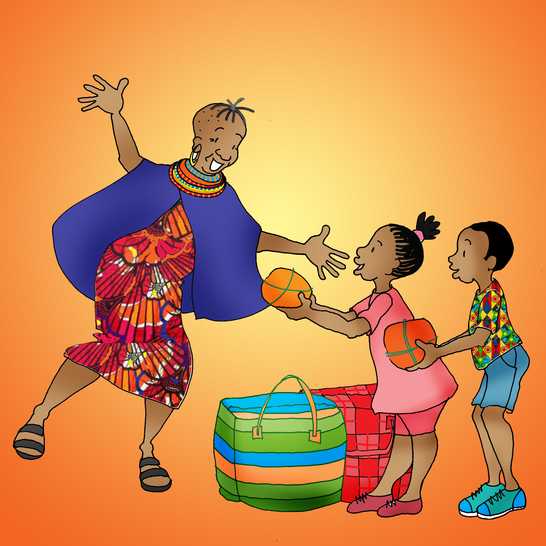
Nyar-Kanyada welcomed them into the house and danced around the room singing with joy.
Her grandchildren were excited to give her the presents they brought from the city.
“First open my gift,” said Odongo.
“No, my gift first!” said Apiyo.
Apa ga mene kupaturura mauhwi, Nyar-Kanyada kwa tungikire vatekuru vendi morupe ropampo.
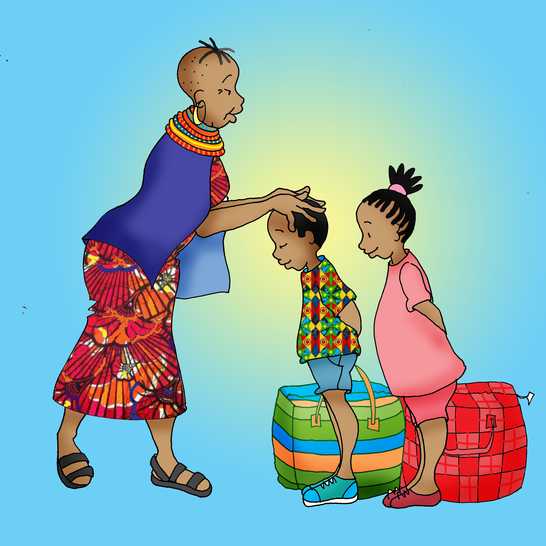
After she opened the presents, Nyar-Kanyada blessed her grandchildren in a traditional way.
Makura Odongo naApiyo tava zi ponze. Awo kwa ka tjida-tjidire mambimbidi noyidira.
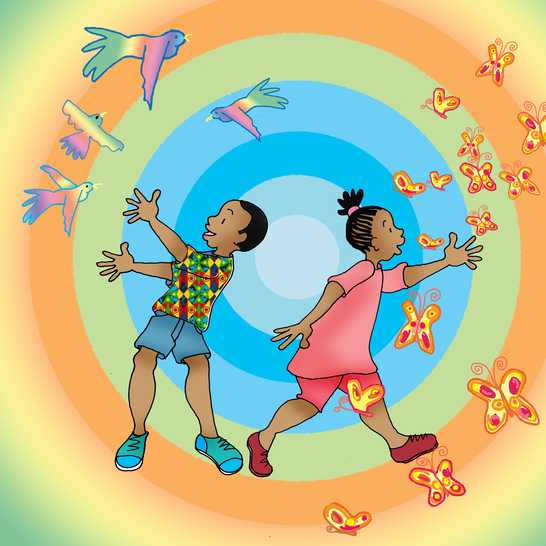
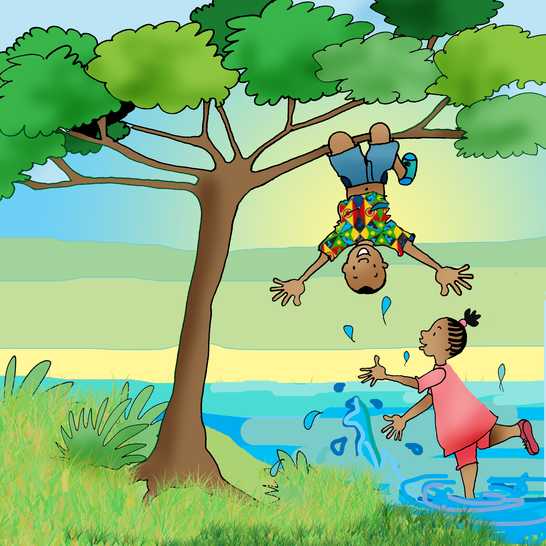
Then Odongo and Apiyo went outside. They chased butterflies and birds.
Awo kwa rondere koyitji ntani kwa linaga-nagerere mema gemediva.
They climbed trees and splashed in the water of the lake.
Apa lya sovaganene yiyo va tengwire kembo va ka lye murarero. Komeho va mene kulya, awo nare vana ponyoka.
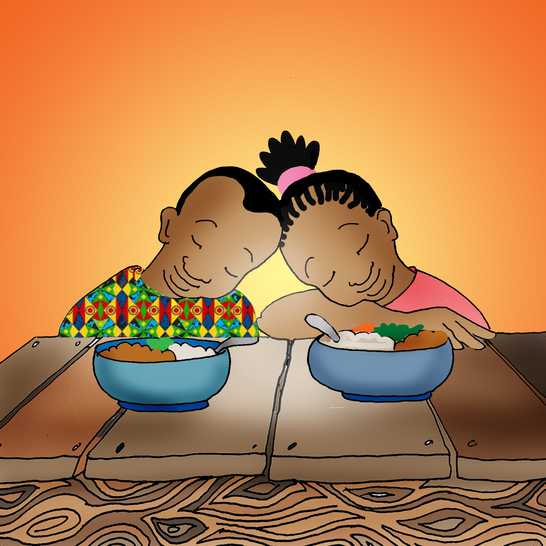
When it was dark they returned to the house for dinner. Before they could finish eating, they were falling asleep!
Ezuva lyokukwama ko, oguhyawo tava singi va tengure ko kositata, ano vanona tava va sigi nye va kare kumwe naNyar-Kanyada.
The next day, the children’s father drove back to the city leaving them with Nyar-Kanyada.
Odongo naApiyo kwa vaterere ozinyakurwawo noyirugana yemembo. Kwa ka vhetere mema ntani noku ka tjava yitare. Awo kwa ka simbire mauta goyinhunhwa ntani kwa toragwire mahako gosinamahako mosikunino.
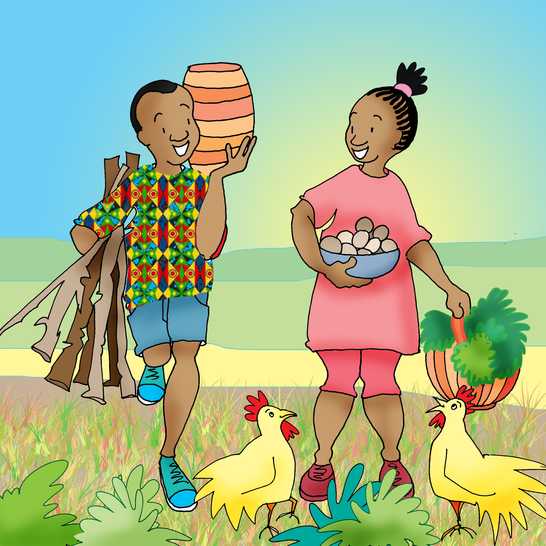
Odongo and Apiyo helped their grandmother with household chores. They fetched water and firewood. They collected eggs from the chickens and picked greens from the garden.
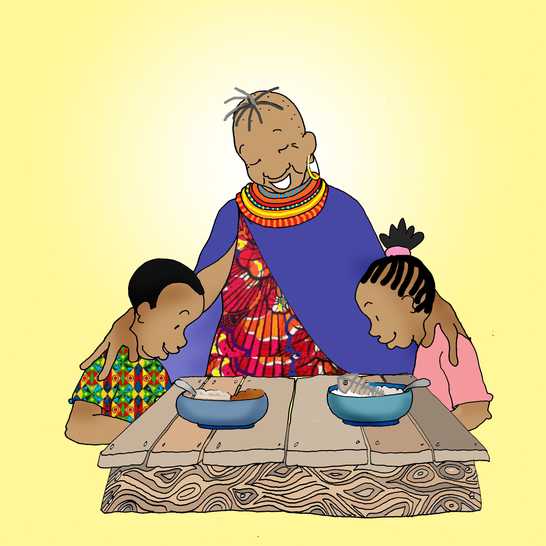
Nyar-Kanyada kwa rongere vatekuru vendi omu ava tereke yisima yougali va lye nomberera. Age kwa va likidire omu ava ninki roso zococonut va zi lye nonomfi dokudosa.
Nyar-Kanyada taught her grandchildren to make soft ugali to eat with stew. She showed them how to make coconut rice to eat with roast fish.
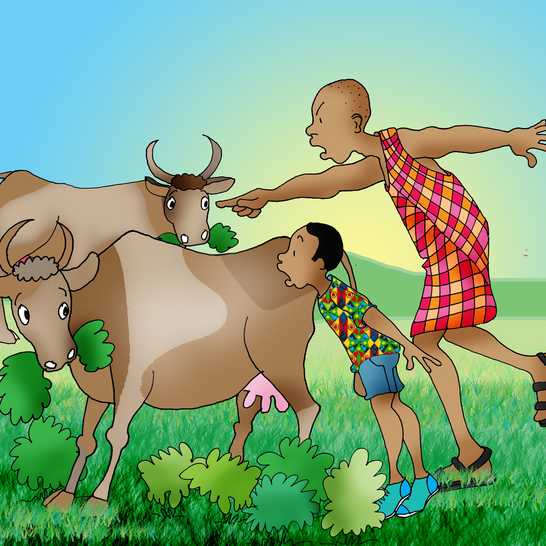
Ngurangura zimwe, Odongo kwa ka lisire nongombe dozinyakurwawo. Ado kwa dukilire mofarama zovamusinda vawo. Munafarama kwa handukilire Odongo. Age kwa mu tjilisire asi ta kwata nongombe, morwa dina li mbuto zendi. Kutunda ezuva olyo, mumati yipo ga kere nosinka asi da ha mu retera hena udigu.
One morning, Odongo took his grandmother’s cows to graze. They ran onto a neighbour’s farm.
The farmer was angry with Odongo. He threatened to keep the cows for eating his crops. After that day, the boy made sure that the cows did not get into trouble again.
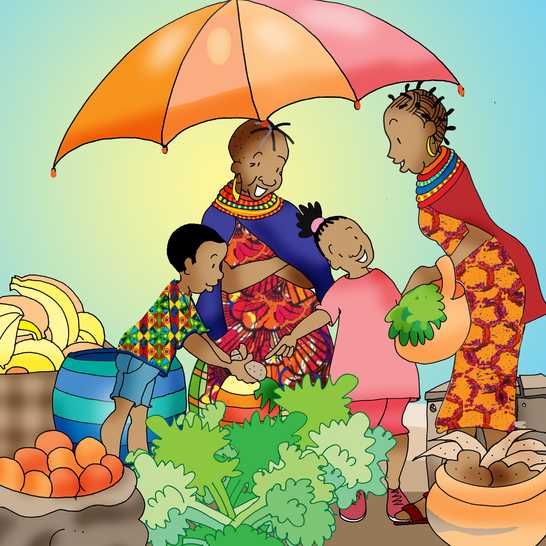
Ezuva limwe, vanona kwa zire kumwe naNyar-Kanyada kositanda. Age kwa kere nevango apa nga randesere yikwahidi, suka, ntani nomfewa. Apiyo kwa here kutantera varandi mukoso goyirandeswa. Odongo yige nga rongere yirandeswa eyi ngava randa varandi.
On another day, the children went to the marketplace with Nyar-Kanyada. She had a stall selling vegetables, sugar and soap.
Apiyo liked to tell customers the price of items. Odongo would pack the items that customers bought.
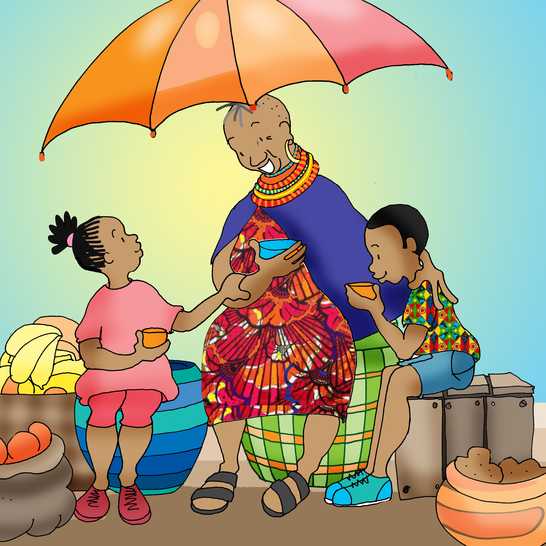
Kouhura wezuva awo kwa nwine te zochai kumwe. Awo ngava vatere zinyakurwawo kuvarura yimaliwa eyi vana gwana mo.
At the end of the day they drank chai tea together. They helped grandmother to count the money she earned.
Nye karuwogona tupu kokasesu epwizumuko lina pu, vanona tava tengura ko kositata. Nyar-Kanyada kwa pere Odongo embare ntani Apiyo kwa mu pere mbindja. Age kwa va rongerere nondya dokusimba morugendo rwawo.
But too soon the holidays were over and the children had to go back to the city.
Nyar-Kanyada gave Odongo a cap and Apiyo a sweater. She packed food for their journey.
Apa va wizire oguhwe va ya va simbe, kapi va here kuza. Vanona tava likwambere Nyar-Kanyada asi ngano va ze kumwe nage kositata. Age ta menyuna ntani ta uyunga asi, “Ame na kurupa kapisi gokukara mositata. Ame tani mu ndindire simpe ngomu wize hena komukunda gwange.”
When their father came to fetch them, they did not want to leave. The children begged Nyar-Kanyada to go with them to the city.
She smiled and said, “I am too old for the city. I will be waiting for you to come to my village again.”
Odongo naApiyo navenye tava mu lidingire unene ntani tava uyunga asi mbaa.
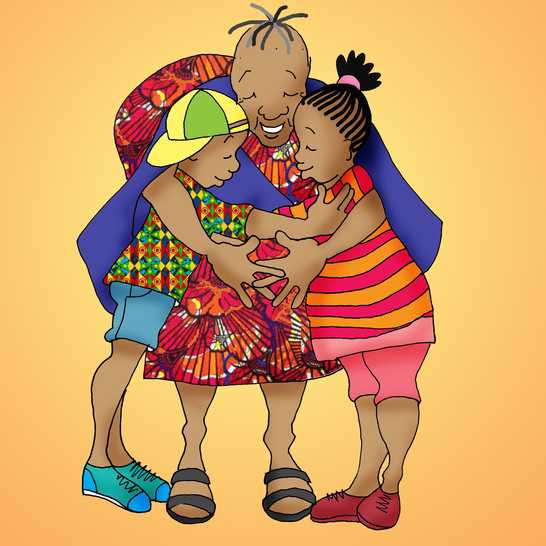
Odongo and Apiyo both hugged her tightly and said goodbye.
Odongo naApiyo apa va tengwire kosure tava ka tantera vakaume vawo kuhamena eparu lyokomukunda. Vanona vamwe awo kwa li zuvhire asi eparu lyomodoropa ewa. Ano vamwe kwa li zuvhire asi eparu lyokomukunda hansa ko. Nye sinzi sawo, kwa lizuvhasanene asi Odongo naApiyo kwa kara nozinyakurwawo wovawa.
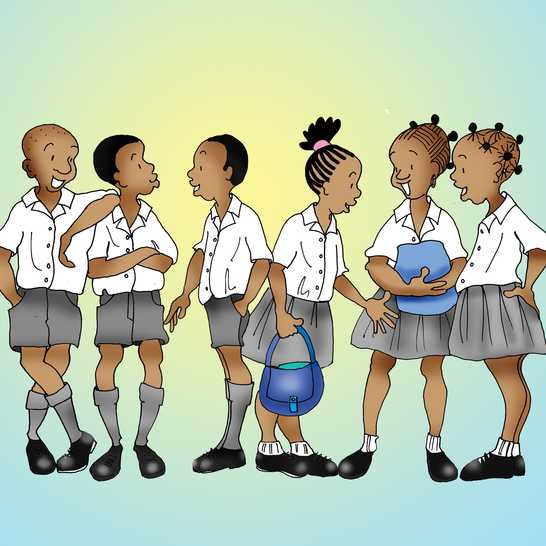
When Odongo and Apiyo went back to school they told their friends about life in the village. Some children felt that life in the city was good. Others felt that the village was better.
But most of all, everyone agreed that Odongo and Apiyo had a wonderful grandmother!



 Violet Otieno
 Catherine Groenewald
 Anna Sengumbe
 Rukwangali
 Level 4