Back to stories list

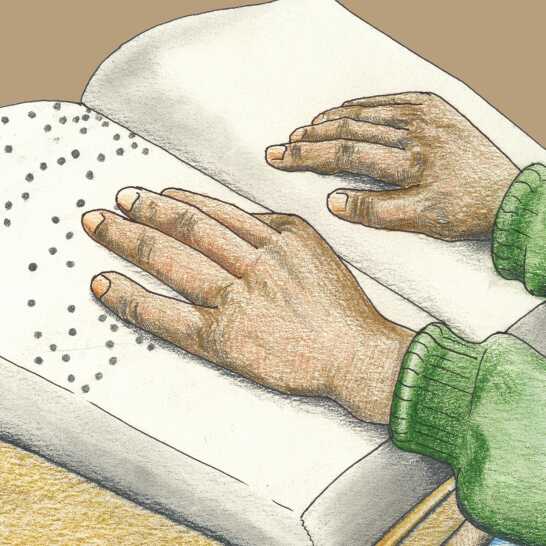
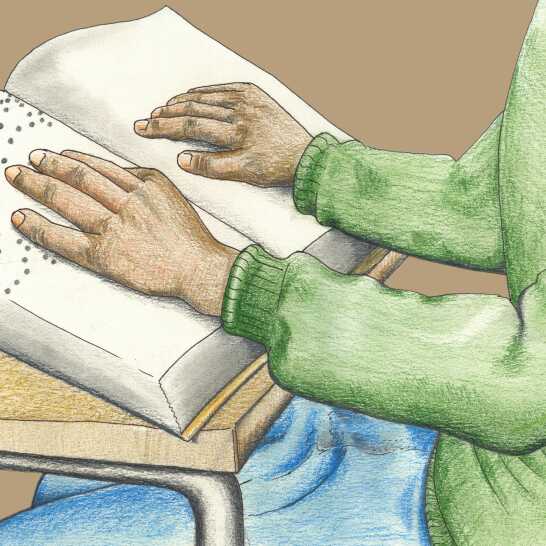
Someone reading a book written in Braille.

Katughuru ghomushigho The whistling man

Written by Magda Swartz

Illustrated by Petrus Amuthenu

Translated by Maria M. Dikuua, Servasius M. Ndjunga

Read by Maria Dikuua

Language Thimbukushu

Level Level 4

Narrate full story

Reading speed

Autoplay story


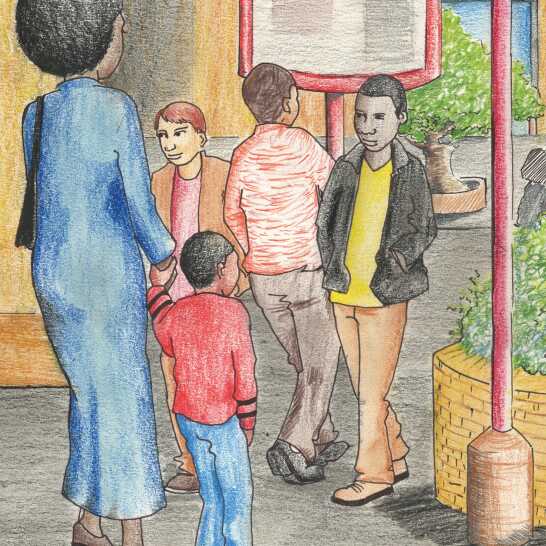
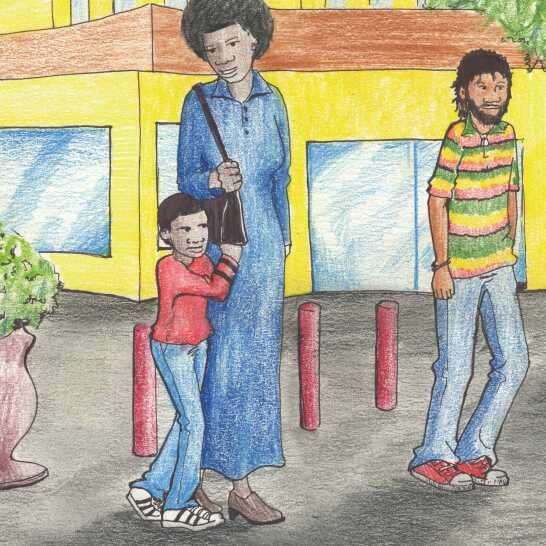
A woman and a boy holding hands walking, and other people passing by.

Dyarero ne Mapeghu, Rico kunakuyenda kudoropa nanyina. Aye ghahaka kuyenda kudoropa. Doropa ne kunyanyukitha! Yingi yinu yokurorera.

It’s Saturday and Rico is going to town with his mother. He likes going to town. Town is exciting! There are lots of things to see.


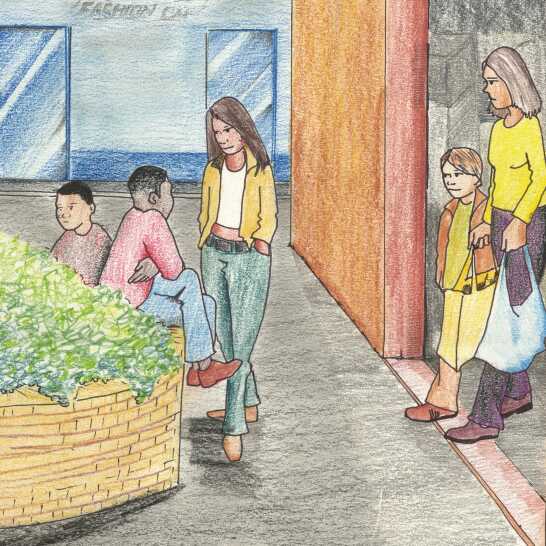
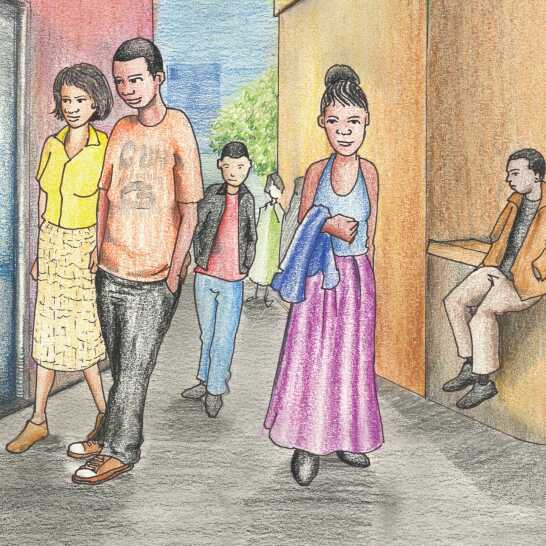
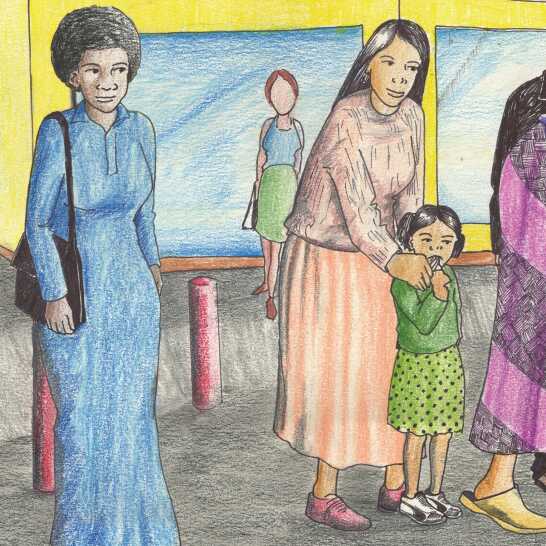
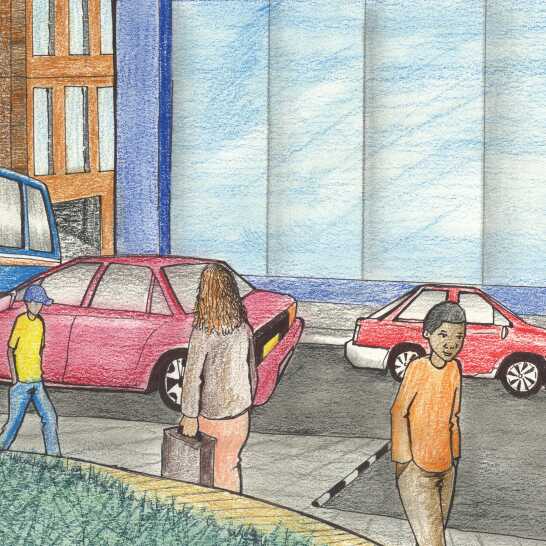
People walking in town.

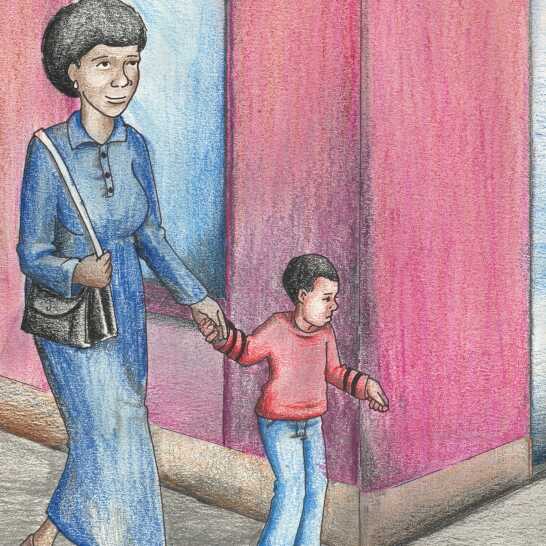
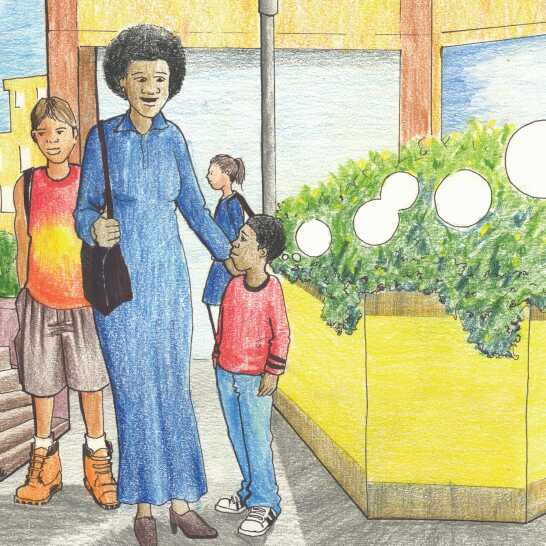
Rico ghanangumata kudyoko dyanyina. Mbunga dhawanu kunakupitapita.

Rico holds his mother’s hand very tightly. Streams of people are passing by.


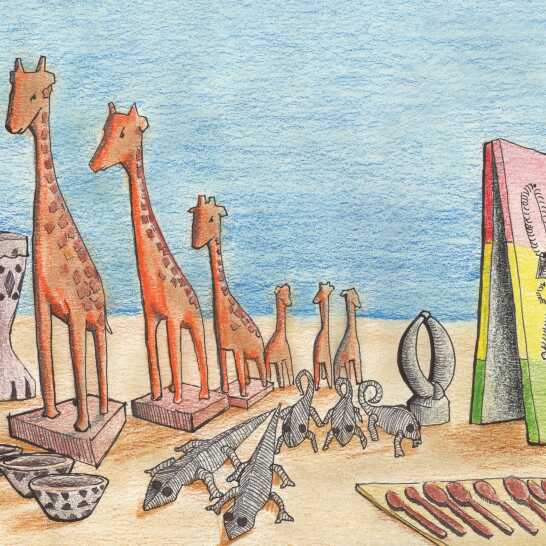
Handmade crafts including wooden giraffes and lizards.

Padi thitaratara apa hanakughurithera eyi haruka nokuyuwa nonyara.

There are stalls selling beautiful handmade crafts.


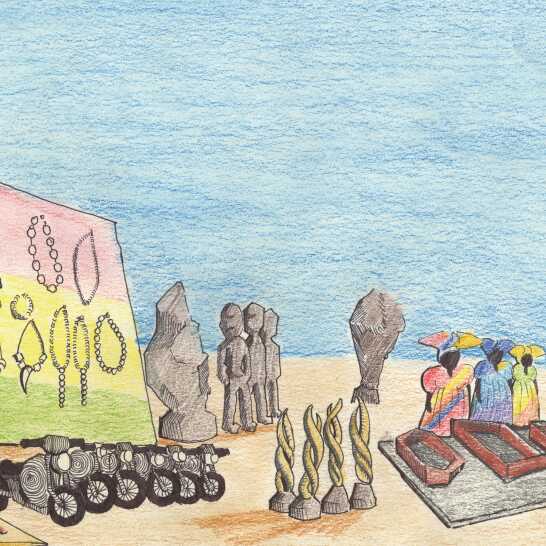
Handmade crafts and jewellery.

Padi muvashe ghoghumbiru oghu hayuwa noyitondo, marughongoro nomihurughudhi edhi hatenditha nondarata noyipako yokumarudhimarudhi, pofotji noyiyengitha eyi hatenditha noyikerera yomahonyi ghomwe.

There are small giraffes carved out of wood, chameleons and lizards made out of wire and coloured beads, and jewellery made from ostrich egg shell.


A boy holding a woman’s hand.

Ndani ghanakuyuva! Munu oyu ghanakushigha mumelodi ghomutowi ghodimbo dyo “Ñeke”. Ghanemana ghutegherera. Kupi ghunakutunderera mushigho?

Then he hears it! Someone is whistling the sweet melody of ‘Amazing Grace.’ He stops to listen. Where is it coming from?


People walking in town.

“Shime nishemwa kuyuva munu ghokushigha noghufudhi kenge,” dyoghaghayarire papendi thinda.

“I’ve never heard anyone whistle so beautifully before,” he thinks to himself.


People standing in town looking at something.

Kunakukonaghuka mwawanu. Hamono katughuru oyu ghanakushighanga. Hanu kunakutura muwayawaya muthindoha thothimburu ethi thidi paghutho dhendi. Ene… poyidi yinapiri kuhungama.

He makes his way through the people. Then he sees the man who is whistling. People are putting coins into a small tin in front of him. But … something is wrong …


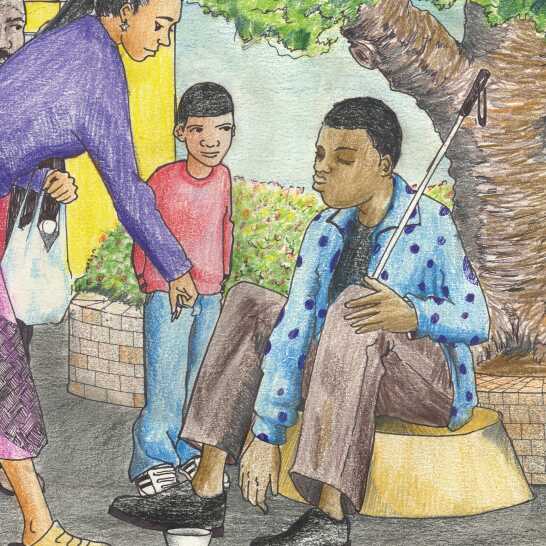
A man whistling and holding a white stick, and a woman putting coins into a tin in front of him.

Katughuru ghokushigha mbadi ghanakukenga hanu. Mbadi ghanakukenga masherenyi agha hanakumutaghera. Mbadi ghanakukenga kukehe thinu. Aye kunakupapatera muwayawaya oghu hanamuturera muthindoha nokughutura mudirimba dyendi.

The whistling man is not looking at the people. He is not looking at the money. He is not looking at anything. He’s searching for the coins in the tin and putting them into his pocket.


 A boy pulling a woman’s dress.

Rico hanunguruka oyu katughuru nokughayara eshi, “Pamweya ghafa meho.” Rico shime ghashemwa kokumona munu ghomukunga. Ghanatanga kwomapa. Ghanangumata kumuthithi wanyina nokwipura ghuhohota, “Nawe, oyu katughuru ne ghafa meho ndi?”

Rico stares at the whistling man and thinks, “Maybe he’s blind.” Rico has never seen a blind person before. He feels scared. He grabs his mother’s dress and asks softly, “Mommy, is that man blind?”


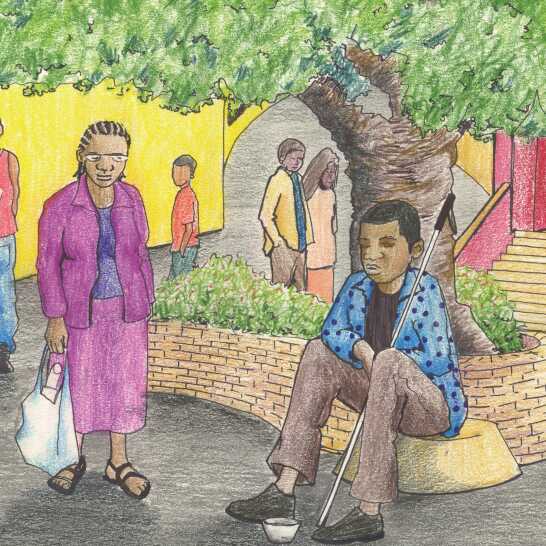
A blind man sitting next to a tree and people passing by.

Nyinamunu ghanatumbura dyoko dyendi. “Ghii” dyoghanahutha, “kemo mukunga. Mone, nomburo dhendi dhodhikenu. Hengi hanu hohakunga hanashimbanga mburo dhodhikenu. Aye kwarughanithanga edhi mburo mukushanithako makwina noyinu yimweya yokupira kuroghera.”

She takes his hand. “Yes,” she answers, “yes, he’s blind. Look, he has a white stick. Many blind people carry a white stick. He uses this stick to feel for holes and other obstacles.”


A woman with her arm around a boy’s shoulder.

“Ene ngepi edi ghaneya kudoropa? Ngepi edi ghanapoghoroka hanu waheya?” Ghepurire Rico.

“But how did he come to town? How did he find his way through all the people?” Rico asks.


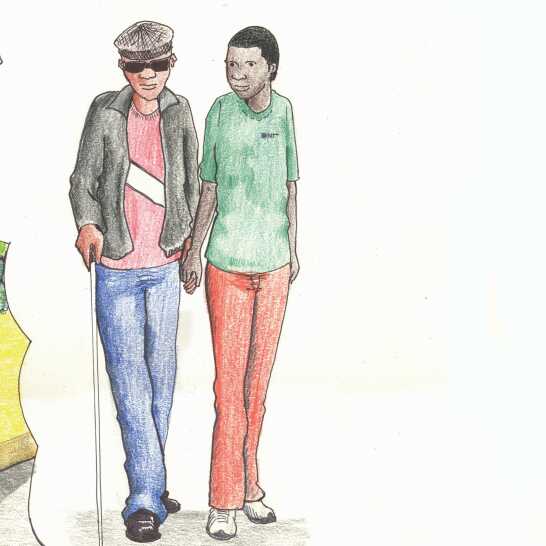
A blind man walking and holding a white stick, and a man holding his other hand.

Nyina ghanamutongwera, “Pamweya koghadi munu oyu ghanamughamwenanga kumukoka kate noghakume. Oyo munu kwamutoyanga eshi mughamweni.”

His mother tells him, “Maybe he has someone who helps him to find his way around. We call that person a guide.”


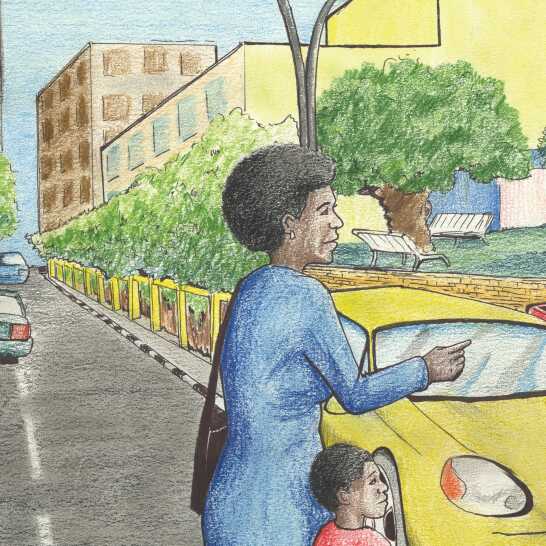
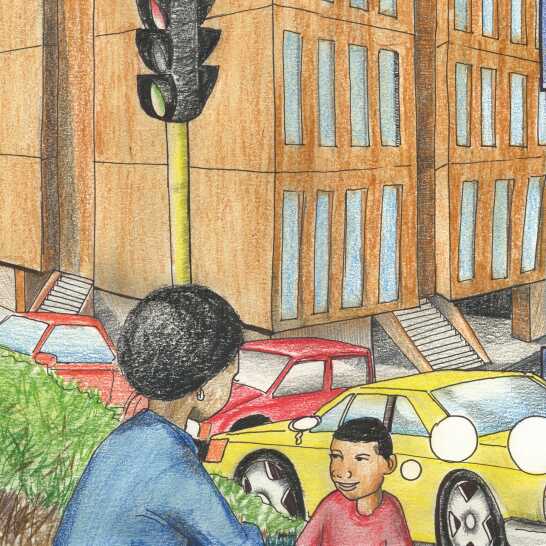
A woman and a boy crossing a street.

Hayendi kwawo kudyango dyokuturumuthera muñurumbara. Maroboti kunakukutjindja kughuthinamahako, yighaghuto yinemana nohanu kunakutjinaghana thitavura.

They walk to the zoopark. The traffic lights change to green, the cars stop and the pedestrians cross the street.


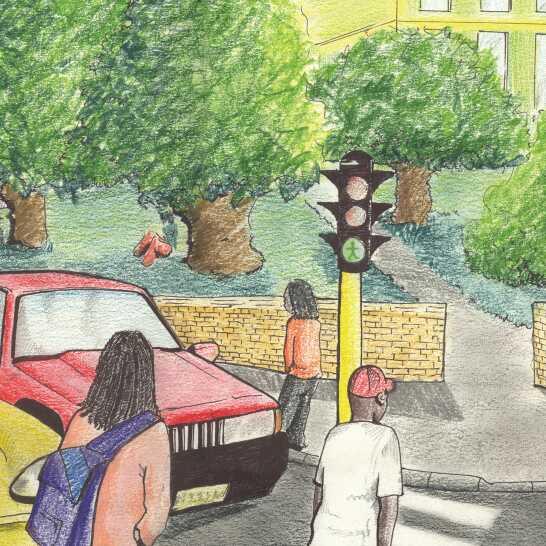
Traffic lights on green and people crossing a road.

“Mone kumaramba ghothinamahako. Ngeshi ghanamuneka thinamahako atwe kudimuka eshi kukona keho tutjinaghane thitavura. Mumatunga ghamweya ne kuwanamo thipembitho,” ghanaghamba nyina Rico. “Hakunga pakuyuva mughuma ghothipembitho, awo kuyidikuka eshi kukona keho hatjinaghane thitavura.”

“Look at the green light. When it is green we can see it is safe to cross the road. In some countries there is also a beeping sound,” Rico’s mother says. “When blind people hear the beeping, they know it is safe to cross the road.”


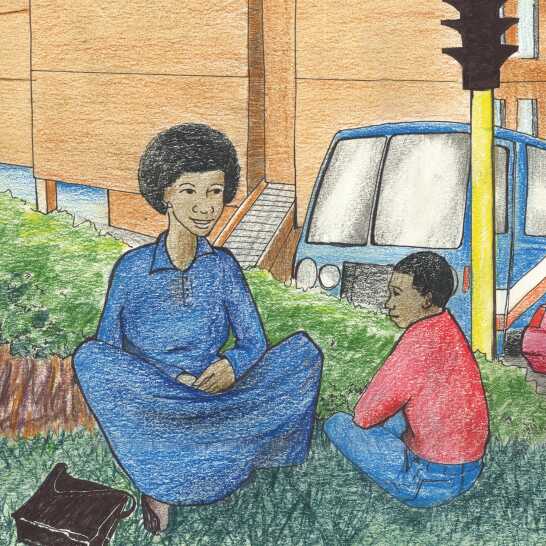
A woman and a boy talking on a street next to traffic lights.

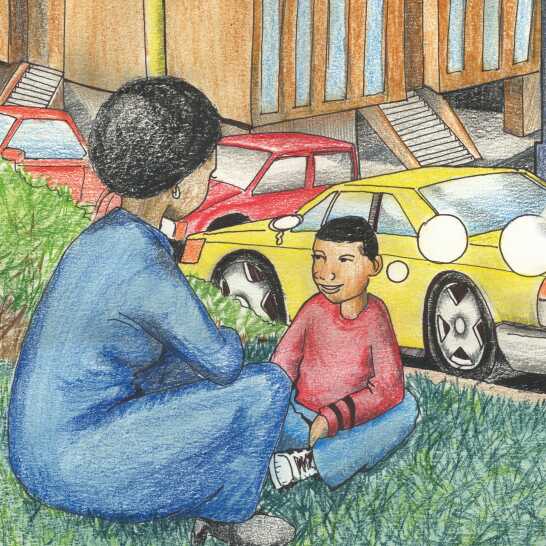
Hanahungumana pamuhonyi ghothinamahako ghomudyango dyomaturumuthero ghurorera hanu awa hanakupita. “Hakunga hamweya hakara nombwa ghokuwayenditha,” ghanaghamba nyina. “Mbwa dhapo ne hadhideghura mukuneghedha hahekudyadho, ene adhone ndhiro thikuma. Mbwa dhokemo ne dhipu muNamibia.”

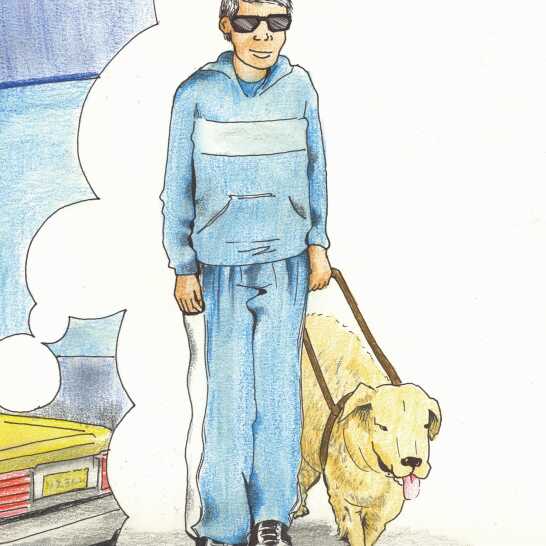
They sit on the green grass of the zoopark and watch the people walking by. “Some blind people have a guide dog,” his mother says. “These dogs are trained to guide their owner, but they are very expensive. There are very few guide dogs in Namibia.”


A blind man holding a guide dog on a harness.

“Oyu katughuru ghokufa meho ne mbadi wakurorera tivi,” ghanaghamba Rico. “Aye kukona kuyuva tivi noradiyo,” ghana mutongwera Nyina. “Hakunga kukona kuyuva yinu kupitakana hanu hokumona.”

“The blind man can’t watch TV,” Rico says. “He can hear the TV and radio,” Rico’s mother tells him. “Blind people can often hear things much better than people who can see.”


A woman and a boy sitting on a grassy bank talking.

“Ene mbadi wakutoya mambapira endi kakorambudhi,” ghanaghamba Rico. “Poghadi mambapira agha hatjanga muBraille. Mudyango dyomañando agha hatjangitha kumahina noingi, pakara tudoti tokundjumburuka otu twatendanga yitjanga yawo. Yira muhingo vene ghoghudhindo.”

“But he can’t read books or newspapers,” says Rico. “There are books written in Braille. Instead of words printed with ink, there are raised dots which make letters. It’s like a code.”


Someone reading a book written in Braille.

“Ngepi edi shoghatoye ngeshi ayene mbadi wakumona?” “Aye kutoya nominwe dhendi. Aye kupapatera tudoti tokundjumburuka nominwe dhendi, kenge vene ghunamonanga yitjanga nomeho ghoye.”

“How can he read if he can’t see?” “He reads with his hands. He feels the raised dots with his fingers, just like you see the letters with your eyes.”


A woman and a boy sitting on a grassy bank talking.

Rico ghanatetuka pakughayara eshi hakunga nawo kukona harughane yinu yokehediyuwa; yinu yira kuyendaghura mudoropa, kushighaghura membo, ndani yira kutoya.

Rico is amazed to think that people who are blind can do everyday things; things like walking around in town, like whistling songs, like reading.


People walking on a street and cars passing by.

Nyina ghanamutongwera, “Apa ngenyu mwakutjakera koye namukunga ne pano: owe kumona, ayene mbadi wakumona.” “Amene kumona, ene mbadi wakukona kushigha yira oya mukunga,” ghanamenyuna Rico.

His mother tells him, “The only difference between you and a blind person is that you can see and a blind person can’t see.” “I can see, but I can’t whistle as beautifully as that blind man,” Rico smiles.


Written by: Magda Swartz
Illustrated by: Petrus Amuthenu
Translated by: Maria M. Dikuua, Servasius M. Ndjunga
Read by: Maria Dikuua
Language: Thimbukushu
Level: Level 4
Source: The whistling man from African Storybook
Creative Commons License
This work is licensed under a Creative Commons Attribution-NonCommercial-ShareAlike 4.0 International License.
Options
Back to stories list Download PDF