Nēs ge ǂhôas Ngedeb, daniǃkhōdao-aob tsî xūǃgunuxa ǂkham khoeb, Gingileb hâkha disa. ǀGui tsēb Gingileba ra ǃau hîab ge ǃaub Ngedeb diba ra ǁnâu. Gingileb ge ra ǂā-am dani-i turab xa. ǁÎb ge ǁūse mâ tsî ǂōrisase ra ǃgâ, ôa rase, ǁîb ǂamǃnâ hâ hais di ǁnâub ai ǂnôa anibab nî mûs kōse. “Tsitik-tsitik-tsitik,” tib ge ǂkhari aniroba ra ǃau, tsî sao ra haisa ǃoa ra ǁkhana, tsî ǁkhaba nausa ǃoa. “Tsitik-tsitik-tsitik,” tib ge ra ǂgai, ǁaeba xu ǁaeb ǁga ra ǃâunǀkhāse, îb Gingileba sao bi.
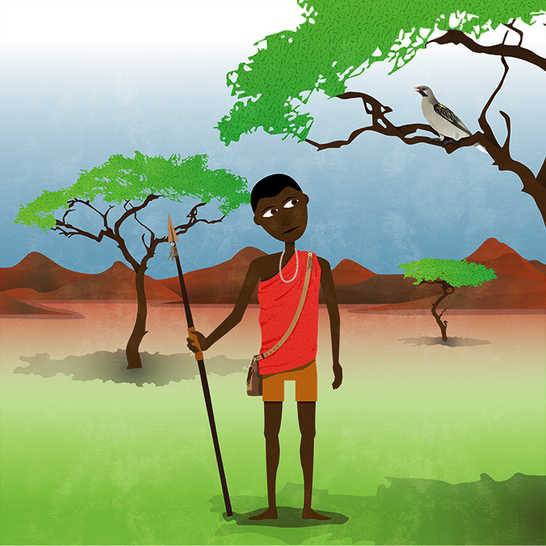
This is the story of Ngede, the Honeyguide, and a greedy young man named Gingile.
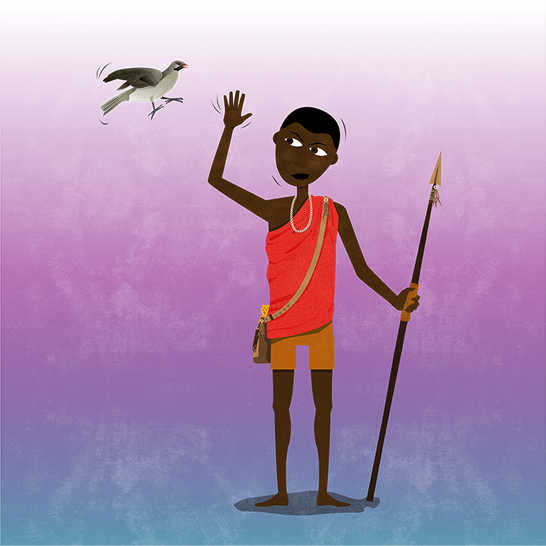
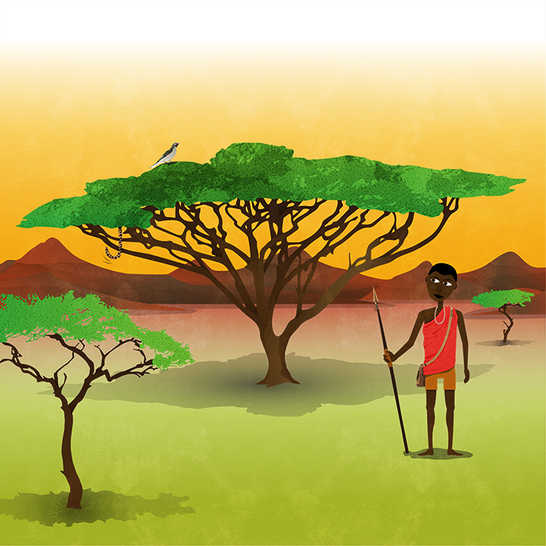
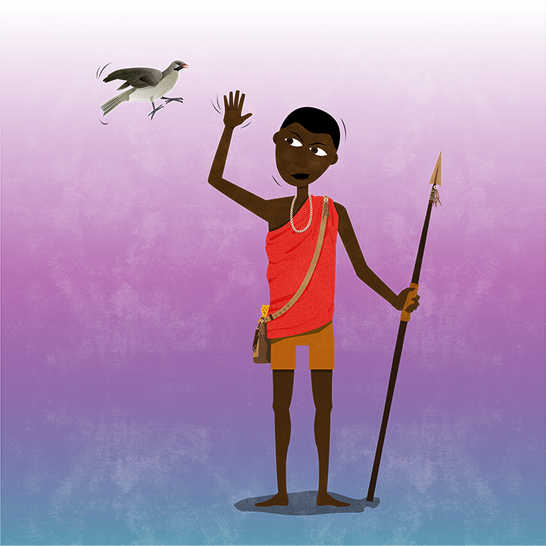
One day while Gingile was out hunting he heard the call of Ngede. Gingile’s mouth began to water at the thought of honey. He stopped and listened carefully, searching until he saw the bird in the branches above his head.
“Chitik-chitik-chitik,” the little bird rattled, as he flew to the next tree, and the next.
“Chitik, chitik, chitik,” he called, stopping from time to time to be sure that Gingile followed.
ǃKhare iri khaoǃgâ kha ge kai ǀnomas tawa ge sī. Ngedeb ge ǃhaeǃhaebese haiǁnâugu ǃnâ ra urimâ. ǁÎb ge ǀgui ǁnâub ai ǂnû tsî Gingileba ǃoa danasa ra ǀhōǂuise ge mî, “Nē i ge a! Nēsi ǀkhī re! Tare-ets ra ǀhaweba?” Gingileb ge ǀguis khami ī ǃhabu-e hais ǃnākaba xu mû tama, xaweb ge ǁîba Ngedeba gere ǂgomǃgâ.
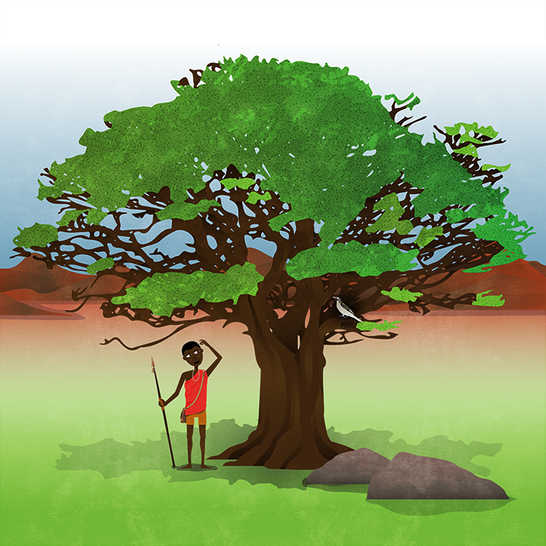
After half an hour, they reached a huge wild fig tree.
Ngede hopped about madly among the branches. He then settled on one branch and cocked his head at Gingile as if to say, “Here it is! Come now! What is taking you so long?”
Gingile couldn’t see any bees from under the tree, but he trusted Ngede.
Ob ge Gingileba ǁîb di somma hais ǃnāka ǁgui, ǂkhari ǀaeroga ǀhaoǀhao, tsî ǂkhari ǀaerosa ge khau. ǀAes ge ǃgâise a khau, ob ge gaxu ǂnâsa haiba ǀaes di ǁaegub ǃnâ ge ǃkhāǂgā. Nē haib ge ǃgōsase a ǂansa khauheb ra ob ǀgaisa lana ra kuruǃkhaisa. ǁÎb ge ǃnāgabaxu hais ai ge ǂharo tsoatsoa, khau tama ǀkhāb haib diba ǁgûn ǀkha nâmâi hâse.
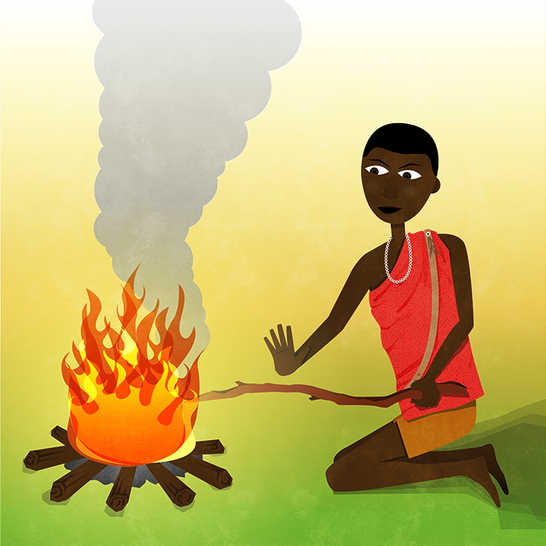
So Gingile put down his hunting spear under the tree, gathered some dry twigs and made a small fire.
When the fire was burning well, he put a long dry stick into the heart of the fire. This wood was especially known to make lots of smoke while it burned.
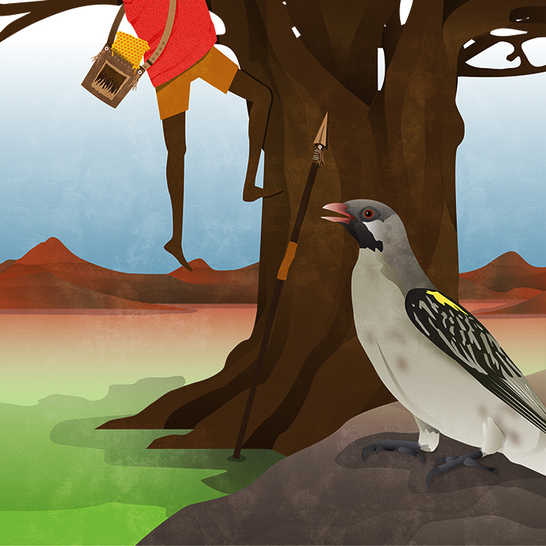
He began climbing, holding the cool end of the smoking stick in his teeth.
ǀAeǁaeb ge ǃhabugu ra summm ǀgauba ge ǁnâu. ǁÎgu ge hais ǃnâ ǂnôa āba xu ra ǂgâ ka ǂoa – ǃhabu omma xu. Gingileb ge ǃhabu ommab ge ǀgū o khau ra ǀkhāb haib diba ǁnāpa ra ǃkhāǂgā. ǃHabugu ge ǁaixa hâse ra ǁkhana ǂoaxa. ǁÎgu ge ra ǁkhanabē, ǀanni xa gu ǃgâibahe tama xui-ao – xawe aibe Gingileba tsûsase ǃkhātoa tsî!
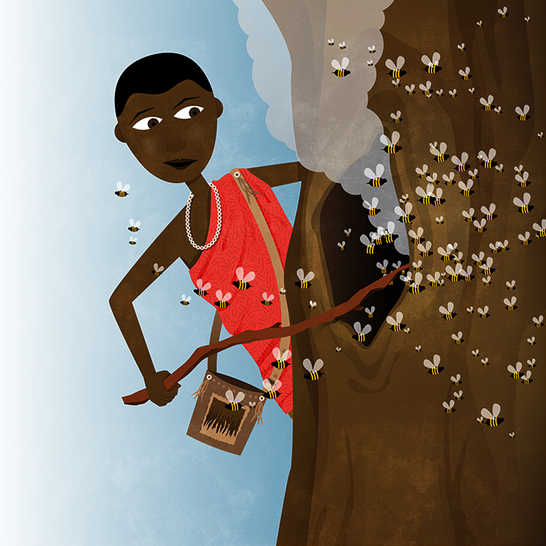
Soon he could hear the loud buzzing of the busy bees. They were coming in and out of a hollow in the tree trunk – their hive.
When Gingile reached the hive he pushed the smoking end of the stick into the hollow.
The bees came rushing out, angry and mean. They flew away because they didn’t like the smoke – but not before they had given Gingile some painful stings!
ǃHabugu ge ǂoatoa, ob ge Gingileba ǁîb di ǃomma ǃhabu-oms ǃnâ ǀhōǂgā tsî ǃomsǀoase ǃgom daniǂgoaba ra ūǂûi, kausa, ǃkhū hâ danib hîa ǃuri goaba ra ǂnâba. ǁÎb ge ǃamkuse daniǂgoaba ǁîb ǃhōb aib tani hâ ǁgarub ǃnâ ra ǂgā, tsî haisa xu ge ǁgôaxa.
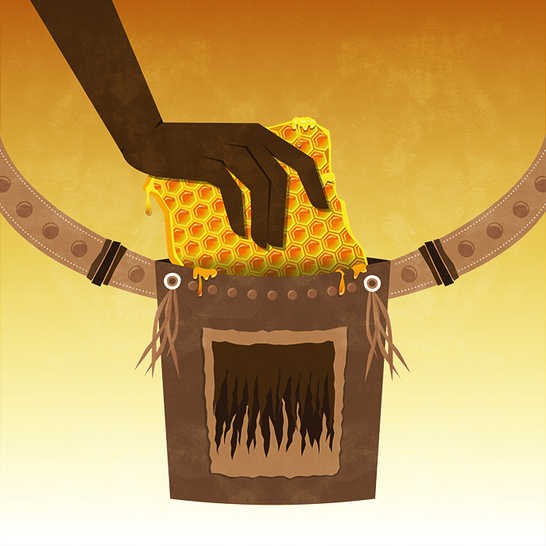
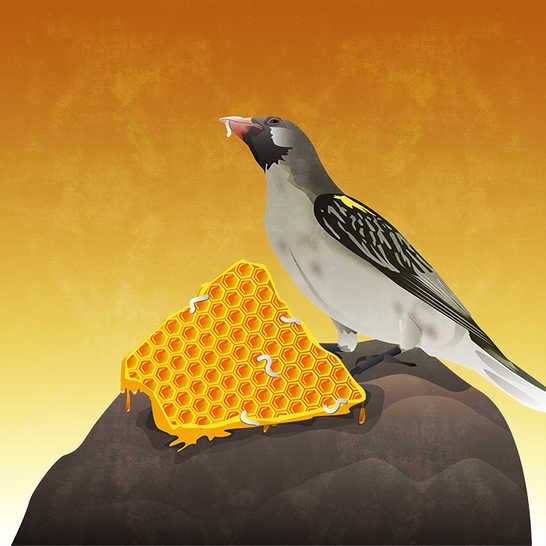
When the bees were out, Gingile pushed his hands into the nest. He took out handfuls of the heavy comb, dripping with rich honey and full of fat, white grubs.
He put the comb carefully in the pouch he carried on his shoulder, and started to climb down the tree.
Ngedeb ge ǂhīnase Gingileb ra dī xūn hoana ra kō. ǁÎb ge ge ǃâubasen hâ i Gingileb kausa daniǃâsa daniǃkhōdao-aoba nî mā gangans di ǁgauǁgaus ase ti. Ngedeb ge ǁnâuba xu ǁnâub ǁga gere uriǁgôa, haisa xu ǃhūb aib nî sīs kōse. ǀUnilams aib ge Gingileba haisa xu ra ǁgôaxa. Ngedeb ge axab xōǀkhā ǂnôa ǀuis ai ǁîb di mātawasa ge ǃâuǂnû hâ i.
Ngede eagerly watched everything that Gingile was doing. He was waiting for him to leave a fat piece of honeycomb as a thank-you offering to the Honeyguide.
Ngede flittered from branch to branch, closer and closer to the ground. Finally Gingile reached the bottom of the tree.
Ngede perched on a rock near the boy and waited for his reward.
Xaweb ge Gingileba ǀaesa ǀari, tsî ǁîb di somma ūkhâi tsî anib ǀkha ǁae tamase oms ǁga ge ǃgû. Anib ge ǁaixa hâse, “Vik-torr! Vik-torrr!” ti ra ǃau. Gingileb ge ǁūse mâ, tsî aniba kō, tsî ǃgarise ge âi. “Dani-ets ra ǂhâba, ǂhâbats ra, ti hore? Ha! Tita ge hoa sîsenna go dī tsî ǀguri hoa ǃkhāde go hō. Tare-i ǃaroma ta sats ǀkha nî ǀgoragu?” Ti mî tsîb ge ge ǃgûbē. Ngedeb ge kaise ge ǁaixa! Nēb ge ǀgau tamab ǁîb nî hâ ūheba! Xawe ǁîb xa nî ǀkhaohe.
But, Gingile put out the fire, picked up his spear and started walking home, ignoring the bird.
Ngede called out angrily, “VIC-torr! VIC-torrr!”
Gingile stopped, stared at the little bird and laughed aloud. “You want some honey, do you, my friend? Ha! But I did all the work, and got all the stings. Why should I share any of this lovely honey with you?” Then he walked off.
Ngede was furious! This was no way to treat him! But he would get his revenge.
ǀGuitsē, wekhega ǃkharu hâseb ge Gingileba ǁkhawa Ngedeb di ǃauba ge ǁnâu. ǁÎb ge ǁkhoaxa dani-e ge ǂâihō tsî turaxase ǁkhawa aniba ge saoǃgon. Gaxu ǁaebab Gingileba ǃgarob di ǂnaob kōse nana hâs khaoǃgâb ge Ngedeba kaiǃgâ ǁkhūhais tawa ge sī mâ. “Ahh,” tib ge Gingileba ra ǂâi. “ǃHabu-oms ge nē hais ǃnâ hâ.” ǁÎb ge ǃhaese ǂkhari ǀaerosa khau tsî hais ai ra ǂharo, ǀan ra haiba ǁgûgu ǀkha nâmâi hâse. Ngedeb ge ǂnû tsî gere kōbi.
One day several weeks later Gingile again heard the honey call of Ngede. He remembered the delicious honey, and eagerly followed the bird once again.
After leading Gingile along the edge of the forest, Ngede stopped to rest in a great umbrella thorn. “Ahh,” thought Gingile. “The hive must be in this tree.” He quickly made his small fire and began to climb, the smoking branch in his teeth. Ngede sat and watched.
Gingileb ge ǃaruǀî ra ǂoa, ǂhâ rase tare-i xab ǃhabugu ǀōba ǁnâu tama ǃkhaisa. “Tsâpes kom ǃhabu-omsa ǃgamse hais ǃnâ ǂnôa o,” tib ge ǁîb ǃnâ ra ǂâi. ǁÎb ge noxopa ǀnî ǁnâub ǃoa ra ǂgaekhâisen. Xaweb ge ǃhabu-oms ǃâs ǃnâ ǂhûiseb ǀkha ra ǃomgu. ǂHûiseb ge ǁîb di ǂomsa xu ǂhanihes xa kaise ra ǁaixa. ǁÎb ge mûra ra ǂōǂō, tsî amǃnâba khora, tsî kaise ǀā ǁgûga ge ǁgaubi.
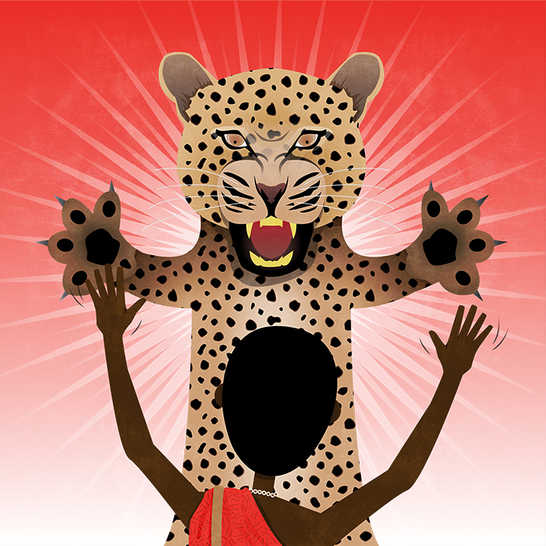
Gingile climbed, wondering why he didn’t hear the usual buzzing. “Perhaps the hive is deep in the tree,” he thought to himself. He pulled himself up another branch. But instead of the hive, he was staring into the face of a leopard!
Leopard was very angry at having her sleep so rudely interrupted. She narrowed her eyes, opened her mouth to reveal her very large and very sharp teeth.
ǂHûiseb xab nî xorahes aiǃâb ge Gingileba ǃhaese haisa xu ge ǁgôaxa. ǃNôaǃnâ tsîb ge ǀgui ǁnâuba dasā tsî tsûsase ǃhūb ai ge ǁnā, tsî ǂaisa ge ǁkhuri. ǁÎb ge ǁkhāb as kōse ǃhaese ge ǀībē. ǁÎb ǃgâiǃgâba ǃoab ge ǂhûiseba noxopa ǂoms ǃnâ ge hâ i, tsî saurubi tama ge i. Ngedeb, daniǃkhōdao-aob ge ǁîb di ǀkhaoba ge hō. Tsî Gingileb ge ǁîb di ǁkhāǁkhāsa ge hō.
Before Leopard could take a swipe at Gingile, he rushed down the tree.
In his hurry he missed a branch, and landed with a heavy thud on the ground twisting his ankle. He hobbled off as fast as he could. Luckily for him, Leopard was still too sleepy to chase him. Ngede, the Honeyguide, had his revenge.
And Gingile learned his lesson.
Tsîn ge ǁnāti, Gingileb di ôasana, Ngedeb di ǂhôas xan ge ǁnâu o, kai ǃgôasiba ǁnā ǂkhari aniroba ge ūba hâ i. Dani-en ga xoraǂûi ǁaeb hoaban ge hoa-i xa kai ǃâsa daniǃkhōdao-aoba gere ǃgauba!
And so, when the children of Gingile hear the story of Ngede they have respect for the little bird. Whenever they harvest honey, they make sure to leave the biggest part of the comb for Honeyguide!



 Zulu folktale
 Wiehan de Jager
 Ngeve Shangombe
 Khoekhoegowab
 Level 4