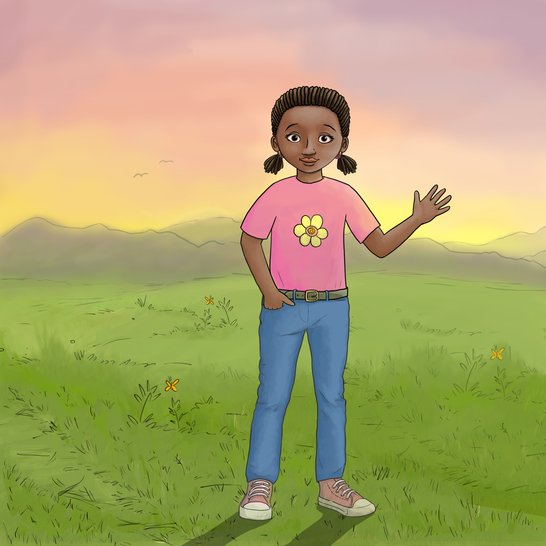
Nēs ge a Khalai. ǁÎs ge a hû kurixa. ǁÎs di lons ge “ǁÎs ge a ǃgâi” ti Lubukusub, ǁîs di gowab, ǃnâ ra ǂâibasen.
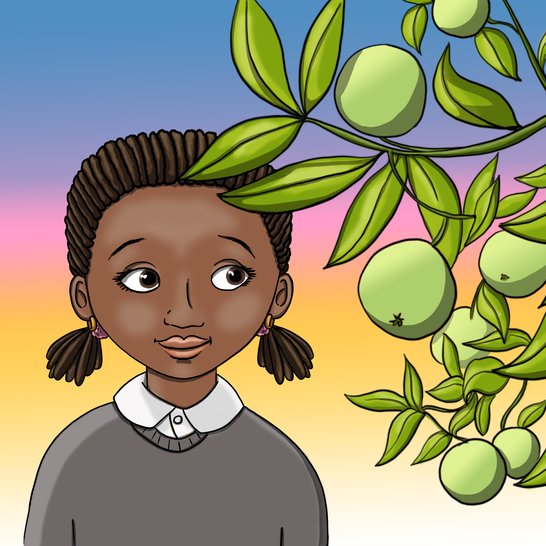
This is Khalai. She is seven years old. Her name means ‘the good one’ in her language, Lubukusu.
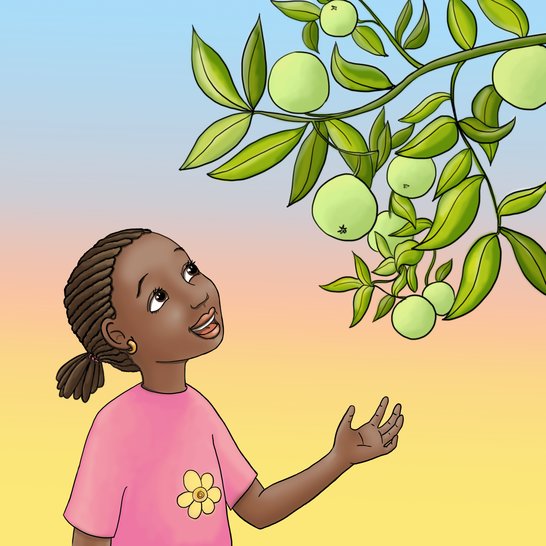
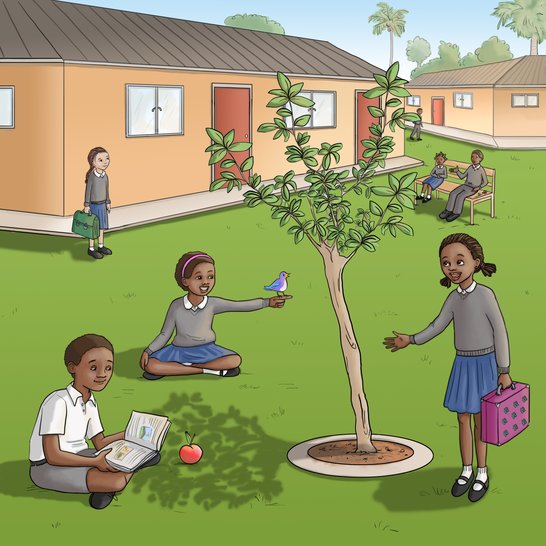
Khalais ge ǁgoagas ra ǂkhai o lemun hais ǀkha ra ǃhoa. “Toxopa lemun hai, ǃgâise ǁhoa re, î ǂgui ǁansa lemunde mā da.”
Khalai wakes up and talks to the orange tree. “Please orange tree, grow big and give us lots of ripe oranges.”
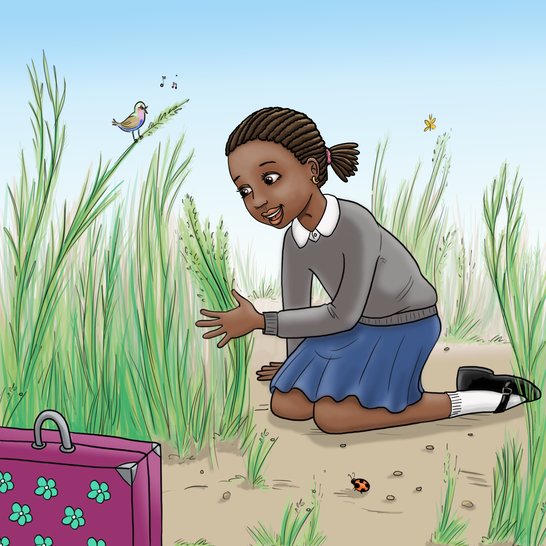
Khalais ge skoli ǁga ra ǃgû. Daob ǃnâs ge ǁîsa ǀgân ǀkha ra ǃhoa. “Toxopa ǀgân, ǀgaisase ǃam re, î tā ǂnâǂui re.”
Khalai walks to school. On the way she talks to the grass. “Please grass, grow greener and don’t dry up.”
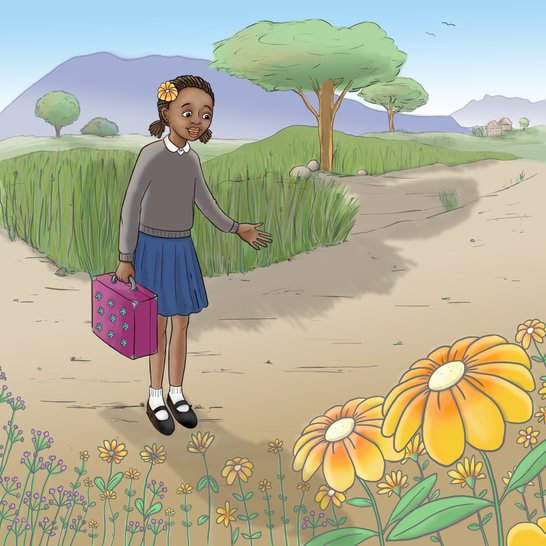
Khalais ge ǃgarob ǃkhādi xōǀkhā ra ǃkharu. “Toxopa ǃkhāso, îsase so ǁhoa re, î ta ti ǀûn ǃnâ ǃkhāǂgāso.
Khalai passes wild flowers. “Please flowers, keep blooming so I can put you in my hair.”
Skoli tawas ge Khalaisa ǁaegub ǃnâ mâ hais ǀkha ra ǃhoa. “Toxopa hais, kai ǁnâuga ǃī re, î da sa sommi ǃnâ ǂnû tsî khomai.”
At school, Khalai talks to the tree in the middle of the compound. “Please tree, put out big branches so we can read under your shade.”
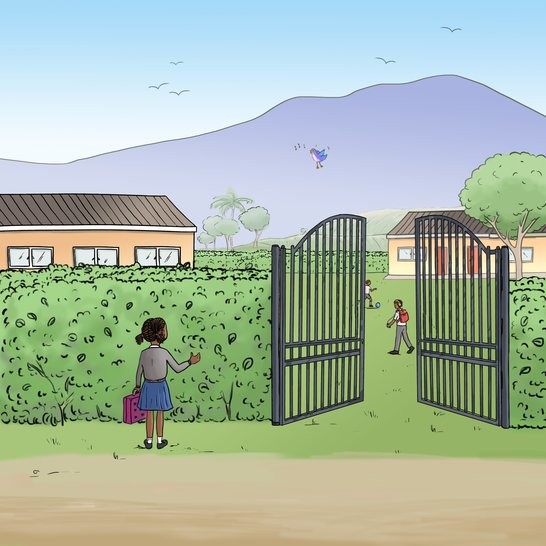
Khalais ge skoli ǂnamipe ra ǁhoa ǀgapegu ǀkha ra ǃhoa. “Toxopa ǀgapegu, ǀgaisase ǃī re, î ǁgai khoena nēpa ǂgâxasa ǁkhae.”
Khalai talks to the hedge around her school. “Please grow strong and stop bad people from coming in.”
Khalais ga skola xu a oaǀkhī, os ge lemun haisa sī ra kō. “Sa lemunde noxopa ǁan tama hâ?” tis ge Khalaisa ra dî.
When Khalai returns home from school, she visits the orange tree. “Are your oranges ripe yet?” asks Khalai.
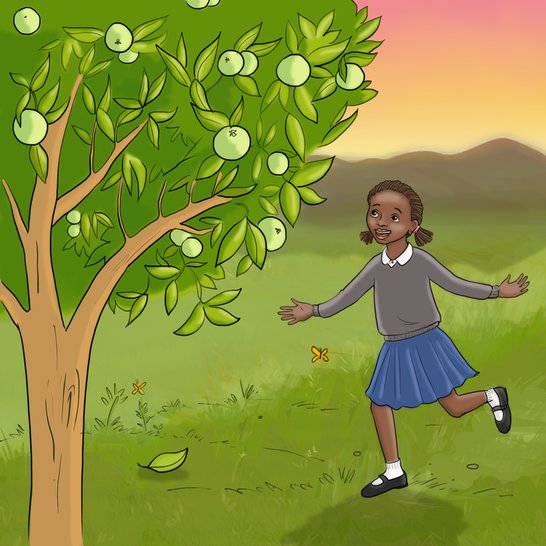
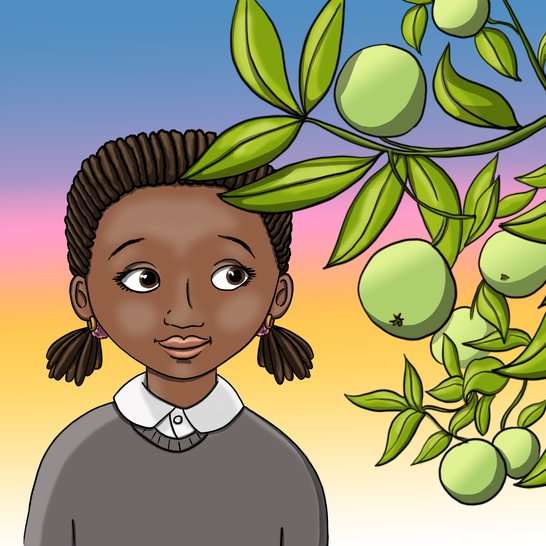
“Lemundi ge noxopa a ǃam,” tis ge Khalaisa ra ǀhâimâinǀom. “ǁAri ta ge nî mû si lemun hai,” tis ge Khalaisa ra mî. “ǀNîsis kom ǁari ǁansa lemunde nî mā te o.”
“The oranges are still green,” sighs Khalai. “I will see you tomorrow orange tree,” says Khalai. “Perhaps then you will have a ripe orange for me!”



 Ursula Nafula
 Jesse Pietersen
 Ngeve Shangombe
 Khoekhoegowab
 Level 2