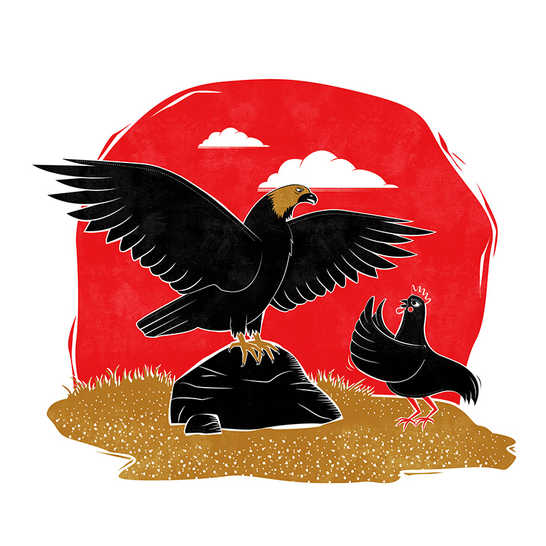
ǀGuitsē ra ge Anis tsî ǃAriǃkhās hâra ge khoeǀhōgu i. ǁÎra ge nau anin ǀkha ǂkhîb ǃnâ ge ǁanǁare hâ i. Hoara ge ge ǁkhana ǁoa i.
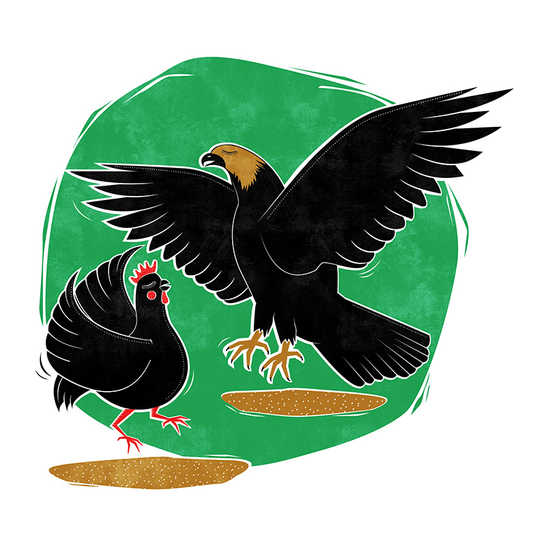
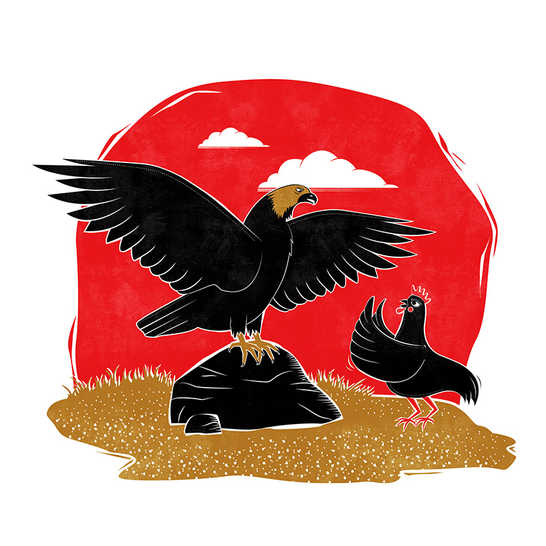
Once upon a time, Hen and
Eagle were friends. They lived
in peace with all the other birds.
None of them could fly.
ǃÂtsūǀkhāb ge ǀguitsē ǁnā ǃhūb ǃnâ ge hâ i. ǃAriǃkhās ge kaise ǃnūse ǂû-e hōs ǃaroma nî ǃgûse ge ī i. ǁÎs ge kaise tsau hâse ge oaǀkhī. “Supu ǀgau i ge nî hâ ǃgûs nî-e!” tis ge ǃAriǃkhāsa ra mî.
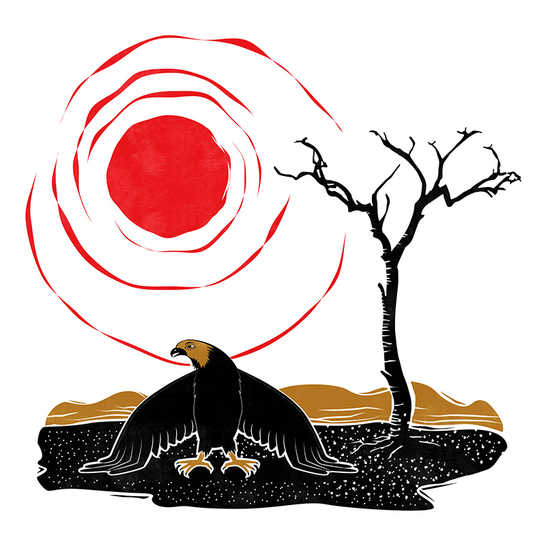
One day, there was famine in
the land. Eagle had to walk very
far to find food. She came back
very tired.
“There must be an easier way
to travel!” said Eagle.
ǃGâi ǃoeǂoms khaoǃgâs ge Anisa kaise ǃgâi ǀawesa ge ūhâ i. Nau anina xu ra ǁnā ǃamgas ge gere ǀhaoǀhao. “ǀKhim nē ǃamga sam di ǃamgu ai ǂomǁgui,” tis ge ge mî. “ǁNās ge ǃgûsa tsâse a supusupu ǁkhā.”
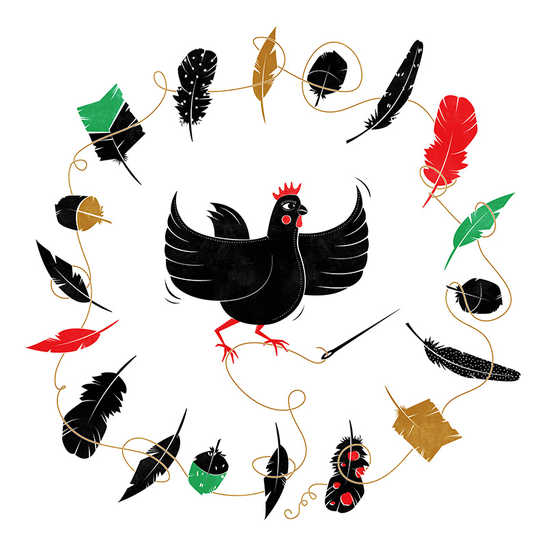
After a good night’s sleep, Hen
had a brilliant idea. She began
collecting the fallen feathers
from all their bird friends.
“Let’s sew them together on top
of our own feathers,” she said.
“Perhaps that will make it easier
to travel.”
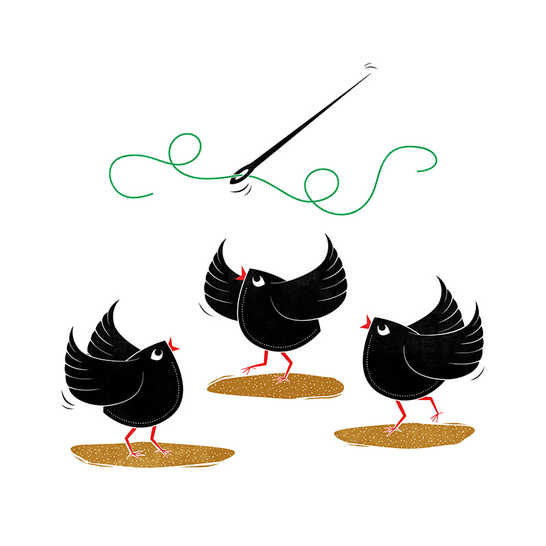
ǃAriǃkhās ǀguis ge ǁnā ǃgaroǃās ǃnâ ge nala ūhâ i, tsîs ge ǂguro ge ǂom tsoatsoa. ǁÎs ge îxa ǁgawokha ge ǂombasen, tsî Anis ǀgapise ge ǁkhana. Anis tsîn ge nē nala ge ǀkhuwi, xawes ge ǃhaese ǁîsa ge ǂoms xa tsau. ǁÎs ge kāb ai nala ǁgui tsî ôasana ǂûdīǃnâ-oms ǃnâ gere ǂûdība.
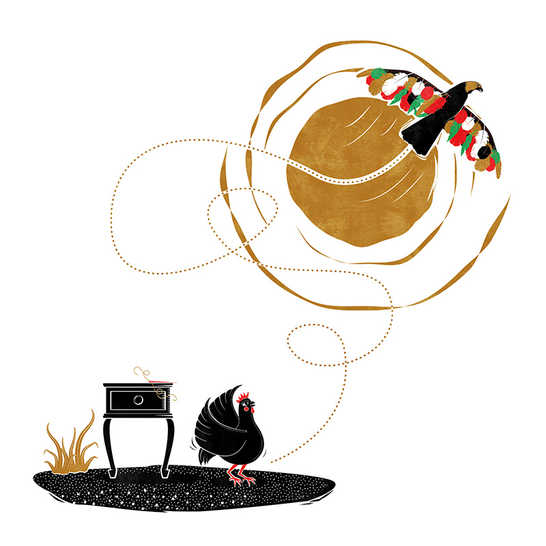
Eagle was the only one in the
village with a needle, so she
started sewing first.
She made herself a pair of
beautiful wings and flew high
above Hen.
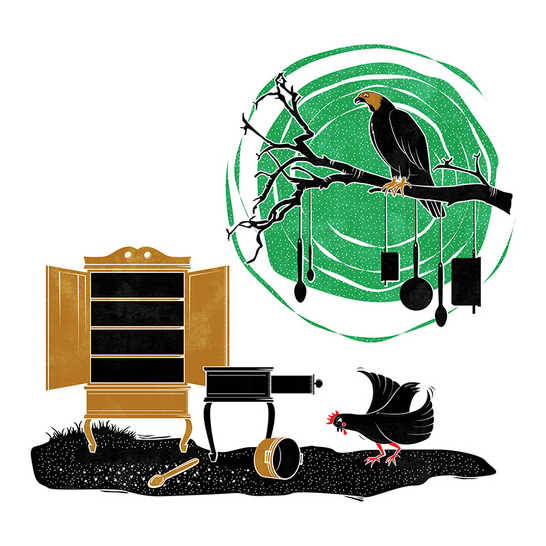
Hen borrowed the needle but
she soon got tired of sewing.
She left the needle on the
cupboard and went into the
kitchen to prepare food for her
children.
Nau anin ge ǃAriǃkhās ra ǁkhanabē ǀgausa ra mû. ǁÎn ge Anis ai nala ge ǂgan, în ǁîn tsîna ǁgawona kurubasen. Hoa anin ge ega ǀhomaib ai gere ǁkhanamâ.
But the other birds had seen
Eagle flying away. They asked
Hen to lend them the needle to
make wings for themselves too.
Soon there were birds flying all
over the sky.
ǀUniga anis îa ge nala ǀkhuwis ge nala oaǀkhī-ū, os ge Anisa oms tawa ge ǀkhai i. Ôasan ge nala ǃkhōǃoa tsî ge ǀhuru-ūbi tsoatsoa. ǀHuru tsautsausen, tsîn ge nala ǃhūb ǃnâ ge ǀuru ǁgui.
When the last bird returned the
borrowed needle, Hen was not
there. So her children took the
needle and started playing with
it.
When they got tired of the
game, they left the needle in
the sand.
ǃUi ǁaeb ais ge ǃAriǃkhāsa ge oaǀkhī. ǁÎs ge nali âsa ge ǂgan, îs ǃgomǀgorahe ge ǃamga ǂomǁare ǁkhā. Anis ge kāb ai kō, ǂûdīǃnâ-oms ǃnâ kō, tsî oms ǃaugas tsîna ge kō, xawes ge ǀguis khama i ǃkhai-i tawas tsîna nala hō tama ge i.
Later that afternoon, Eagle
returned. She asked for the
needle to fix some feathers that
had loosened on her journey.
Hen looked on the cupboard.
She looked in the kitchen. She
looked in the yard. But the
needle was nowhere to be
found.
“ǀGui tsēs ǀguisa mā tere, tis ge Anisa ǃAriǃkhāsa ǃoa gere ǀkhoma. Osas ge sa ǁgawokha ǁkhawa ǂomǁae, ǁkhanabē tsî si ǂûna ôa ǁkhā.” “ǀGui tsēs ǀguisa” tis ge ǃAriǃkhāsa ge mî. “Nalas ga hō tama i, os ge sa ôarona xu ǀguiro-e matares ase nî mā te.”
“Just give me a day,” Hen
begged Eagle. “Then you can
fix your wing and fly away to
get food again.”
“Just one more day,” said Eagle.
“If you can’t find the needle,
you’ll have to give me one of
your chicks as payment.”
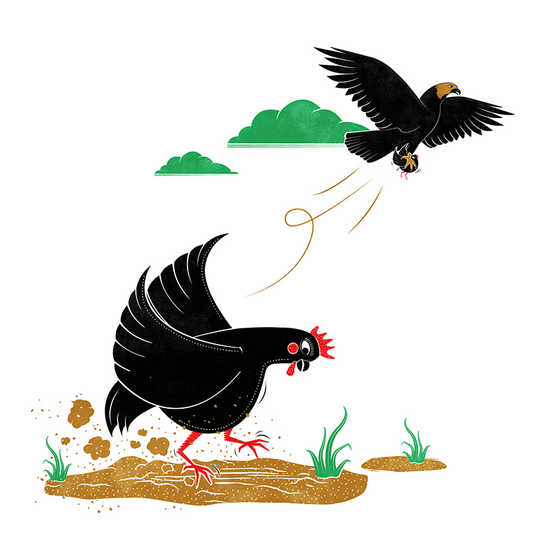
Sao ra tsēs ge ǃAriǃkhāsa sī, os ge Anisa ǃhūb ǃnâs ra ǁhoramâse ge si ǀhao-u, xaweb ge nala ge ǀkhai i. ǃAriǃkhās ge ǃnoesase ǁkhanaǁnâ tsî ǀgui anirosa ǃkhō, tsî ge ǁkhanabē ūsi. ǁNā tsēsa xus ge ǃAriǃkhāsa, Anisa ǃhūb ǃnâs ra nala ǁhoramâse ra mû.
When Eagle came the next day,
she found Hen scratching in the
sand, but no needle.
So Eagle flew down very fast
and caught one of the chicks.
She carried it away.
Forever after that, whenever
Eagle appears, she finds Hen
scratching in the sand for the
needle.
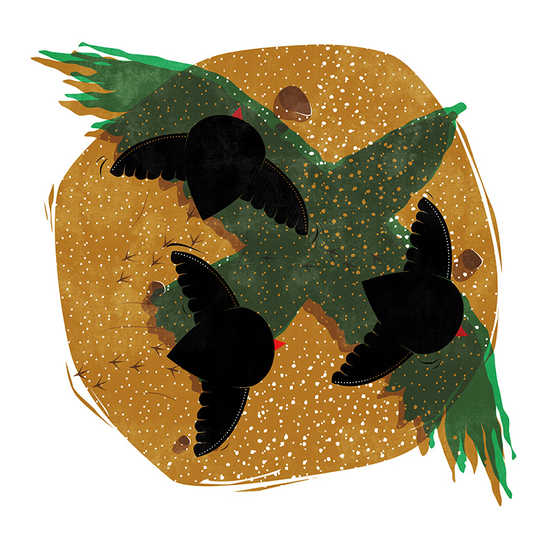
Tsî ǃAriǃkhās ǁgawogu di sommi ra ǃhūb ai ǁgausens kōses ge Anisa, ǁîs anirona ra ǃkhâikhom. “ǃGora tsî ǂnâsa ǃhūba xu ǂgō.” Tsîn ge anirona ra ǃeream “Sida ge gâre tama hâ, ǃkhoe da nî” ti.
As the shadow of Eagle’s wing
falls on the ground, Hen warns
her chicks. “Get out of the bare
and dry land.”
And they respond:
“We are not fools. We will run.”


 Ann Nduku
 Wiehan de Jager
 Ivan Petrus Josob
 Khoekhoegowab
 Level 3