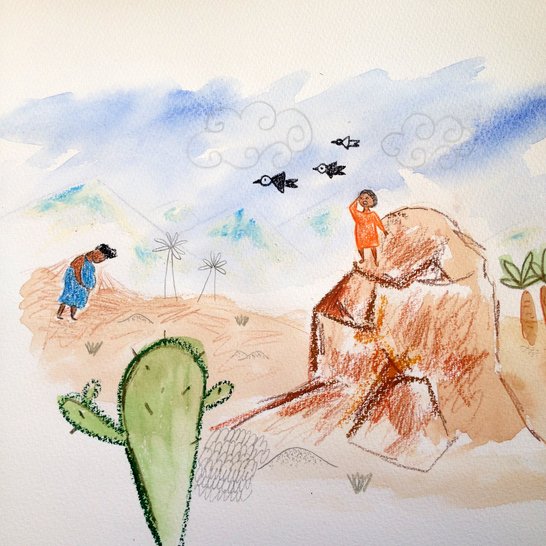
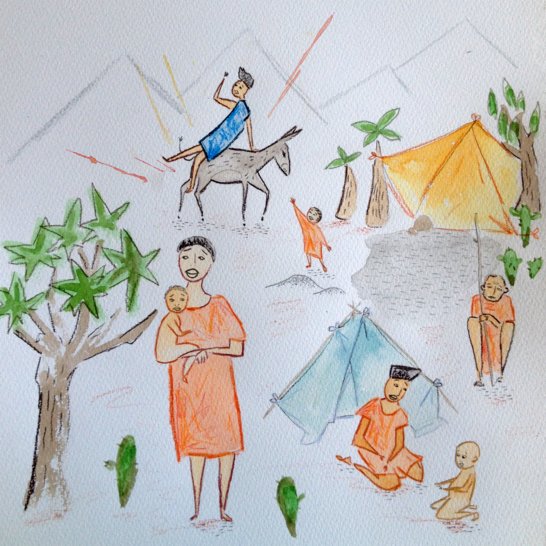
It was a little girl who first saw the mysterious shape in the distance.
Nē īsi-i ra ǀgū, khamis ge ǃgom tarekhoesa ra mû.
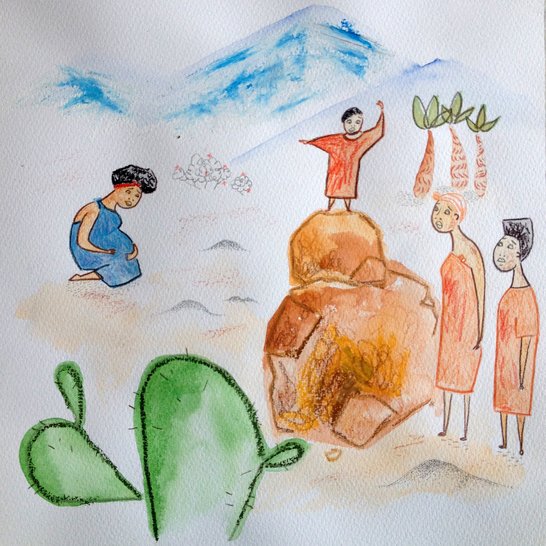
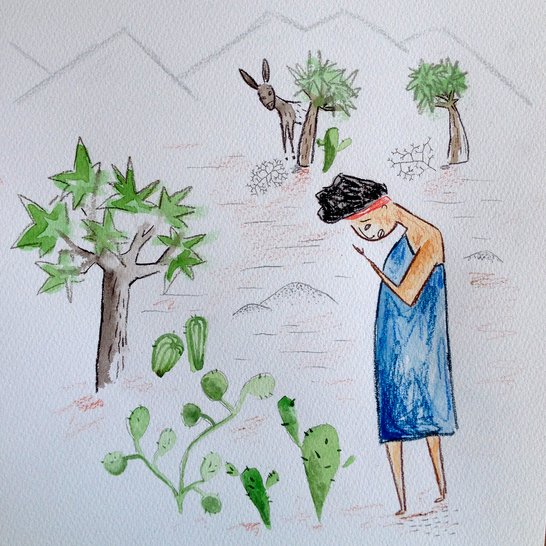
As the shape moved closer, she saw that it was a heavily pregnant woman.
Taoxa, xawe ǁkhoases ge nē ǂkham ǀgôarosa nē khoes ǁga ra ǃgûǀgū.” Ūbasen si da ge nî,” tin ge ǂkham ǀgôaros khoena ge mîǀgui. “ǁÎ ôagura da ge nî ǃûi, tsî ǃnorasase ūhâ.”
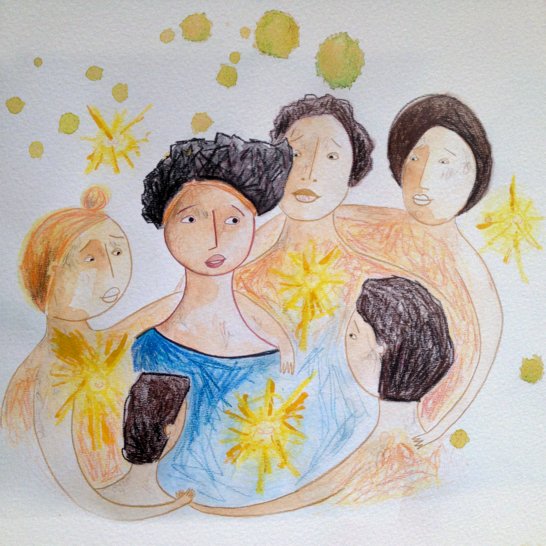
Shy but brave, the little girl moved nearer to the woman.
“We must keep her with us,” the little girl’s people decided. “We’ll keep her and her child safe.”
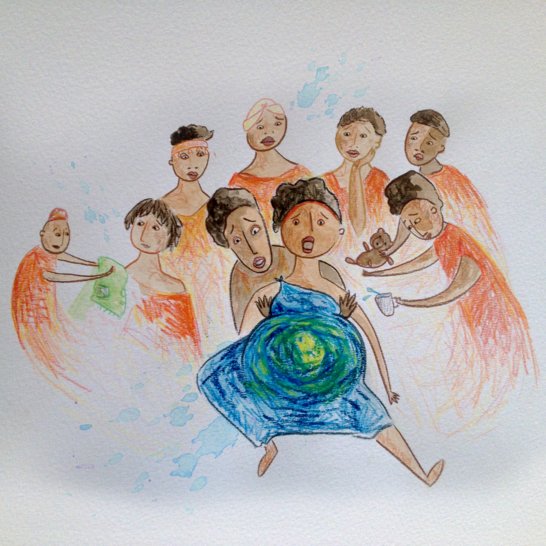
ǀGôaro i nî ǃnae, ǁaeb ge ge ǀoa. “ǁGâi!” “ǂNamna ǀkhī-ū!” “ǁGam!” “ǁGâiiiiii!”
The child was soon on its way.
“Push!”
“Bring blankets!”
“Water!”
“Puuuuussssshhh!!!”
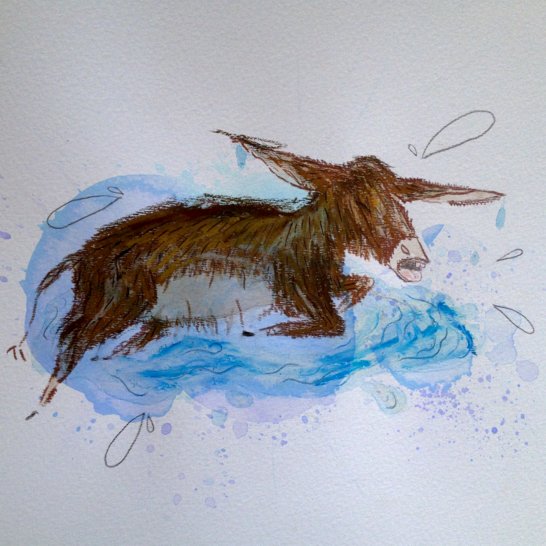
Xawen ge ǀgôaro-en ge mûo, hoana ǃhurib xa ge uri-oa. “Donki- i!”
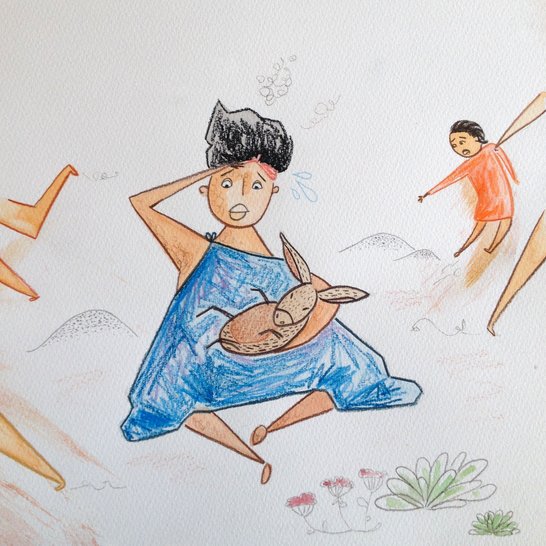
But when they saw the baby, everyone jumped back in shock.
“A donkey?!”
ǁÎn ge ge ǂnoagu tsoatsoa. “Sada ge go mî mamasas tsî ǀgôaro-i tsîna da nî ǃnorasase ūhâ ti, xui-ao da ge ǁnāsa nî dī,” timîn ge ǀnîna ge mî. “Xawe ra ge ǁîra tsūǃōba nî ǀkhī-ū” tin ge nauna ge mî.
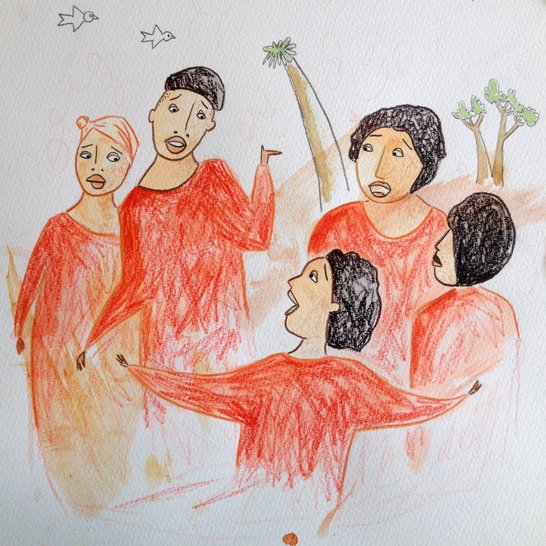
Everyone began to argue.
“We said we would keep mother and child safe, and that’s what we’ll do,” said some.
“But they will bring us bad luck!” said others.
Timîs ge nē tarasa ǁkhawa ǀguri ge hâ i. ǁÎs ge gere ǂhâ, tare-es nē ǂopera ǀgôaro-i ǀkha nî dī ǃkhaisa. ǁÎs ge ǁkhāti gere ǂhâ, tare-es ǁîs ǀkhāsa nî dī-ūsensa.
And so the woman found herself alone again.
She wondered what to do with this awkward child.
She wondered what to do with herself.
Xawes ge ǀunis ai ge ūǃoa khoe-ôagura a ǃkhaisa.
But finally she had to accept that he was her child and she was his mother.
Nē ǀgôa i ga ǃnae i ge khami ǀgui hâhâ o, o i ge ga ǃgomsi tama hâ. Xawe i ge nē donki ǀgôaro-e kai i ra, o ra kai, ega i ge mamasas ǁâb ai ǂâu tama hâ is kōse. Tsî mâtikōseb ga dītsâ, xaweb ge ge khoe-i khami tanisen ǁoa i. ǁÎb mamas ge kaise ge tsau, tsî ǀhū hâ i. ǀGurun ǀguin ra dī sîsengas ge gere ǀnîǃnāde dī kaibi.
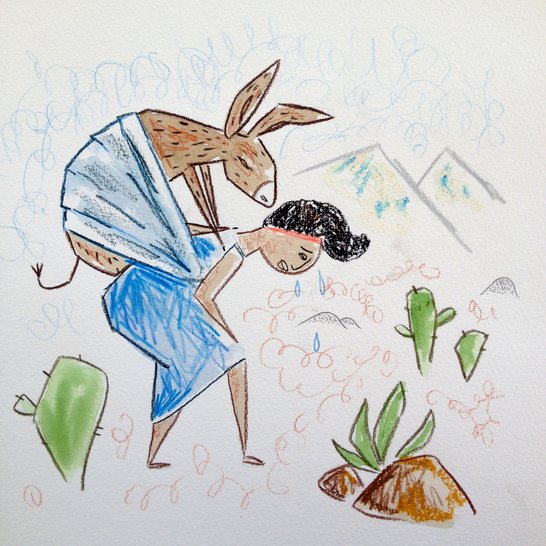
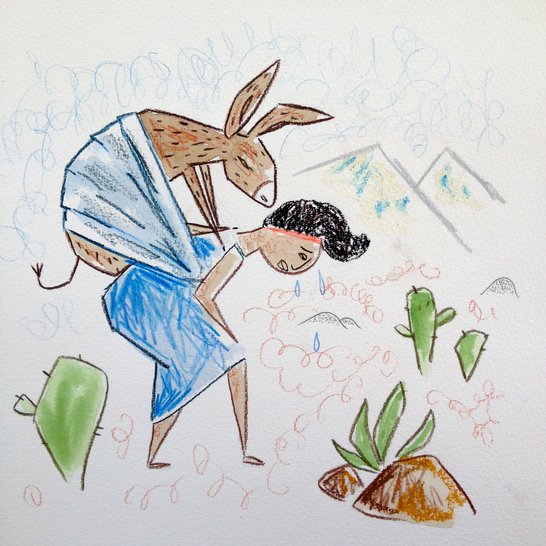
Now, if the child had stayed that same, small size, everything might have been different. But the donkey child grew and grew until he could no longer fit on his mother’s back.
And no matter how hard he tried, he could not behave like a human being. His mother was often tired and frustrated. Sometimes she made him do work meant for animals.
Donkib ǃnâ i ge ǀgarusa ǂâis tsî ǁaib tsîna ge omkhâisen. Nē xū-e dī ǁoa, nau-e dī ǁoa tib ge i. Nēpa ī ǁoa, naupa ī ǁoa, tib ge i. ǀGuitsēb ge kaise ǁaixa tsî ǁîb mamasa ge ǂnā, îs ǃhūb ai si ǁnā.
Confusion and anger built up inside Donkey. He couldn’t do this and he couldn’t do that. He couldn’t be like this and he couldn’t be like that.
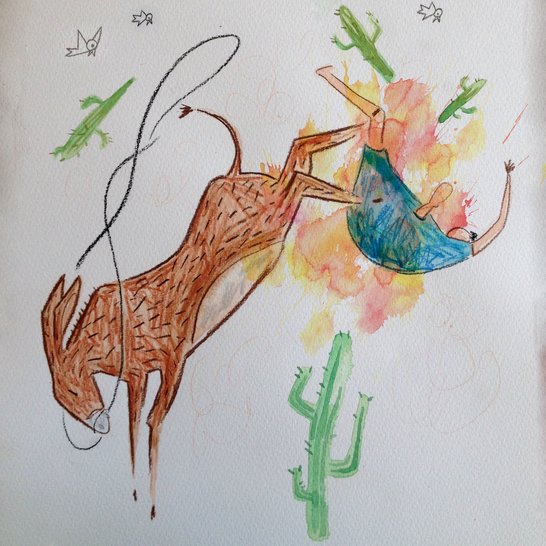
He became so angry that, one day, he kicked his mother to the ground.
Donkib ge kaise nē ǃkhais xa tao tsî ǃnūse ǃgarise ge ǃkhoebē.
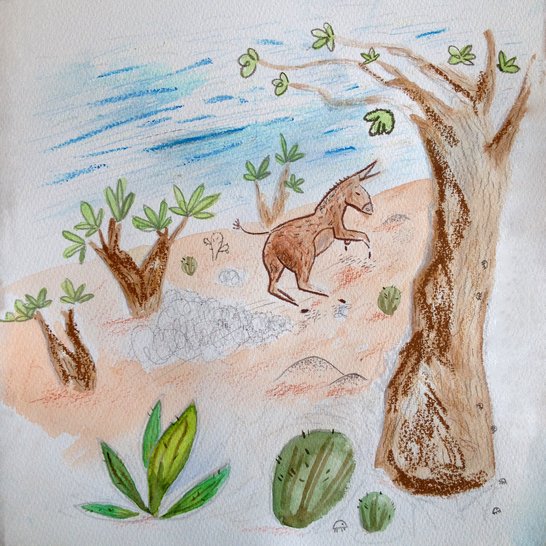
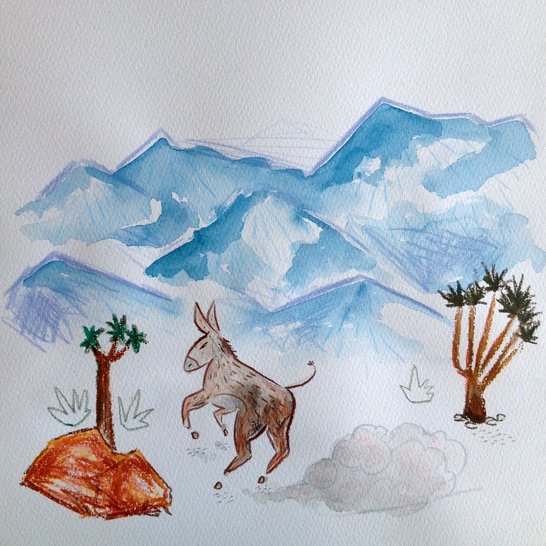
Donkey was filled with shame. He started to run away as far and fast as he could.
ǃKhoeǀûb ge ǁaeb ai i ge ǀnai ge ǃkhae i, tsîb ge Donkiba ge kā. “Uuu Uuuu?” tib ge ǃkhaeb ǃnâ gere tupu. “Uuuu, uuuu?” ti ra ǀgana oa. ǁÎb ge ǀguri ge hâ i. Bols khamib ge ǃgupuse ge amiǂgāsen, tsîb ge ǃgam ǂomsa ge ǁom.
By the time he stopped running, it was night, and Donkey was lost.
“Hee haw?” he whispered to the darkness.
“Hee Haw?” it echoed back. He was alone.
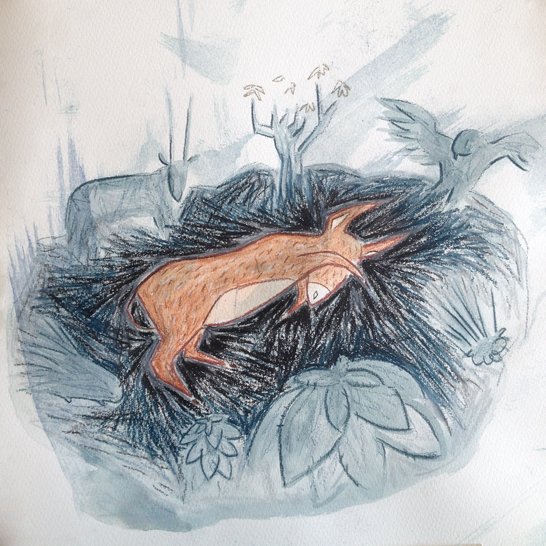
Curling himself into a tight ball, he fell into a deep and troubled sleep.
Kaira ao-i ra kōbiseb ge Donkiba ge ǂkhai. ǁÎb ge kaira aob di mûdi ǃnâb ge kō, o ǃâubasen-e ge hōǃâ.
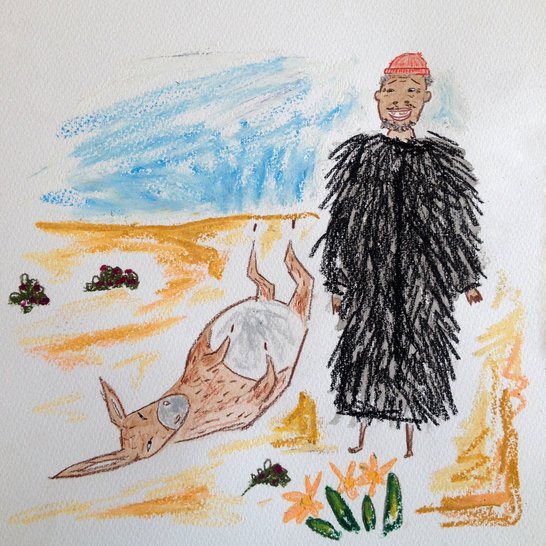
Donkey woke up to find a strange old man staring down at him. He looked into the old man’s eyes and started to feel a twinkle of hope.
Donkib ge nē kaira aob ǀkha ge sī ǁan, tsîb ge mâtib nî ûiǃkharu ǀgausa ge ǁkhāǁkhāhe. ǃGâ tsîb ge Donkiba gere ǁkhāǁkhāsen, tsîb ge kaira aoba ǁnās ǁkhāsa gere dī. ǁÎkha ge huigu tsî ǀguiba gere âiǁae.
Donkey went to stay with the old man, who taught him many different ways to survive.
Donkey listened and learned, and so did the old man. They helped each other, and they laughed together.
ǀGui ǁgoagab ge kaira aoba Donkiba ge ǂgan îb ǃhommi ǂamǃnâb kōse tani ǃapabi.
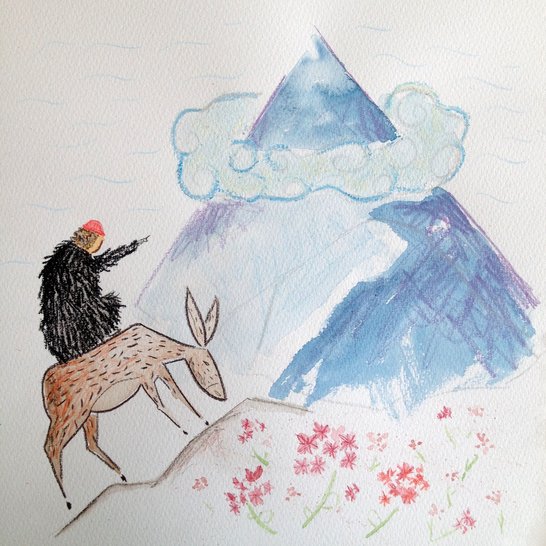
One morning, the old man asked Donkey to carry him to the top of a mountain.
Kaise ǀgapise kha ge ǃâudi ǁaegu ge ǁom. Donkib ge ǁîb mamas ǀaesen hâ tsî ǁîba ra ǂgai ti ge ǁhapo. ǃHuri ǂkhaib ge o…
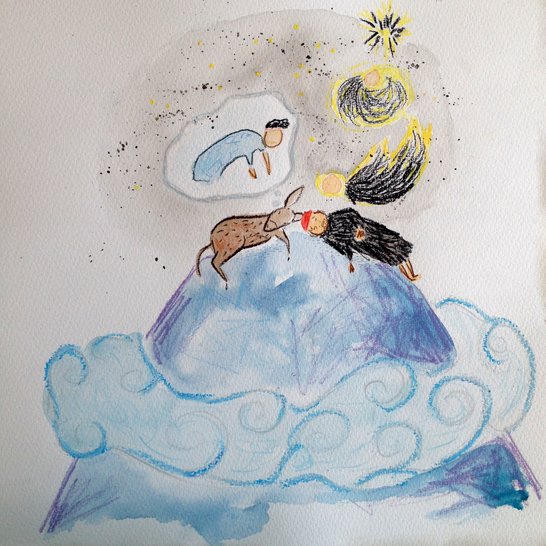
High up amongst the clouds they fell asleep.
Donkey dreamed that his mother was sick and calling to him.
And when he woke up…
…ob ge ǀhōsab, kaira aoba, ǃâudi ǀkha ge kābē.
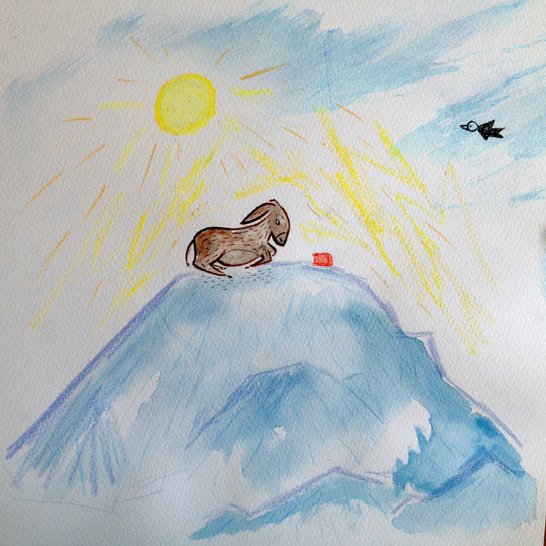
… the clouds had disappeared along with his friend, the old man.
ǀUnis aib ge Donkiba tare-eb nî dīsa ge ǂan i.
Donkey finally knew what to do.
ǁÎb mamasas kā hâ ǀgôab âs xa ra ǃoama, hîab ge Donkiba ǁîsa ge si hō. Gaxuse ra ge aibe ge kōgu, tsî ra ge kaise ǀgaisase ge ǁnamǂgāgu.
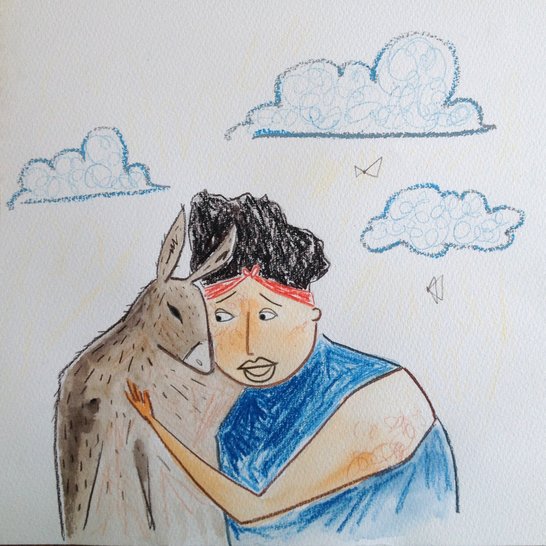
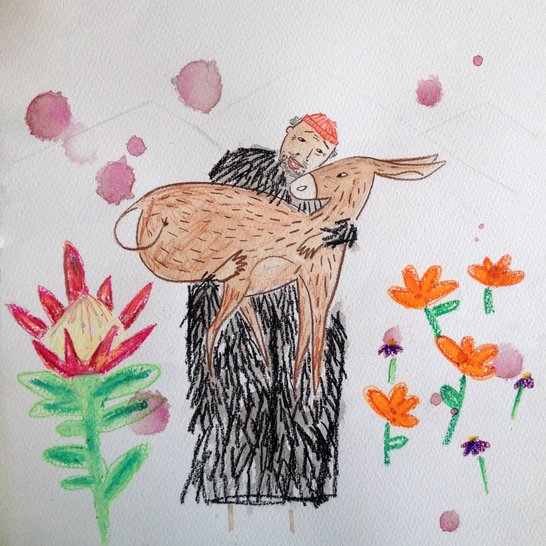
Donkey found his mother, alone and mourning her lost child. They stared at each other for a long time.
And then hugged each other very hard.
Donki ǀgôab tsî mamasas hâra ge ǀguiba ge kaikhâi tsî ǂguiǃnâgu ǀgauna ge hō ûiǁare ra nîna. ǁÎra ǂnamipe hâ khoen tsî nau ǀaokhoen tsîn ge ǂause ge hâǁare tsoatsoa.
The donkey child and his mother have grown together and found many ways of living side by side.
Slowly, all around them, other families have started to settle.