Odongob tsî Apiyos hâra ge kaiǃās ǃnâ, dadasab ǀkha ge ǁan hâ i. ǁÎra ge kaise gere mûǂui ǃgoaxa mâiǂuis ǁga. Skolgu ra ǂganam ǃkhais ǃaroma tama i tsî, xawe ra nî si ǁnaosasa sari xui-ao. ǁÎra ǁnaos ge ǁaun ra ǃkhōhe ǃgaroǃās hîa kai ǃāb amǃgâ ǂnôas tawa ge ǁan hâ i.
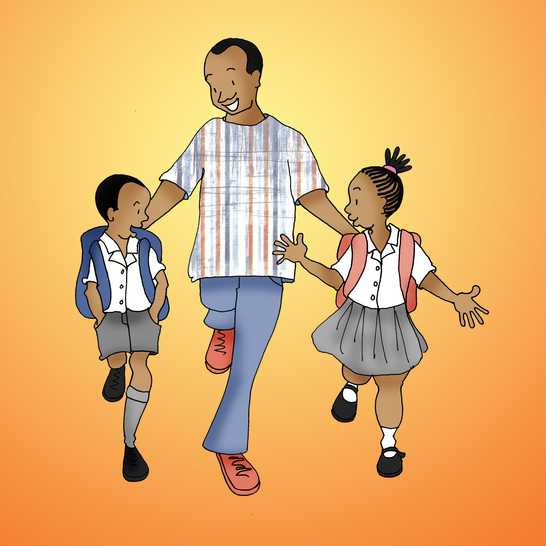
Odongo and Apiyo lived in the city with their father.
They looked forward to the holidays. Not just because school was closed, but because they went to visit their grandmother. She lived in a fishing village near a large lake.
Odongob tsî Apiyos hâra ge ǁkhawa ra ǁnaosasa nî si sari, ǃkhais xa kaise gere ǃgâiaǂgao. Ī ge ǃoesa ra ge ǁîra sarana ǁgarugu ǃnâ ge ǂgā, ǃgaroǃās ǁga hâ gaxu ǃnarisa ra gere aiǂhomisenba ǃkhais ǃaroma. ǂOm-e hō tama i tsî ra ge mâiǂuis xa ge ǁgam ǂkhai.
Odongo and Apiyo were excited because it was time to visit their grandmother again.
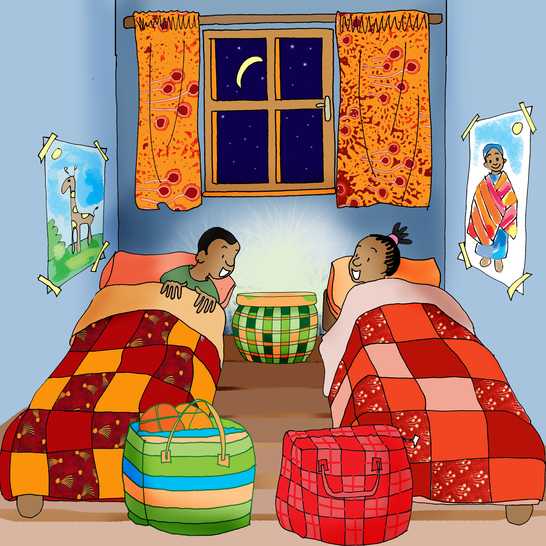
The night before, they packed their bags and got ready for the long journey to her village. They could not sleep and talked the whole night about the holiday.
ǃNauǁgoaga ra ge ǁîra dadasab ǀkha ǃgaroǃās ǁga ge ǃnari. ǁÎn ge ǃhomgu, xamarin tsî tē ǃhanagu tsîna gere ǃnariǃkharuǀkha. Audona ǃgôa tsî ra ge amna gere ǁnae.
Early the next morning, they left for the village in their father’s car.
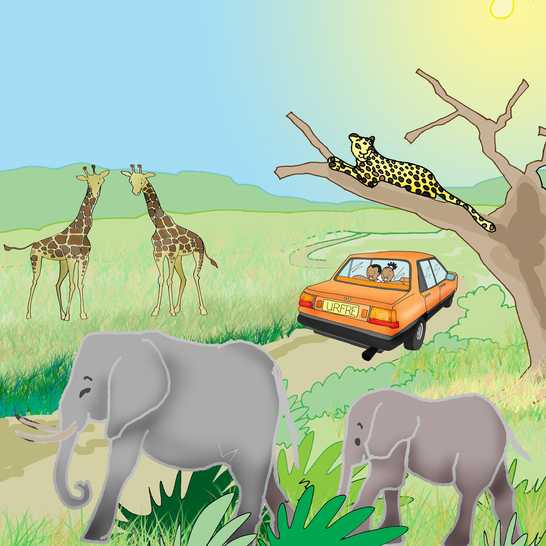
They drove past mountains, wild animals and tea plantations. They counted cars and sang songs.
ǁAe-i khaoǃgâ ra ge ǀgôara tsau, tsî ge ǁom.
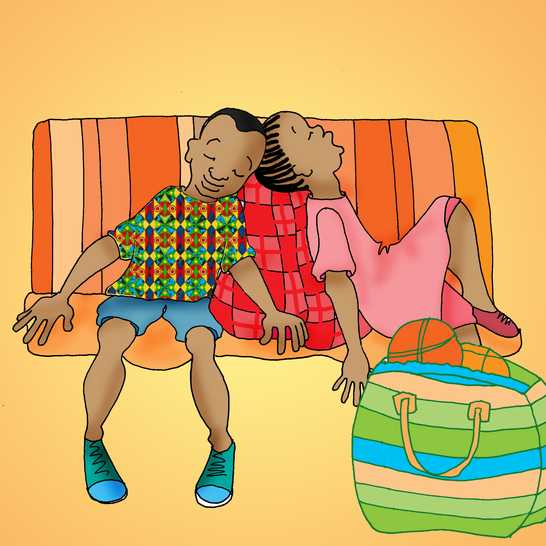
After a while, the children were tired and fell asleep.
ǃGaroǃās ain ge sī, ob ge ǁîra dadaba ge ǂkhaiǂkhai ra. ǁÎn ge Nyar-Kanyadas, ǁîra ǁnaosa, ǂgoa i ais hais ǃnaga ǁgoese ge ǀhao-u. Nyar-Kanyadas ti hâ ǀons ge Luo gowab ǃnâ “Kanyadab khoen ǀgôas” ti ra ǂâibasen. ǁÎs ge ge îxa tsî ǀgaisa tara i.
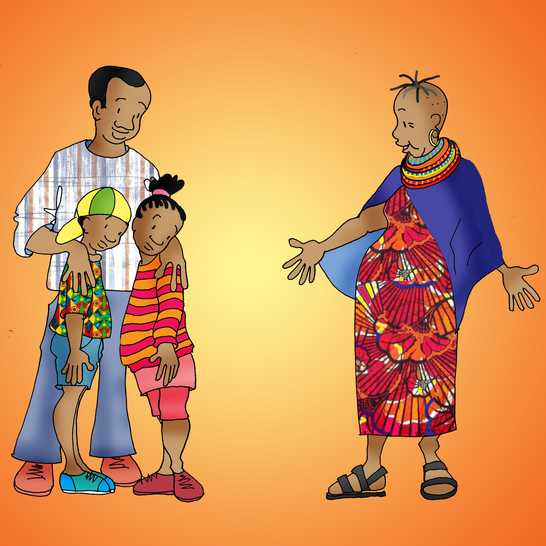
Father woke up Odongo and Apiyo as they arrived in the village.
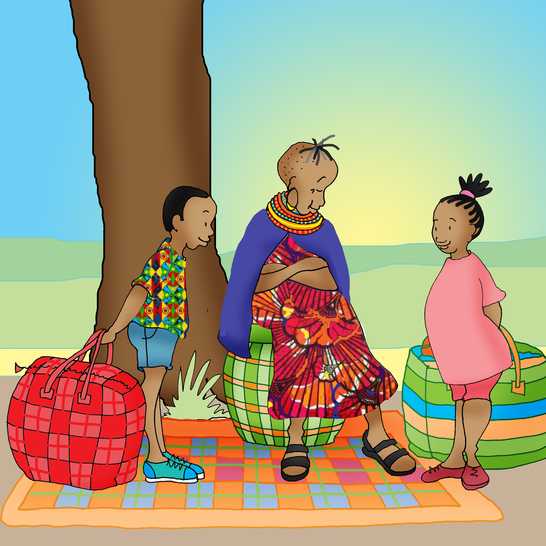
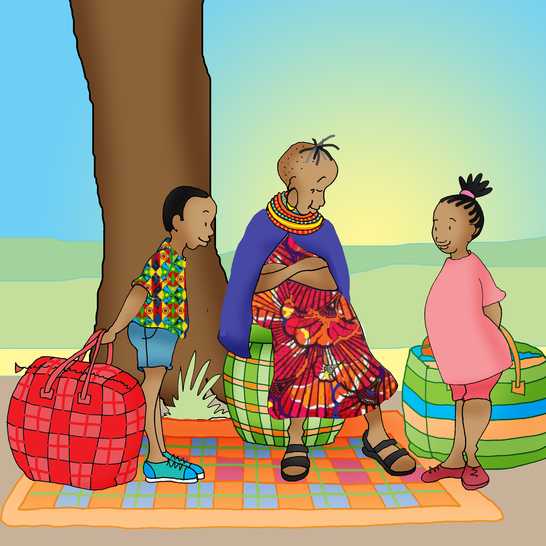
They found Nyar-Kanyada, their grandmother, resting on a mat under a tree.
Nyar-Kanyada in Luo, means ‘daughter of the people of Kanyada’. She was a strong and beautiful woman.
Nyar-kanyadas ge khoe-ôaguna ge ǁkhoreǁhare tsî ǁnaerase oms ǃnâ ǃgâiaǂgaob xa gere ǂnāmâ. ǁÎs ǁnurira ge kaise gere ǃgâiaǂgao tsî ǀkhaexūn hîa ra kaiǃāsa xu ge sī-una ge mā si. “Ti ǀkhaeba ǂguro ǀhui-am” tib ge Odongoba gere mî. “Hî-i, ti ǀkhaeba ǂguro ǀhui-am” tis ge Apiyosa gere mî.
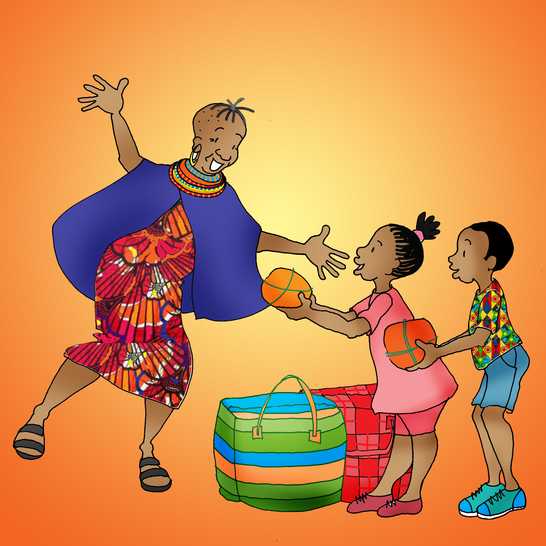
Nyar-Kanyada welcomed them into the house and danced around the room singing with joy.
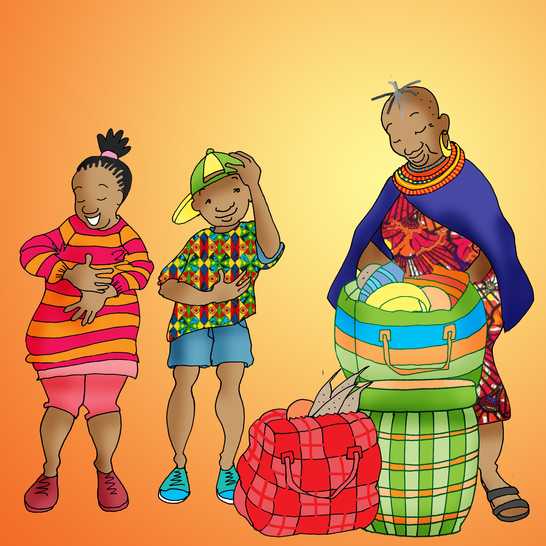
Her grandchildren were excited to give her the presents they brought from the city.
“First open my gift,” said Odongo.
“No, my gift first!” said Apiyo.
ǀKhaexūnas ge ǀhui-ams khaoǃgâs ge Nyar-Kanyadasa ǁîs ǁnurira ǃhaoǃnāsi ǀgaub ai ge ǀkhae.
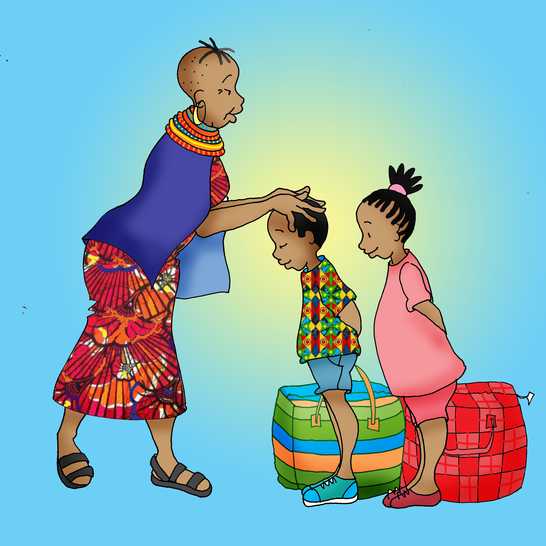
After she opened the presents, Nyar-Kanyada blessed her grandchildren in a traditional way.
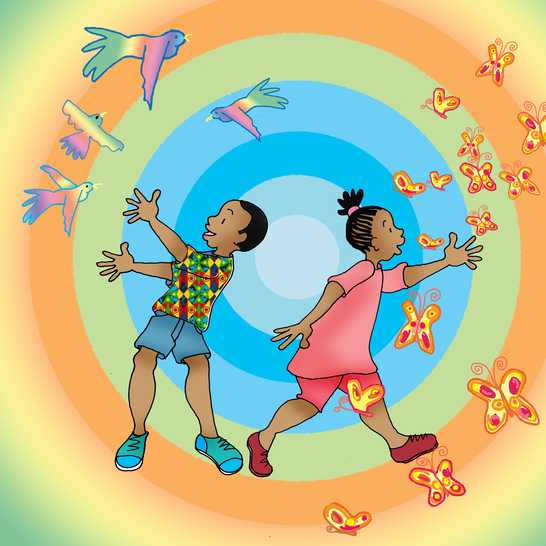
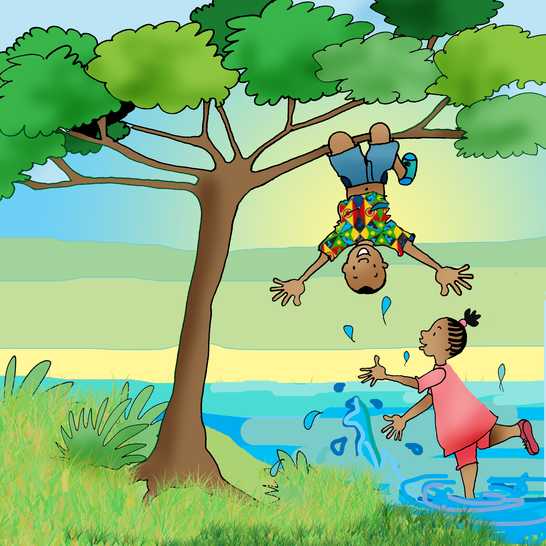
They climbed trees and splashed in the water of the lake.
ǃKhae i ge, o ra ge oms ǁga oa tsî ǃoes ǂûsa gere si ǂû. ǂÛ toa ra nîs aiǃâ ra ge gere ǁom ǂnôa.
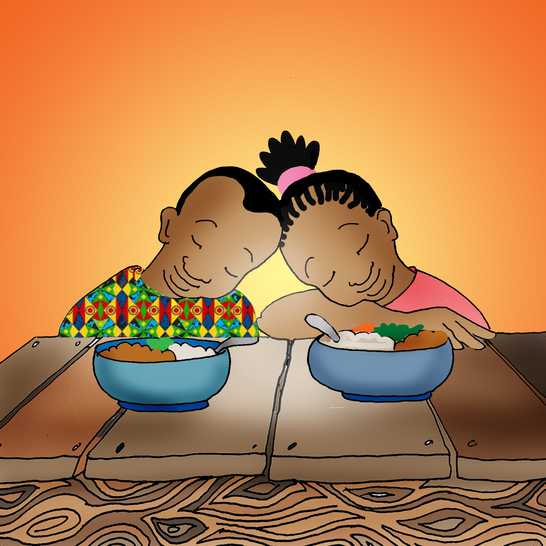
When it was dark they returned to the house for dinner. Before they could finish eating, they were falling asleep!
Sao ra tsēb ge dadasaba kaiǃās ǁga ge ǃnari-oa tsî ǀgôara Nyar-Kanyadas ǀkha ge ǃgoro.
The next day, the children’s father drove back to the city leaving them with Nyar-Kanyada.
Odongob tsî Apiyos hâra ge ǁnaosasa oms sîsengu ǀkha gere hui. ǁGam-e si xuri tsî ra ge ǀaena gere ǀaere. ǁÎra ge aniǃupuna si ū, tsî ǃhanaǂûna gere hare.
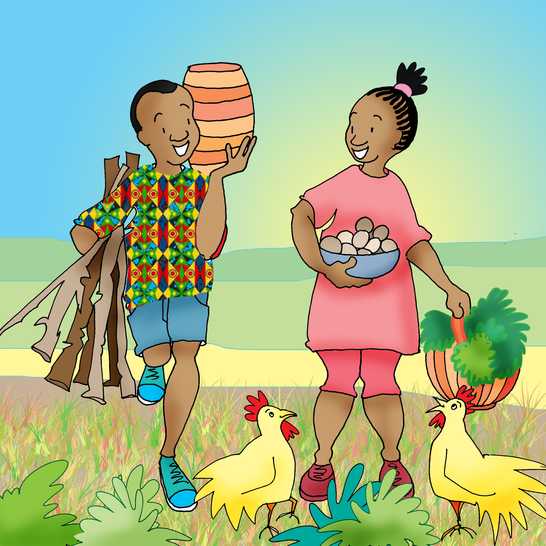
Odongo and Apiyo helped their grandmother with household chores. They fetched water and firewood. They collected eggs from the chickens and picked greens from the garden.
Nyar-Kanyadas ge ǁnurisara, tsaura ugali-i hîa goma ǁgan- i ǀkha ra ǂûhe i, ra sâihe ǀgausa ge ǁkhāǁkhā. Amsa ǁau-i ǀkha ra ǂûhe kokonut raisi-i ra sâihe ǀgaus tsînas ge ge ǁgau ra.
Nyar-Kanyada taught her grandchildren to make soft ugali to eat with stew. She showed them how to make coconut rice to eat with roast fish.
ǀGui ǁgoab ge Odongoba ǁîb ǁnaos gomana ǃgarob ǃoa ge gūre, în si ǃû. ǁîn ge ǁanxōǃnan hâ ǃgaroǃas ǃnâ ge ǃkhoeǂgâ. ǂGari-aob ge Odongob ǀkha kaise ge ǁaixa tsî ge ǁēbabi, ǁîb gomanab nî ǃkhâisa, ǁÎn ǃhanaǂûna ge hîgaga xui-ao. ǁNātsēs khaoǃgâb ge axaba ge dītsâ în tā ǁîn gomana ǁkhawa ǃgomsib ǃnâ ǂgābi.
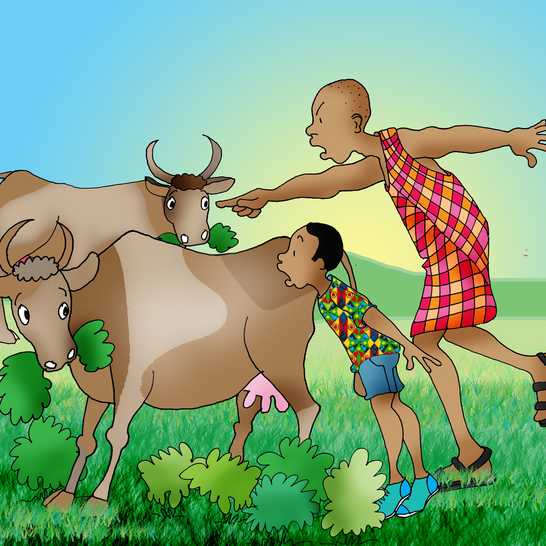
One morning, Odongo took his grandmother’s cows to graze. They ran onto a neighbour’s farm.
The farmer was angry with Odongo. He threatened to keep the cows for eating his crops. After that day, the boy made sure that the cows did not get into trouble again.
ǀGôara ge ǀnîhâ tsēs ai ǁnaosas ǀkha ǁamaǂharuguǁgâub ǁga ge ǃgû, ǁîs ge nēba ge ǁamaxū ǃkhairo-e ūhâ i, tsîs ge nē ǂharuguǃkhaib ǃnâ ǃhanaǂûn, sukur- i, tsî sē-i tsîna gere ǁamaxū. Apiyos ge mâtikō-en xūna ra ǂgan ǃkhaisa ǁama-aona mîbas xa ge ǃgâibahe i. Odongob ge ǁama-aon ra ǁama xūna ǁgarub ǃnâ gere ǂgāba ni.
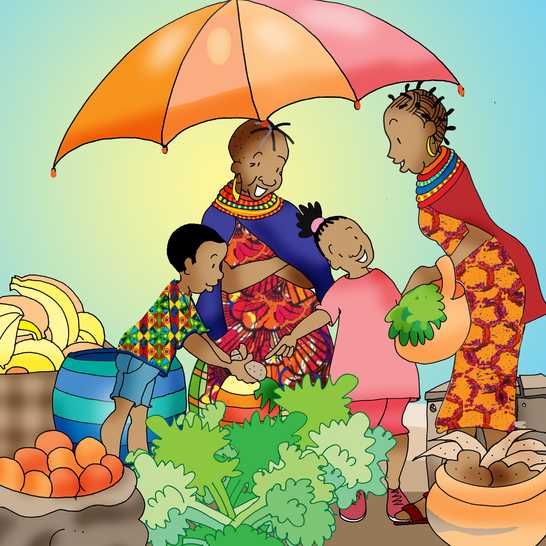
On another day, the children went to the marketplace with Nyar-Kanyada. She had a stall selling vegetables, sugar and soap.
Apiyo liked to tell customers the price of items. Odongo would pack the items that customers bought.
Tsēs ǀams ain ge nē khoeǁnurisaguna chai tē-e, ǀhûbe gere ā. ǁNaosasa ra ge hōǂgās ge marina gere ǃgôahui.
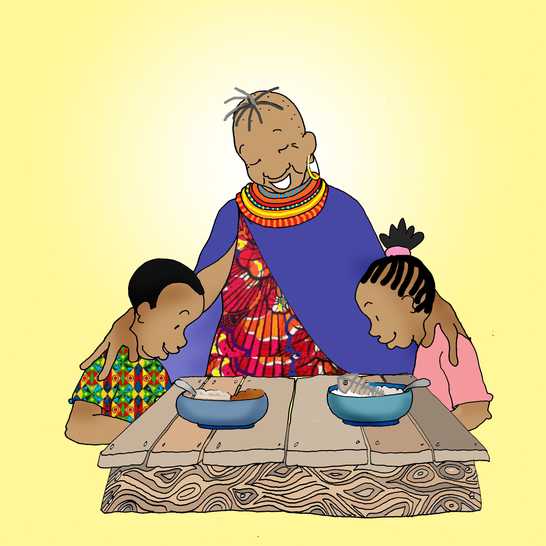
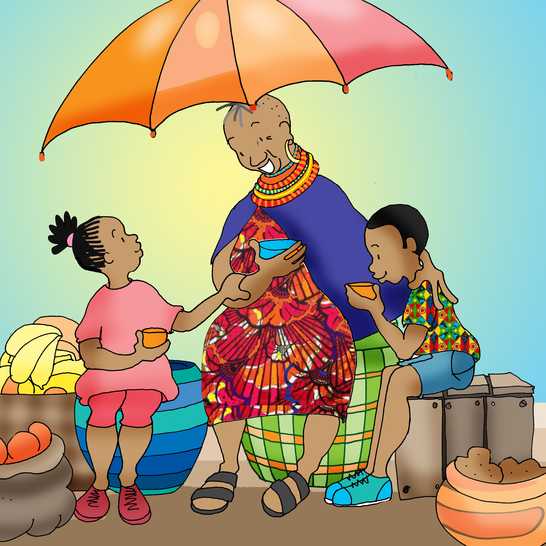
At the end of the day they drank chai tea together. They helped grandmother to count the money she earned.
Xawes ge nē mâiǂuisa kaise ǃhaese ge toa, tsî ra ge ǀgôara kaiǃās ǁga nî oase ge i. Nyar-Kanyadas ge Odongoba ǀgapasa mā tsî Apiyosa jersisa ge mā. ǁÎs ge daob ǃaroma ǂû-e ge ǃgaelkhā.
But too soon the holidays were over and the children had to go back to the city.
Nyar-Kanyada gave Odongo a cap and Apiyo a sweater. She packed food for their journey.
Dadasab ge ôaǀkhīra, ora ge nē ǀgôara ge oa ǂgao tama hâ i. ǀGôara ge Nyar-Kanyadasa gere ǀkhoma, îs ǁîn ǀkha kaiǃās ǁga ǃnari-oa sao. ǀNom rases ge ra mîba ra “Tita ge kaise kaira hâ kaiǃās ǃaroma, tita ge nî ǃâu ro ǁkhawa ro nî ǃgaroǃās ǁga sari ǀkhīs kōse.”
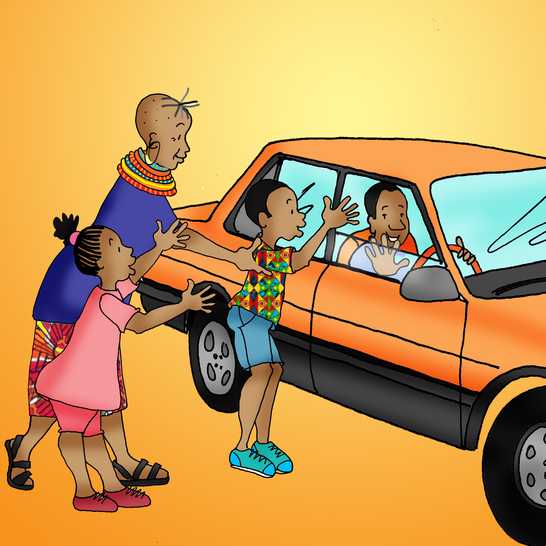
When their father came to fetch them, they did not want to leave. The children begged Nyar-Kanyada to go with them to the city.
She smiled and said, “I am too old for the city. I will be waiting for you to come to my village again.”
Odongob tsî Apiyos hâra ge ǁnamǂgāsi tsî ge tawede ǁnāxūsi.
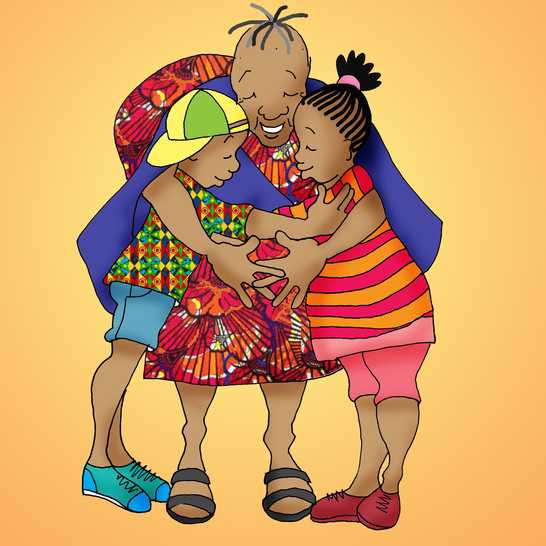
Odongo and Apiyo both hugged her tightly and said goodbye.
Skoli tawa ra ge oasī, ora ge Odongob tsî Apiyos tsîra ǀhōsana gere ǃgaroǃās ûib xa ǁgamba. ǀNî ǀgôan ge kaiǃā ûib a ǃgâi ǃkhaisa gere mî. Naun ge ǃgaroǃā ûib a ǂoaǂamsa ti gere mî. Xawen ge hoa ǀgôana gere ǃkhōǃgâ Odongob tsî Apiyos hâra kaise ǃgâi ǁnaosasa ūhâ ǃkhaisa.
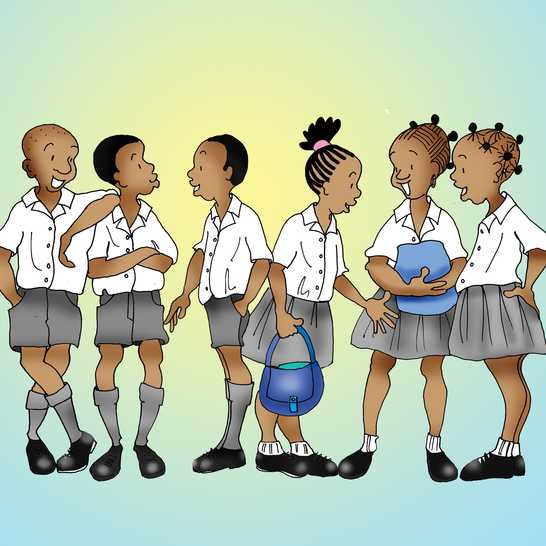
When Odongo and Apiyo went back to school they told their friends about life in the village. Some children felt that life in the city was good. Others felt that the village was better.
But most of all, everyone agreed that Odongo and Apiyo had a wonderful grandmother!



 Violet Otieno
 Catherine Groenewald
 Ivan Petrus Josob
 Khoekhoegowab
 Level 4