ǂKhari bēgu mâǃkhais sida ǃāros ǃnâ hâs ge kaise ge ǀhawe i, khoen tsî ǃnaoǃnāsa bēn ǀkha. ǃHūb ai i ge noxoba ǂgui xūn ǃnaohe nîse ge īna ge mâ i. ǃNao-aogu ge mâǀî gu ra ǁîgu bēga ǃnarisa, gere ǃhao.
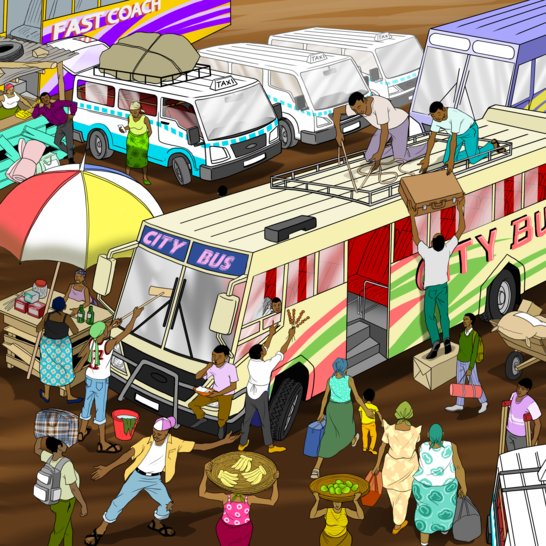
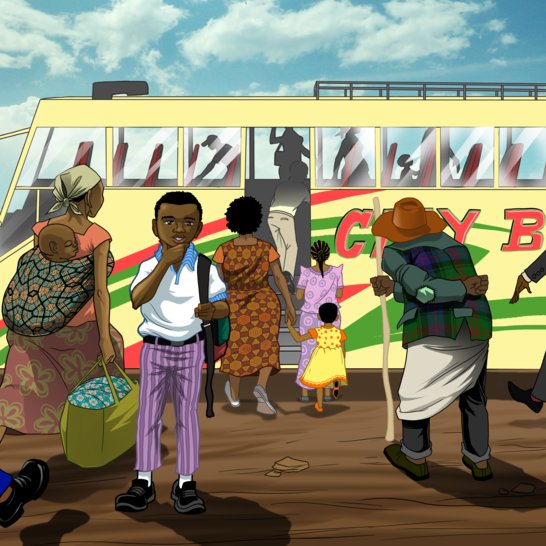
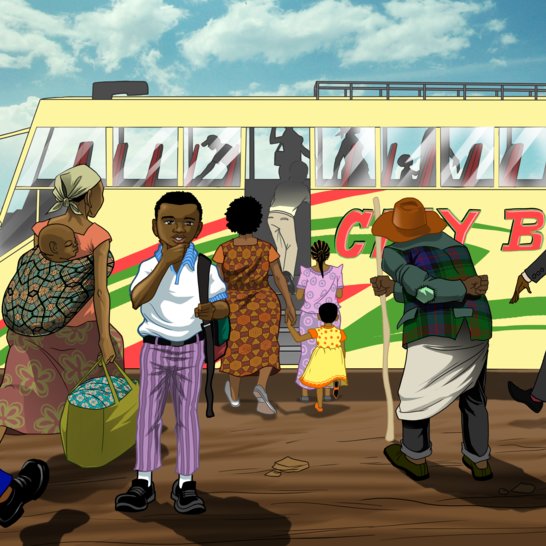
The small bus stop in my village was busy with people and overloaded buses. On the ground were even more things to load. Touts were shouting the names where their buses were going.
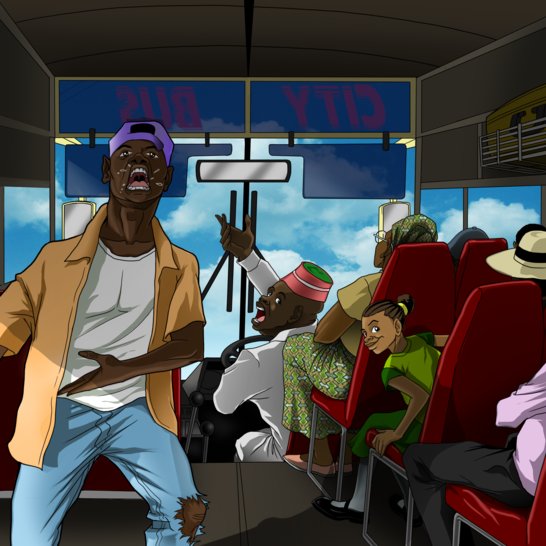
“Kaiǃā! Kaiǃā! Huriǂoasa ǃoa!” Ti ta ge ǃnao-ao-i ra ǃhaosa ge ǁnâu. ǁNāb ge bēb hîa ta nî ūse ība.
“City! City! Going west!” I heard a tout shouting. That was the bus I needed to catch.
Nē kaiǃgâ bēb ge ǁaupexa ge ǀoa hâ i, xawen ge noxopa ǂgui khoena gere ǁgūtsâ ǃapasa. ǀNîn ge ǁîn di ǃgaeǀkhāde bēb ǃnāka gere sâu. Naun ge bēb ǂganagab ǃnâ ge sâu hâ i.
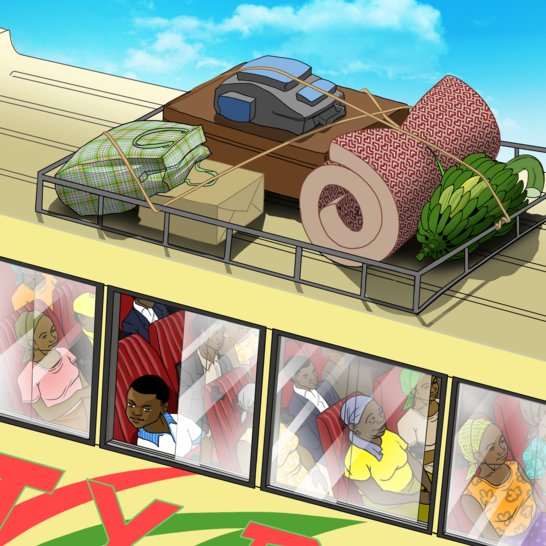
The city bus was almost full, but more people were still pushing to get on. Some packed their luggage under the bus. Others put theirs on the racks inside.
ǀAsa ǃnarisao-aon ge ǁîn karkide ǁkhammâi hâse ǂnûǃkhaide nē ǀoa hâ bēb ǃnâ gere kōmâ. Taradi ǂkhariǀgôarona ūhâ di tsîn ge gere ǂnû-unusen, nē gaxu ǃnarisa ra ǂhomisense.
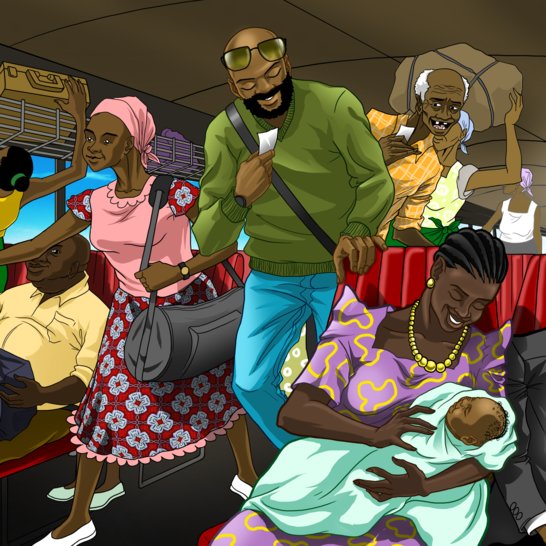
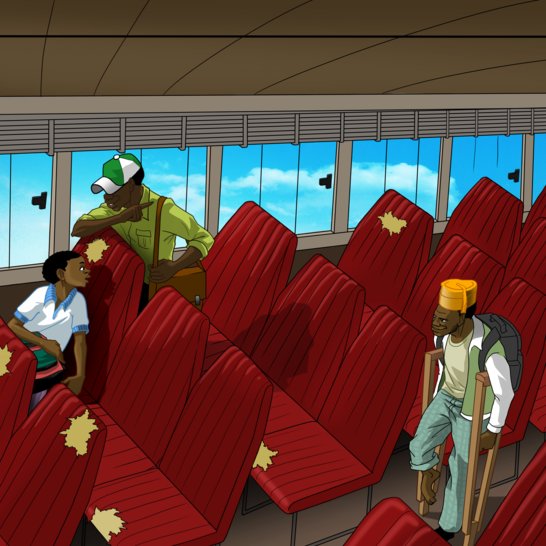
New passengers clutched their tickets as they looked for somewhere to sit in the crowded bus. Women with young children made them comfortable for the long journey.
Tita ge mûǂuidaos xōǀkhā ge ǀāǂgāsen. Ti xōǀkhā ge ǂnôa-i khoeb ge ǃam plastik ǁgaruba ǀkhamasase ge ǃkhō hâ i. ǁÎb ge ǀoro ǁharode ge ana hâ i, ana ǀorohe hâ jab ǀkha, tsî kaise ǃhuri hâse gere mûsen.
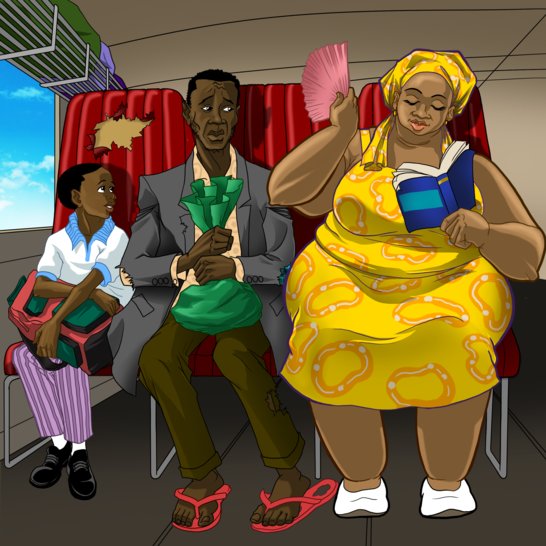
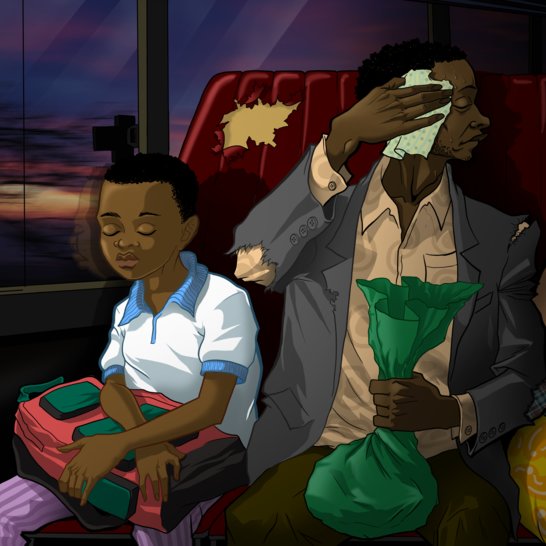
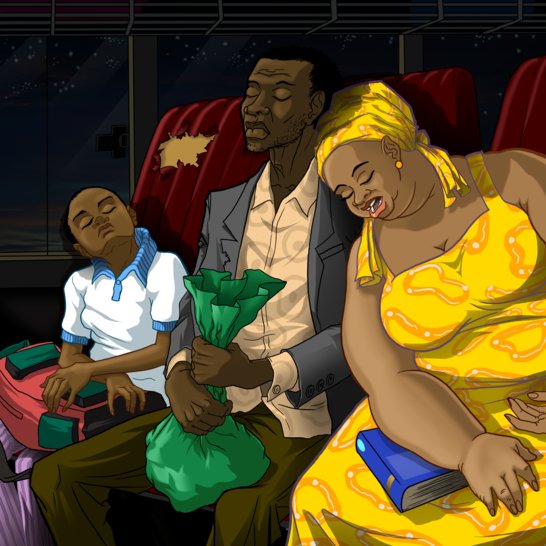
I squeezed in next to a window. The person sitting next to me was holding tightly to a green plastic bag. He wore old sandals, a worn out coat, and he looked nervous.
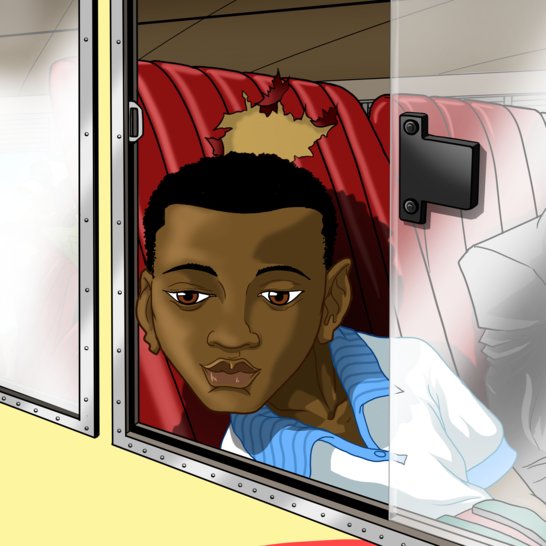
ǃAukab ai ta ra kō ǁaeb ai ta ge ge mûǂan ti ǃāsa ta ra bēxū ǃkhaisa, kai-ai ta ge ǃāsa. Kaiǃāsa ǃoa ta ge gere ī.
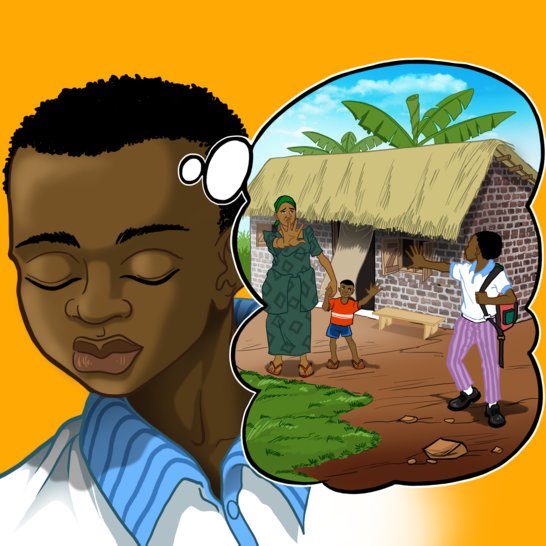
I looked outside the bus and realised that I was leaving my village, the place where I had grown up. I was going to the big city.
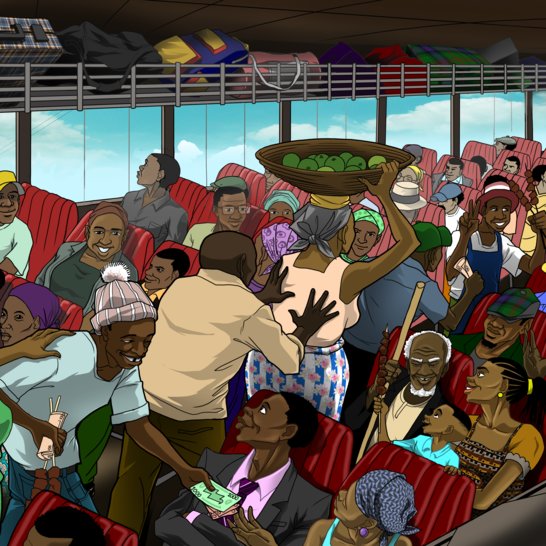
ǃGaeǀkhāde ǃnaotoahe, tsîn ge hoa ǃnarisao-aona ge ǂnôa i. ǁAmaxū-aon ge noxoba bēb ǃnâ gere ǀāǂgāsen în ǃnarisao-aon ai ǁîn xūna sī ǁamaxū ǁkhā. Mâ-i-hoa-i ge ǁamaxūn ra xūna gere ǃhao. Mîdi ge kaise ǀkhonxase gere ǀōbate.
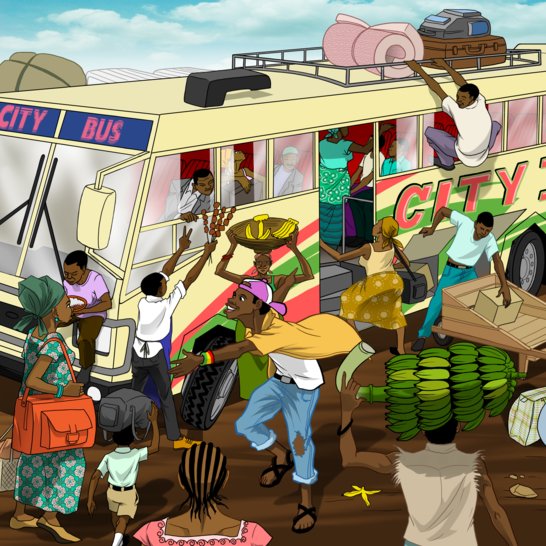
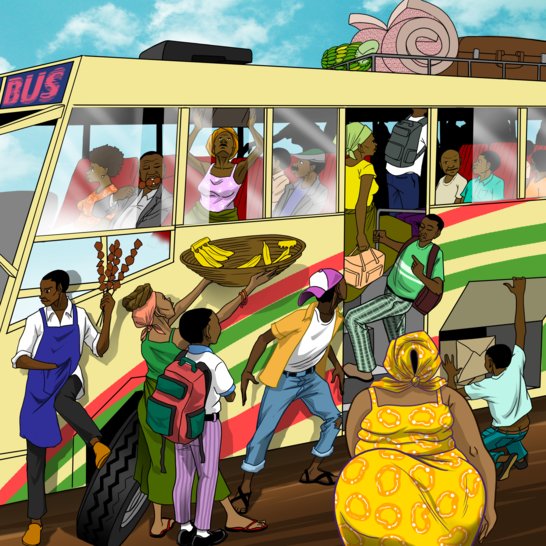
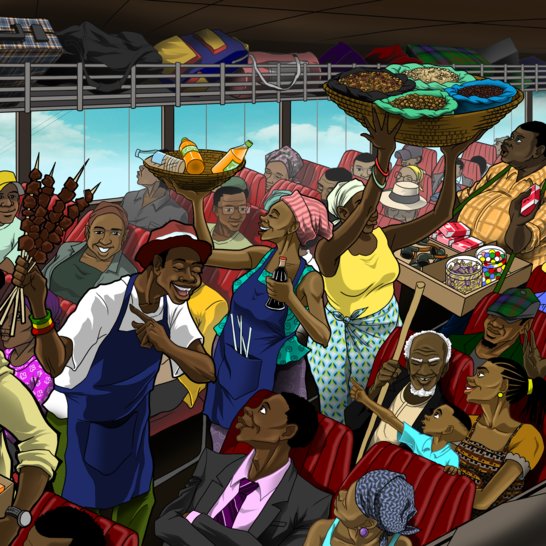
The loading was completed and all passengers were seated. Hawkers still pushed their way into the bus to sell their goods to the passengers. Everyone was shouting the names of what was available for sale. The words sounded funny to me.
ǀOro ǃnarisao-aon ge ān nî xūrona ge ǁama, naun ge ǂkhari ǂûxūrona ǁama tsî a ǁgaetsoatsoase. ǁNān hîa mari-e ge ūhâ tama hâ în, tita khamin, ge ǃharas ǀguisa gere hî.
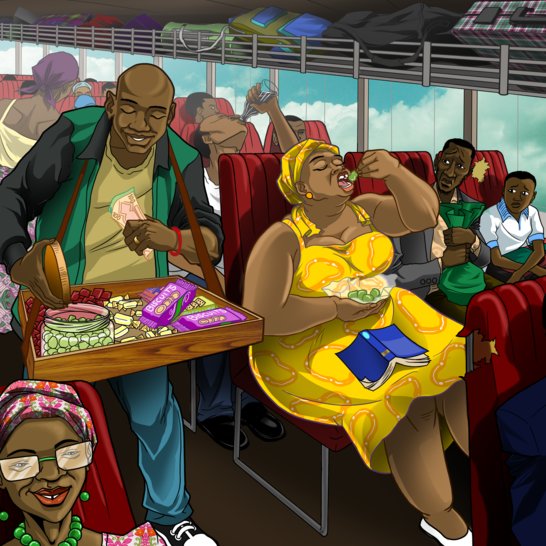
A few passengers bought drinks, others bought small snacks and began to chew. Those who did not have any money, like me, just watched.
Nē ǁaxasib ge bēb huters ǀōb xa ge ǂhanihe, ǁgauǁgaus ǃnariǂoa da ras disa. ǃNao-aob ge ǁamaxū-aona ra ǃhaoba în bēba xū ǁgôa ga.
These activities were interrupted by the hooting of the bus, a sign that we were ready to leave. The tout yelled at the hawkers to get out.
ǁAmaxū-aon ge gere ǂhāgu bēba xū ǁgôas ǃaroma. ǀNîn ge ǂkhari marina gere mā-oa. ǁKhātin ge ǀnîna ǀuni ǂharugu xūna ǁamaxūsa gere dītsâ.
Hawkers pushed each other to make their way out of the bus. Some gave back change to the travellers. Others made last minute attempts to sell more items.
Bēb ra ǁîb mâǃkhaisa xu ǂgaebē ǁaeb ai ta ge mûǂuidaos ǃnâ gere kō. Buru ta ge gere, xare ta nî ǁkhawa ti ǃās ǃoa oasīsa.
As the bus left the bus stop, I stared out of the window. I wondered if I would ever go back to my village again.
ǃNaris ta aiǃgû khami îb ge bēba ǂganakab ǃnâ kaise gere ǀgam. ǁOmsa ra ǁkhorese ta ge mûde ge ǂganam.
As the journey progressed, the inside of the bus got very hot. I closed my eyes hoping to sleep.
Xawes ge ti ǂâisa ǁgâusa ǃoa ra oa. Ti mamasa ǃnorases nî hâ? Ti ǃôade xare mari-e kuru di nî? Ti ǃgâsaba ǂâihōb nî, ti hairode ǂnâbatesa?
But my mind drifted back home. Will my mother be safe? Will my rabbits fetch any money? Will my brother remember to water my tree seedlings?
Garu ta a daob ǃnâ ta ge ti ǁnaob kaiǃās ǃnâ ra hâb ǃkhais ǀonsa gere ǁkhāpesen, î ta ǃkhōmâisi ǁkhā ga. ǁÎsa ra tsaurase ǂgaibasense ta ge ge ǁom.
On the way, I memorised the name of the place where my uncle lived in the big city. I was still mumbling it when I fell asleep.
Khoese īrgu khaoǃgâ ta ge ǃgari ǂkhuwib tsî ǃnarisao-aon ǂgaihes, hāxū ta ra ǃās dib ǀgaub xa ra ǃhuriǂkhai. Ti ǂkhari ǁgarurosa ǁgope tsî ta ge bēba xu ge uriǁgôa.
Nine hours later, I woke up with loud banging and calling for passengers going back to my village. I grabbed my small bag and jumped out of the bus.
Oadawasens bēb ge ǃhaese gere ǀoa. ǀGūǁaeb ge ǁîba aiǂoas ǁga nî ǃnari-oa. Tita nēsi a ǂhâǂhâsaba xū i ge, ti ǁnaob omsa ôatsoatsoasa.
The return bus was filling up quickly. Soon it would make its way back east. The most important thing for me now, was to start looking for my uncle’s house.


 Lesley Koyi, Ursula Nafula
 Brian Wambi
 Maureen Merley So-Oabes
 Khoekhoegowab
 Level 3