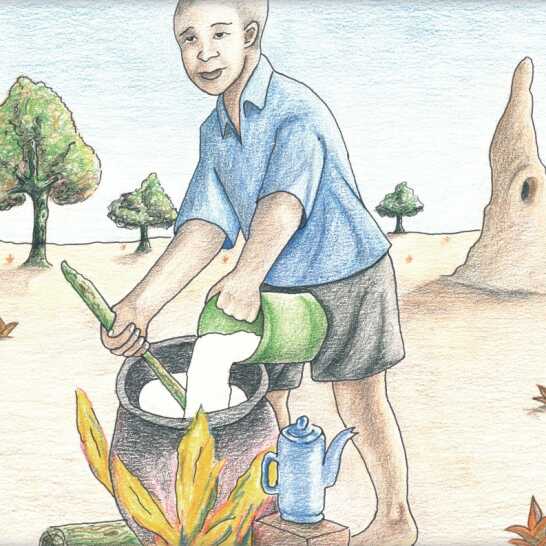
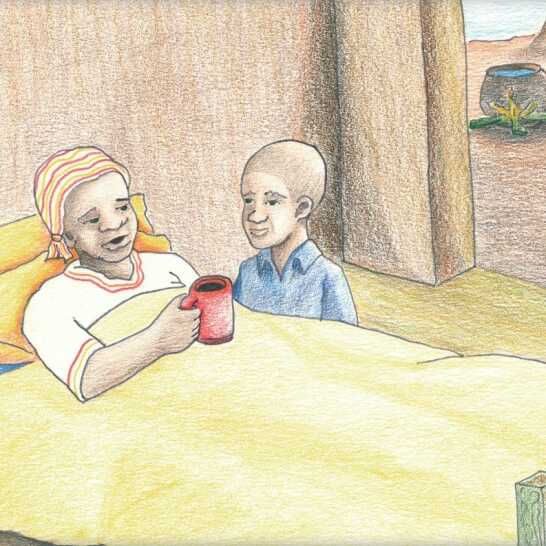
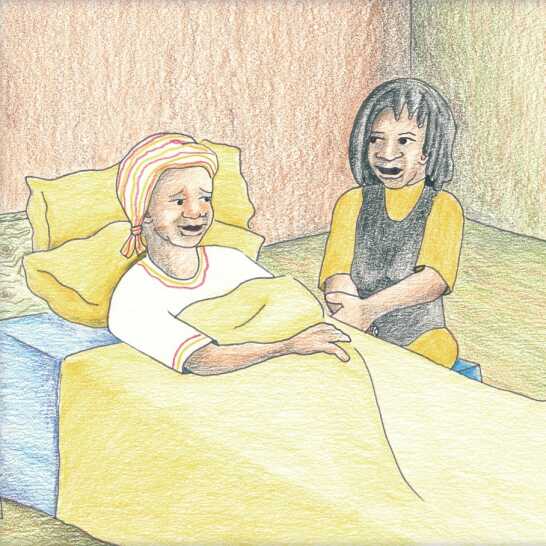
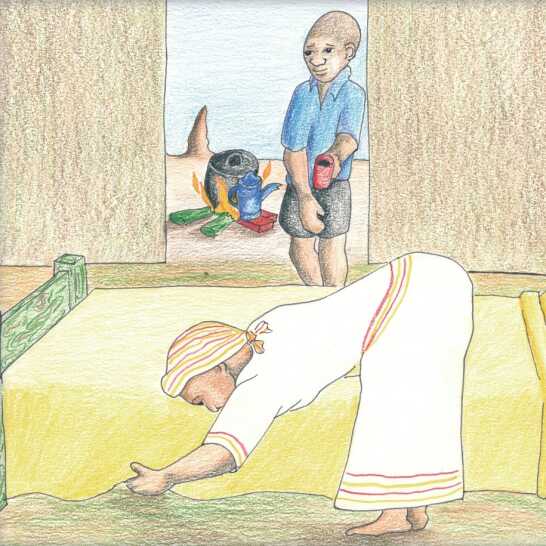
Mâ ǁgoas hoasab ge Hilifaba ǃnauǁgoaga ǂkhai tsî ǁîb mamasa ǁgoaǂûsa ra aiǂhomiba. ǁÎs ge ǃkharu go ǁaeb ǃnâ kaise ge ǀaesen hâ i, tsîb ge Hilifaba mâtib nî ǁîb tsî mamasas hâra kōǃgâ ǀgausa ge ǁkhāǁkhāsen. Mamasas ge kaise khâis tsînas a hî ǁoas kōse ge ǀaesen hâ i, ob ge ǁîba ǀaesa khau tsî ǁgam-e mâi-ai tsî tē-e gere kuru. ǁÎb ge mamasasa tē-e sī-ūba tsî ǁnas khaoǃgâ mâi-e ǁgoaǂûs ǃaroma gere aiǂhomiba ra. ǀNî ǁaegas ge mamasa kaise ge ǂkhawusa i, tsî ǂûs tsîna hî tama gere ī. Hilifab ge kaise mamasas xa gere ǂâiǂhansen. ǁÎb dadab ge ǀgam kurin ǃkharu hâse ge ǁō, tsîs ge mamasas tsîna nēsi ǀaesen hâ. ǁÎs ge kaise ge ǂgaba hâ i dadasab ge ī i khami.
Every morning Hilifa woke up early to prepare breakfast for his mother. She had been sick a lot recently and Hilifa was learning how to look after his mother and himself. When his mother was too ill to get up he would make a fire to boil water to make tea. He would take tea to his mother and prepare porridge for breakfast. Sometimes his mother was too weak to eat it. Hilifa worried about his mother. His father had died two years ago, and now his mother was ill too. She was very thin, just like his father had been.
ǀGui ǁgoab ge mamasa ge dî, “Tare-e a tsū, Mama? Mâǁae du ra ǂuru? Mamas ge ǂû-i tsîna ǃaruǀî sâi tama hâ. ǃHanab ǃnâ sîsen ǁoa tamas ka io du ge oms tsîna a ǃanu ǁoa. Ti skolpere-i tsînas ge ǂhomiba te, tamas ka io, ti skolsaran tsîna ǁā tama hâ…” “Hilifa, ti ôaro, khoese kurixas ǀguisats ge ī, xawets ge tita ra kōǃgâ.” ǁÎs ge nē ǀgôarob âsa kō, tsî ra ǂhâ tare-es nî mîba bi ǃkhaisa. ǁNâuǃāb nî? “Tita ge kaise ǀaesen hâ. Sats kom ǂhôaǂgares ǃnâ AIDS ti ra ǂgaihe ǁōs xa ge ǁnâuo. ǁNā ǁōsa ta ge ūhâ”, tis ge ge mîba bi. Hilifab ge ǀnîkhamakō haigu di ǀgaiba ra ǃnō. “Nēsa ra ǂâibasen Dadab khami du nî ǁō ti.” “AIDSa nî ǂuruǂuru sōǀôa-i ge a ǀkhai.”
One morning he asked his mother, “What is wrong Mum? When will you be better? You don’t cook anymore. You can’t work in the field or clean the house. You don’t prepare my lunchbox, or wash my uniform…” “Hilifa my son, you are only nine years old and you take good care of me.” She looked at the young boy, wondering what she should tell him. Would he understand? “I am very ill. You have heard on the radio about the disease called AIDS. I have that disease,” she told him. Hilifa was quiet for a few minutes. “Does that mean you will die like Daddy?” “There is no cure for AIDS.”
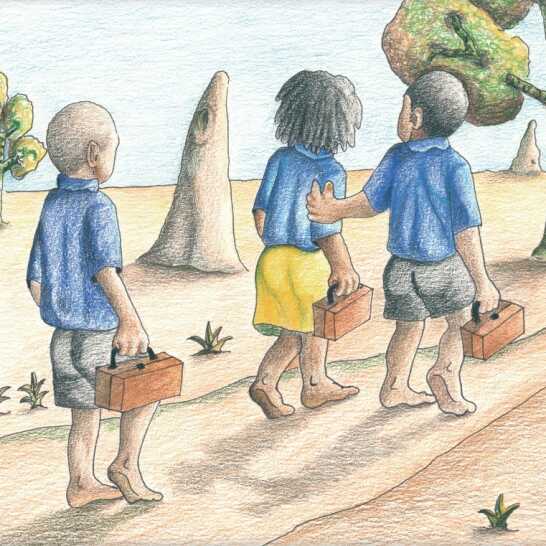
Hilifab ge ǂâirase skoli ǁga garu. ǁÎb ge garun asen ǀhōsana ūhâ ǁgamdi tsî ǀhurun ǃnâ ge ǁhao ǁkhā tama hâ i. “Tare-e a tsū?” tin ge ge dî bi. Hilifab ge ge ǃeream nî ǁoa i, ǁîb mamasas di mîdi ǀguideb gere ǀamǂgae xui-ao, “ǂUruhe tama. ǂUruhe tama.” Mamasas ǁōb khaoǃgâ i ǁîb ǀkha mâti nî hā ǃkhais xab ge gere ǂâiǂhansen. Mâpab nî hâ? Mâpaxub nî ǂû-i mari-e hō?
Hilifa walked to school thoughtfully. He couldn’t join in the chatter and games of his friends as they walked along. “What’s wrong?” they asked him. But Hilifa couldn’t answer, his mother’s words were ringing in his ears, “No cure. No cure.” How could he look after himself if his mother died, he worried. Where would he live? Where would he get money for food?
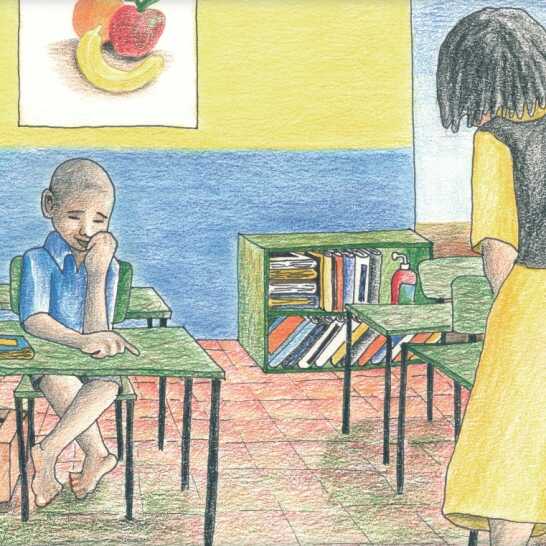
Hilifab ge ǃnaob âb tawa ge ǂnôa i. ǃNaob aib ge ǂnôa ǀkhunub ǀkha ra ǂgaeǃnâ, “ǂUruhe tama. ǂUruhe tama ti.” “Hilifa? Hilifa, sida ǀkhats hâ?” Hilifab ge ra kōkhâi. ǃGôahesa Nelaos ge ǁîb ǀgūse mâ. “Khâimâ Hilifa! Mâti ta go dî?” Hilifab ge ǂais âb ǁga ra kōǁnâ. “ǃEreamsats ge ǁnāpa ǃnāka hō tide!” tis ge ǁaixa hâse ra mî. “Magano, mîba re Hilifaba ǃereamsa.” Hilifab ge kaise ra tao, ǃGôahesas Nelaos ǁîb ai ǀguitsē-i tsîna ǃau tama ge hâ i xui-ao.
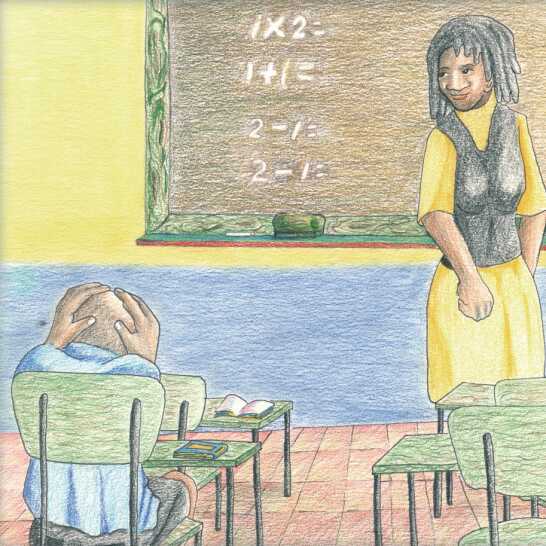
Hilifa sat at his desk. He traced the worn wood markings with his finger, “No cure. No cure.” “Hilifa? Hilifa, are you with us?” Hilifa looked up. Ms. Nelao was standing over him. “Stand up Hilifa! What was my question?” Hilifa looked down at his feet. “You won’t find the answer down there!” she retorted. “Magano, tell Hilifa the answer.” Hilifa felt so ashamed, Ms. Nelao had never shouted at him before.
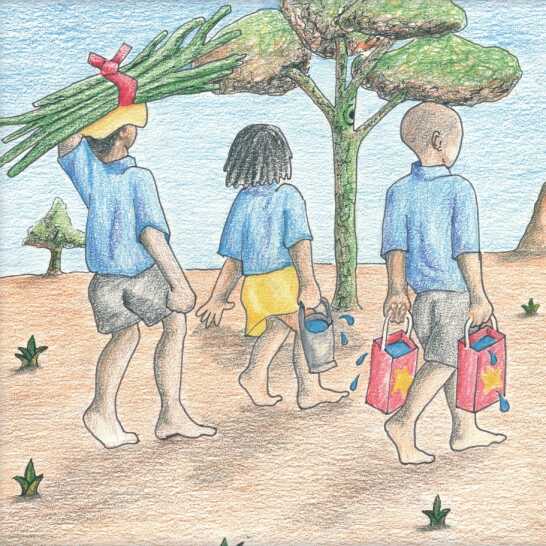
Hilifab ge hoaraga ǁgoasa ǃgomse ge hâǃkharu. ǂÛǁaeb aib ge ǁîba ǃgubis ǃnâ ge ǂnûǃkharu. “Ti ǃnāb ge ra tsû,” tib ge ǀhōsana ra gāba. ǁÎb ge ama ǀaesen hâse gere tsâ, tsî ge ǁîb ǂâide, ǁaixa ǃhabugu khami ǁîb danas ǃnâ gere ǂkhuwi. ǃGôahesa Nelaos ge ǃnōsase gere ǃkhē bi. ǁÎs ge tare-i a tsūba bi ǃkhaisa ge dî. “Xū-i tsū tama,” tib ge ge ǃeream. ǁÎs ge tsaub tsî ǂâiǂhansens hîab ǂnôa-ūs tsîna gere ǁnâu dommi âb ǃnâ. Mûs ge gere ǃaob hîab ra sâub tsîna.
Hilifa struggled through the morning. At break time he sat in the classroom. “I have a stomach ache,” he lied to his friends. It wasn’t a big lie, he did feel sick, and his worried thoughts buzzed inside his head like angry bees. Ms. Nelao watched him quietly. She asked him what was wrong. “Nothing,” he replied. Her ears heard the tiredness and worry in his voice. Her eyes saw the fear he was trying so hard to hide.
Hilifab ge ǁîb di ǃgôana dīsa dītsâ, o di ge ǃgôade ǁîb danas ǃnâ gere urimâ. ǁÎb ge dītsâb ra xawe ǁîde gaxuse ǁūsase ge ūhâ ǁoa i, ǃgôab nî ga. ǁÎb ge ge ǀû. Mamasas xab ge ge ǂâitsoatsoa. ǁÎb ǀkhunugu ge ǂâidi âba ra ǀnōǁnâtsoatsoa. ǁÎb mamasab ge ǁîs kharob ǃnâs ǁgoese ra ǀnōǁnâ. Mamasas di ǀhowas amǃgâb mâseb ge ǁîba ra ǀnōǁnâsen. “ǃGôab kōǃgâ-aodo, hoaraga ǂkhaniga ǀhaoǀhao re” tis ge ǃGôahesas Nelaosa ge ǂgai. Hilifab ge nēsi ǀgui ra mû ǁîb skolǂkhanib ǃnâb go ǀnōǁnâ ǃkhaisa, tsîb ge ǂhaweba ge ǀkhauǂui ǂgao hâ i, xawe-i ge kaise go ǂōpaǀkhābi. Kōǃgâ-aob ge ǁîb ǂkhaniba ge ū.
When Hilifa tried to do his maths the numbers jumped around in his head. He couldn’t keep them still long enough to count them. He soon gave up. He thought of his mother instead. His fingers began to draw his thoughts. He drew his mother in her bed. He drew himself standing beside his mother’s grave. “Maths monitors, collect all the books please,” called Ms. Nelao. Hilifa suddenly saw the drawings in his book and tried to tear out the page, but it was too late. The monitor took his book to Ms. Nelao.
ǃGôahesas Nelaos ge Hilifab ǀnōǁnânna gere kō. ǀGôan ra ǂoa omdi ǁga ǁarus ǁaeb ais ge, “ǀKhī nēpa Hilifa. Sats ǀkha ta ge ra ǃhoa ǂgao” ti ge ǂgai. “Tare-e a tsū?” tis ge ǃgâi ǀgaub ǃnâ ge dî bi. “Ti mamas ge ǀaesen hâ. ǁÎs ge AIDSas ūhâ ti go mîba te. O ǁîsa ǁō is nî?” “Tita ge a lū Hilifatse, xawe ǁîs ge kaise ǀaesen hâ AIDSas nî ūhâs ka o. ǂUruhe tama i ge hâ.” ǁNā mîde ǁkhawa, “ǂUruhe tama. ǂUruhe tama.” Hilifab ge ra ātsoatsoa. “Oa re oms ǁga, Hilifa,” tis ge ge mî. “Sa mamasa ta ge si oms tawa nî sari.”
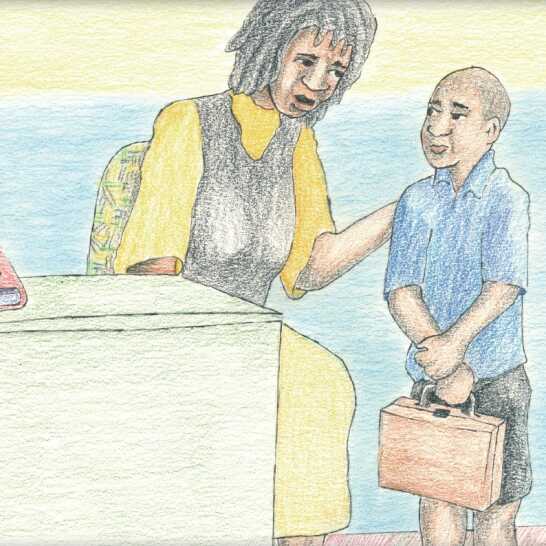
Ms. Nelao looked at Hilifa’s drawings. When the children were leaving to go home she called, “Come here Hilifa. I want to talk to you.” “What’s wrong?” she asked him gently. “My mother is ill. She told me she has AIDS. Will she die?” “I don’t know, Hilifa, but she is very ill if she has AIDS. There is no cure.” Those words again, “No cure. No cure.” Hilifa began to cry. “Go home, Hilifa,” she said. “I will come and visit your mother.”
Hilifab ge oms tawab ge oasī o, ǁîb mamasa tsēǃgâǁaeb ǂûsas ra aiǂhomise ge ǀhao-ū. “Nētsē ta ge go ǂûdībatsi, Hilifa, xawe ta ge nēsi kaise tsau hâ. ǃHanaba si kō, îts ǀnî tamatina stors ǁga ǃgû-ū. ǁÎn xam nî ǁamaxūbahe xuige.” ǂÛtoas khaoǃgâb ge Hilifaba ǃhanab ǁga ra ī. ǁÎb ge ra kō, îsa ǃnâsa ǀûgu ǃhanaǂûn diga, ǃnâsa ǀapa tamatidi tsî pepern tsîna, gaxu ǃam buinkigu tsî ǃkhaeǃam ǁgâuben tsîna, ǃam ǂnaregu ǂkhon ǃaiab digu tsî gaxu ǃhuniǀurib ǀûba ūhâ miligu tsîn ǁga. ǁÎb ge ǃhanaba ǂnâ tsî ǁgarub loa ǃgâise ǁan hâ ǀapa tamatina stors ǁga ge ī-ū. “Mâti i sim di ǃhanab ǀkha nî hā ti mamas kara ǁō o?” tib ge gere burugâ.
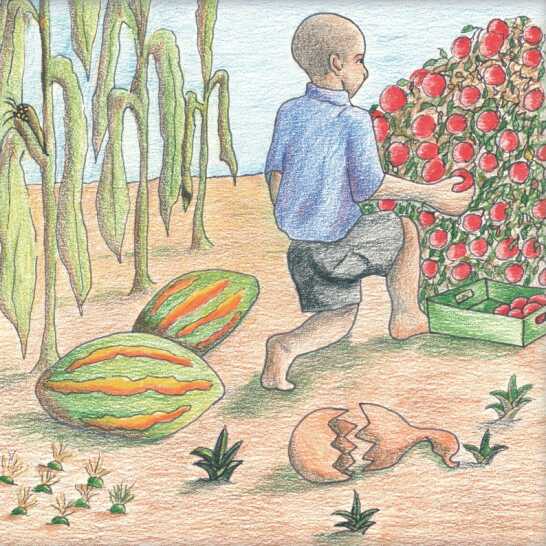
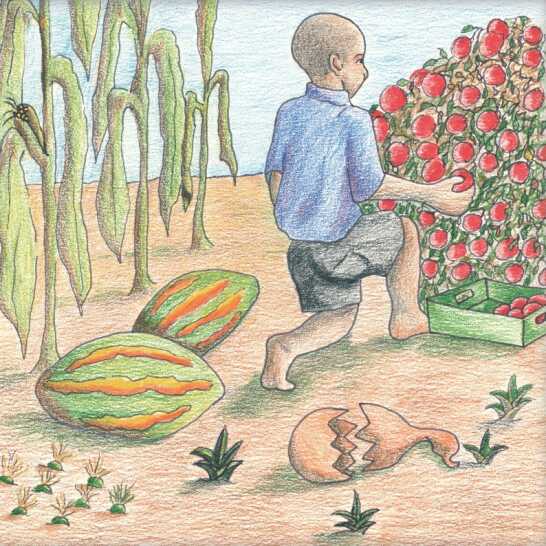
Hilifa went home and found his mother preparing lunch. “I’ve cooked for you today, Hilifa, but now I am very tired. Look after the vegetable garden and take some tomatoes to the shop. They will sell them for us.” After lunch Hilifa went to the vegetable plot. He looked at the bright colours of the vegetables, bright red tomatoes and chillies, long green beans and dark green spinach, the green leaves of the sweet potato and tall golden maize. He watered the garden and picked a bag full of ripe red tomatoes to take to the shop. “What would happen to their garden if his mother died?” he wondered.
Hilifab ra ītoa hîas ge ǃGôahesas Nelaosa ge ǀkhī. ǁÎs ge gaxu ǁaeba ǁîb mamas ǀkha gere ǁgam. ǁÎs ge Hilifab mamasa ge dî, “ǁGûs Ndapandase, AIDS ǃaromas kha sōǀôana ra ā?” ti. “Ti aob ge ǁōs khaoǃgâ ta ge ǀaedī-aon ǁga īsa kaise gere tao,” tis ge ǃGôahesas Nelaosa ge mîba. “Tita ge ǀûs ose gere ǂgomkaisen, nē ǁōsa ta ǂhīhe tama ǃkhaisa. ǀAesentsoatsoa tsî ta ge ǀaedī-aos tawa a sī, os ge ǁîsa ge mîba te ǀnai i ǃonkhao hâ ǃkhaisa. Sōǀôan ge hui tide,” tis ge ge mî. ǃGôahesas Nelaos ge ǁGûs Ndapandasa ge mîba mâtis nî Hilifaba hui ǃkhaisa.
Ms. Nelao arrived soon after Hilifa left. She spent a long time talking to his mother. She asked Hilifa’s mother, “Meme Ndapanda, are you taking the medicine for AIDS?” “After my husband died I was too ashamed to go to the doctor,” she told Ms. Nelao. “I kept hoping I wasn’t infected. When I became ill and went to the doctor she told me it was too late. The medicine would not help me.” Ms. Nelao told Meme Ndapanda what to do to help Hilifa.
Hilifab ge oms tawa a oaǀkhī, os ge mamasasa, “Hilifa, ti ôatse, sats ǀkha ta ge ra ǀnobaro ǂgao. Hui tets nî?” ti ge dî. Hilifab ge mamasas di ǁôaba ū tsîs ge ǁîb ai ge ǃgâbasen. ǁÎra ge ǀgapi ǁkhūhaidi mâpa ra sī. ǁÎs ge ra dî bi “ǂÂihōts ra sa ǁnuriǃgâsab, Kunuub ǀkhats ge nēpa ǂaiǃgaisa gere ǀhuru ǀgausa? Sats ge bolsa hais ai ge ǂnāǃapa tsîs ge ǁkhūgu ǃnâ ge ǂnû. Sa dadab ge ǂgui ǁkhūgu xab ǃkhāhe toahâs khaoǃgâ bolsa ge ūǁnâbatsi.”
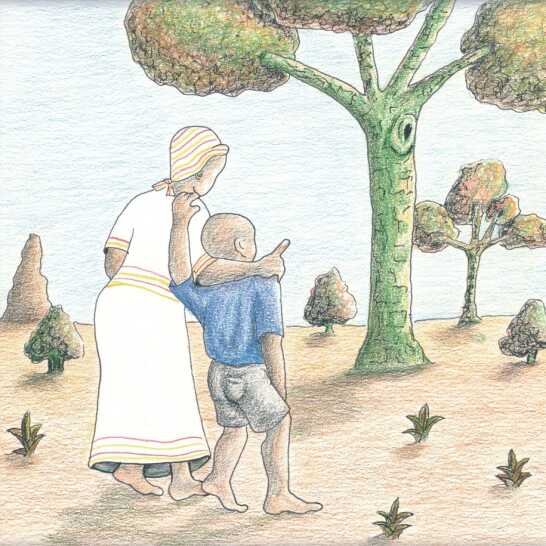
When Hilifa came home his mother asked him, “Hilifa, my son, I want to take a walk with you. Will you help me?” Hilifa took his mother’s arm and she leaned on him. They walked to where the tall thorn trees grew. She asked him, “Do you remember playing football here with your cousin Kunuu? You kicked the ball into the tree and it got stuck on the thorns. Your father got scratched getting it down for you.”
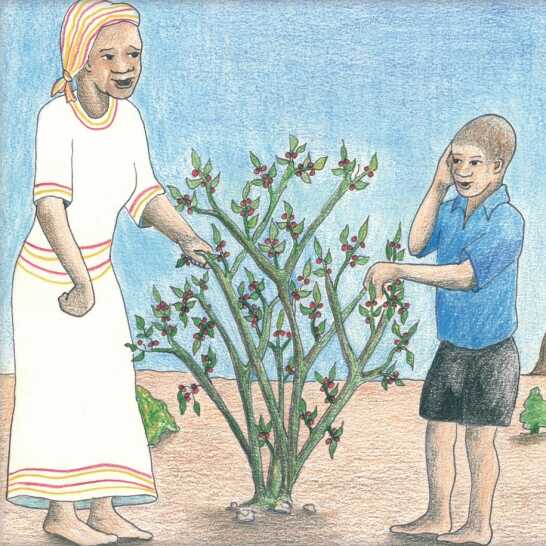
“Kō re, ǁnās ge ǂâuhaisa mâ. ǃGû its si hare tsî oms ǁga ūsao re.” Hilifab ra ǂâuna hare hîas ge ra mî, “ǂâihōts ra, ǂkharirots a hîats ge ǂâuna ǃkhomdi hoadi ǀkha ǂû hâ i ǃkhaisa. Hoaraga wekhebats ge ǂkhari-oms ǁga ge ī tama hâ i!” “Î, ti ǃnāb ge kaise ge tsûsa i,” tib ge Hilifaba âi rase ra ǂâihō.
“Look, there’s an omandjembere bush. Go and pick some to take home.” When Hilifa was picking the sweet berries, she said, “Do you remember when you were small you ate the berries and the seed inside. You didn’t go to the toilet for a week!” “Yes, my stomach was sooo sore,” remembered Hilifa, laughing.
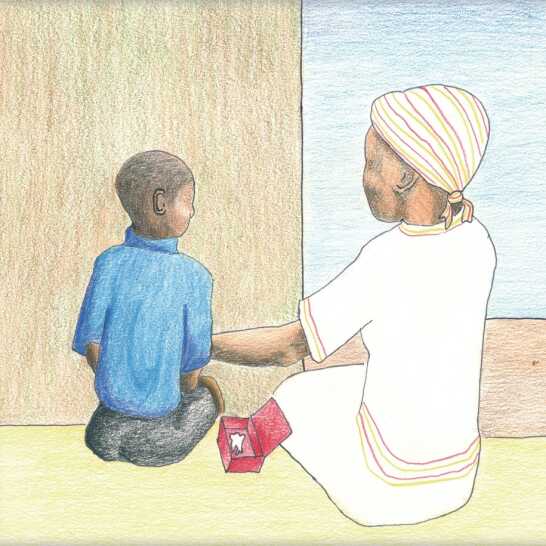
Oms tawa ra ge oasī, os ge Hilifab mamasa kaise ge tsau hâ i. Hilifab ge tē-e ge kuru. ǁGûs Ndapandas ge ǂkhari boksirosa ǁîs kharob ǃnagaba xu ge ūǂui. “Hilifa, nē-i ge a sa. Nē boksis ǃnân ge xūna hâ, mâpaxūts ra ǀkhī ǃkhaisa nî ǂâiǂâiǃnâ tsina.”
When they got home Hilifa’s mother was very tired. Hilifa made some tea. Meme Ndapanda took a small box from under her bed. “Hilifa, this is for you. In this box are things that will help you remember where you come from.”
ǁNā xūnas ge ǀguiǀguibese boksisa xu ra ūǂui. “Nēs ge kikis sa dadab satsa tonǃnâ hâsa. Sats ge ǁîb ǂguro ǀgôa ge i tsa. Nē kikis ge sa ǁnaosarats nî sī mûga ta ge ī-ū tsi hâ i ǁaeb disa, ǁîra ge kaise ge ǂkhî i. Nēb ge sa ǂguro ǁgûb ǁgôa geba. ǂÂihōts ra mâtits gere ǁnā ǁgûb ǃaroma ā ǃkhaisa, tsî ta ge noxopan ǂguina nî ǂoa ti a mîǁguiba tsi ǃkhaisa. Nēs ge saos, sa dadab ge ǃgameb ge ǀgui kurixa o, a mātesa.”
She took the mementos out of the box one by one. “This is a photo of your father holding you. You were his firstborn son. This photo is when I took you to see your grandparents, they were so happy. This is the first tooth you lost. Do you remember how you cried and I had to promise you that more would grow. This is the brooch your father gave me when we were married for one year.”
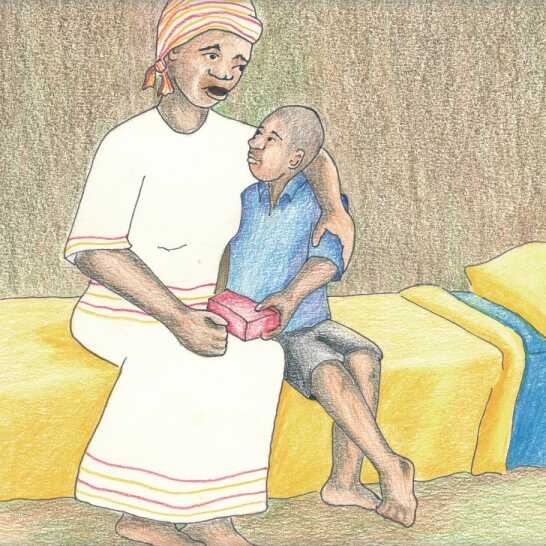
Hilifab ge boksisa ūǀgara tsî ge ā. ǁÎb mamas ge ǁîs ǃnammi ǃnâ ǃkhōmâibi, tsî ge ǀgore, “Ab Eloba ǃûi tsi, tsî ǃnorasase ūhâ tsi”, ti. ǁÎs ge ǃhoa rase ge ǃkhōǀgarabi. “Hilifa, ti ôatse. Sats kom a ǂan o, kaise ta ǀaesen hâsa tsî ta ge ǀgūǁae sa dadab ǀkha sī nî hâ. ǃOats nî ǃkhaisa ta ge ǂgao tama hâ. ǂÂis ǃnâts ge nî ūhâ ǀnam tsi ta a ǃkhaisa. ǂÂis ǃnâ ūhâ re, sa dadab ge mâti ǀnam tsi i ǃkhaisa.”
Hilifa held the box and began to cry. His mother held him close by her side and said a prayer, “May the Lord protect you and keep you safe.” She held him as she spoke. “Hilifa, my son. You know that I am very ill, and soon I will be with your father. I don’t want you to be sad. Remember how much I love you. Remember how much your father loved you.”
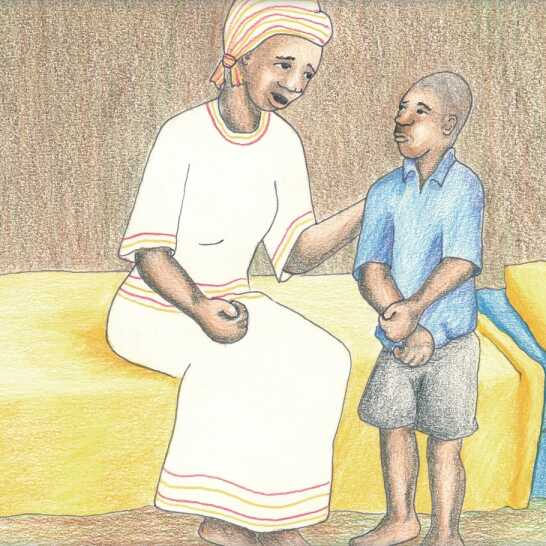
Mamasas ge ra ǃkharuǃkharu, “Ome Kaveb, Oshakatis ai ra hâb ge marina gere sîba da ǁkhāsibab gere ūhâo. ǁÎb ge ge mîba te satsab nî kōǃgâ ǃkhaisa. ǁÎb ǀkha ta ge ǁnās ǂama ge ǃhoa. Sats ge Kunuub, ǁîb ôab ǀkha skoli ǁga nî ǃgû. Kunuub ge sats ǁkhats khami Xrat 4s ǃnâ hâ. ǁÎn ge satsa ǃamkuse nî kōǃgâ.” “Tita ge Ome Kaveb tsî Aumaro Muzaas hâra xa a ǃgâibahe,” tib ge Hilifaba ge mî. “Tita ge Kunuub ǀkha ǀhurus xas tsîna a ǃgâibahe. ǁÎn xas kara kōǃgâheo, o ǂurus nî?” “Hî-î, ti ôatse. ǂUru ta ge tide. Sats ge kaise ǃgâise ra kōǃgâ te. Kaise ta ge sats khami ī ǀgôa-e ūhâs ǃaroma a ǂnīsa.”
His mother continued, “Uncle Kave from Oshakati sends us money when he can. He told me that he will care for you. I have talked to him about it. You’ll go to school with Kunuu, his son. Kunuu is in Grade 4 like you. They will take good care of you.” “I like Uncle Kave and Aunt Muzaa,” said Hilifa. “And I like playing with Kunuu. Would you become well if they look after you?” “No, my son. I won’t become well. You look after me very well. I am proud to have such a good son.”
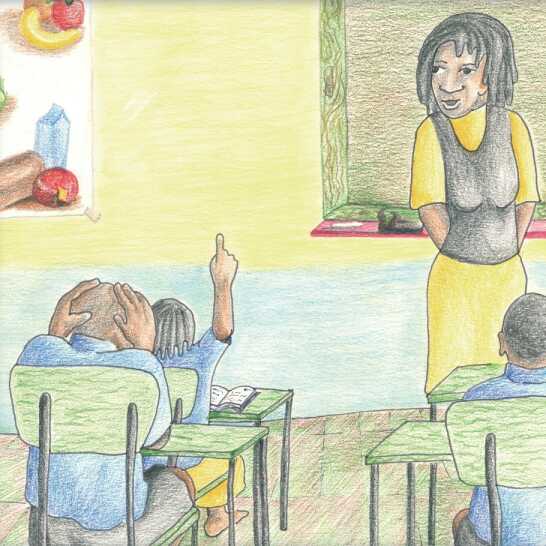
Sao ra ǁgoas ge ǃGhs. Nelaosa, ǁîna HIVs tsî AIDS xa ra ǁkhāǁkhā. ǀGôan ge ǃao rase ra mûsen. ǁÎn ge nē ǁōs xa ǂhôaǂgares ǃnâ ge ǁnâu, xawe-i ge ǀgui khoe-i tsîna nēs ǂama ǁîn ǀkha ǁgâudi tawa ǁgam tama hâ. “Mâpaxu ra hā ǁōsa?” tib ge Maganoba ra dî. “Mâti ra hōhe?” tib ge Hidipoba ra dî. ǃGhs. Nelaos ge HIVs a virus ǃkhaisa ra ǁguiǃāba nî. Khoe-i ga ǁî-i di ǀaob ǃnâ HIV virusa ūhâ, xawe-i ge noxopa ǂuruse ra mûsen. “ǀAesentsoatsoan ra, o da ge AIDSa ūhâ ti ra mî.”
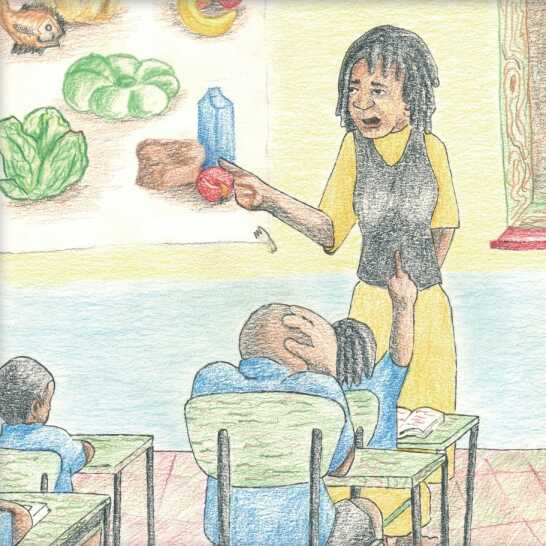
The next morning at school Ms. Nelao taught them about HIV and AIDS. The learners looked afraid. They heard about this illness on the radio, but no-one spoke about it at home. “Where does it come from?” asked Magano. “How do we catch it?” asked Hidipo. Ms. Nelao explained that HIV is the name of a virus. When a person has the HIV virus in their blood they still look healthy. “We say they have AIDS when they become ill.”
ǃGhs. Nelaos ge ǀnî ǀgaun hîa da HIVsa a hō ǁkhāna ra ǁguiǃā. “Khoe-i ga HIVs tamas ka io AIDSa a ūhâ, o da ge ǁî-i ǀaoba xu nē virusa a hō ǁkhā. Tātsē da ge ǂkhomūxūn tsî ǁgûǁā-ūdadi tsîna nî ǀgoragu. ǂNoaǂgaehe da ga, o da ge sâiǂuisa ǀāxūn tsî naldn tsîna nî sîsenū. “ǁÎs ge mâtin ǀāxūn tsî naldn tsîna nî sâiǂuihe ǀgausa gere ǃgāǃgā. “ǃGaosen da ga, tsîb nî ǀaoba hâs kara, o da ge kai khoe-e mîba tsî ǃgao-amsa nî ǃanubahe. ǃGao-amsa da ge nî ǂganam ǀuriba ǁkhaebēs ǃaroma,” tis ge ge mîba nî.
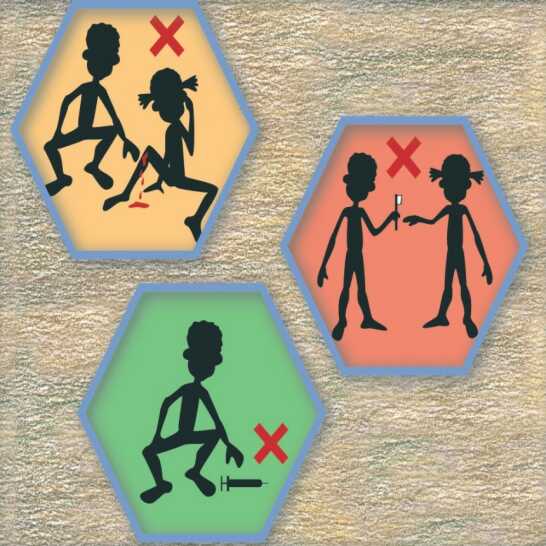
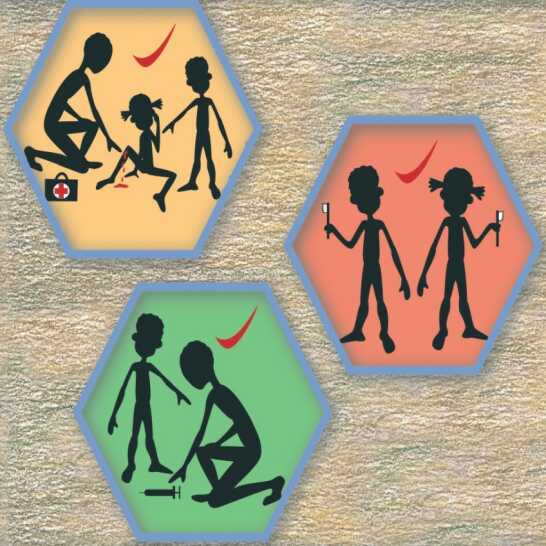
Ms. Nelao explained some of the ways we can be infected with HIV. “If someone has HIV or AIDS we can catch the virus from their blood. We should never share razors or toothbrushes. If we get our ears pierced we must use sterilised blades and needles.” She explained how needles and blades should be sterilised. “If we hurt ourselves and there is blood we must ask an adult to clean the wound. We must cover the wound to protect it,” she told them.
ǁNāpaxus ge ǂhaweba ge ǁgau nî. “Nē gu ge ǀgaugu HIVsats a hōxū ǁoaga” tis ge ge mîba nî. “Sats ge HIVsa ǂkhari-oms tamas ka io ǀguipa ǁāsens ǃnâ-ū a hō ǁoa. ǁNamgus, ǁoagus tamas ka io tawedegus, HIVs tamas ka io AIDSa ūhâ khoe-i ǀkhas, ge a ǃnorasa. ǂHanu i ge a xapana HIVs tamas ka io AIDSa ūhâ khoe-i ǀkha ǀgoragusa. ǁUi ra tamas ka io ra tsî khoe-e xus tsînats ge nē ǁōsa a hō ǁoa. ǁKhātits ge ǀûitsin tamas ka io ǀnî hâ nâ ra ǁgamaben aiǁgause, urin tsî bilina xus tsîna nē ǁōsa hō tide.”
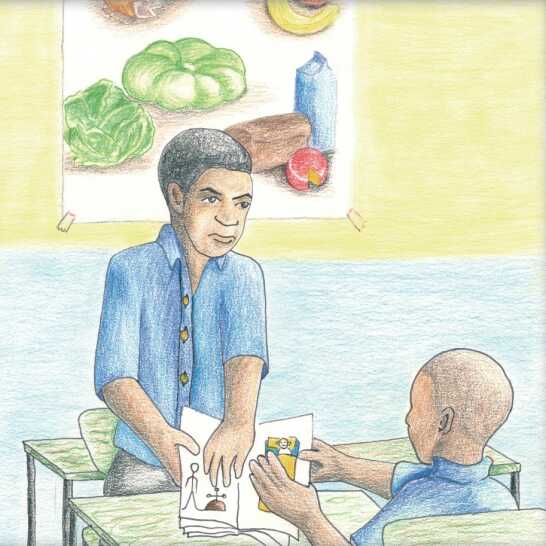
Then she showed them a chart. “These are all the ways you can’t catch HIV,” she told them. “You won’t get HIV from using the toilet, or sharing a bath. Hugging, kissing or shaking hands with someone with HIV or AIDS is also safe. It’s OK to share cups and plates with someone who has HIV or AIDS. And you can’t catch it from someone who is coughing or sneezing. Also, you can’t get it from mosquitoes or other biting insects like lice or bedbugs.”
“Tare-ets nî dī, nē ǁōsats kara hō o?” tib ge Maganoba ge dî. “Aitsama ǃûiǃgâsen tsîts ge ǂgui ǂuru ǂûna nî ǂû. Sada ǂûnǂhaweb ǁga kō re,” tis ge ge mî. “Tari-e ǂâis ǃnâ ūhâ mâ ǂûn sats ǃaroma a ǃgâi ǃkhaisa?” tis ge ge dî.
“What do you do if you’ve got it?” asked Magano. “Well, you must take care of yourself and eat lots of healthy food. Look at our food chart,” she said. “Who can remember what food is good for you?” she asked.
Hilifab ge oms tawab ra oasī, o mamasasa tarenab go nētsē skoli ǃnâ a ǁkhāǁkhāhe ǃkhaisa ge ǁgamba. “ǃGhs. Nelaos ge sida HIVs tsî AIDS xa go mîba tsî mâtits ǀaesen hâ khoena nî ǃûiǃgâs tsîna. Maganob tsî Hidipob hâkha ge ǁgâusîsengu ǀkha tida nî hui, tsî ge ge ǀguipa omsîsenna nî dī,” tib ge mamasasa ge mîba.
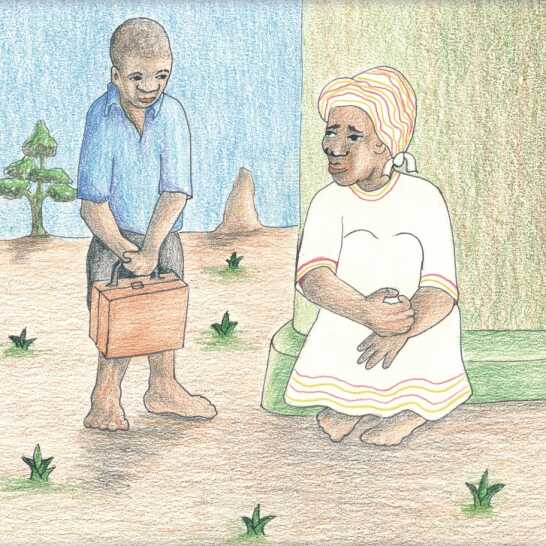
When Hilifa got home he told his mother what he had learned at school that day. “Ms. Nelao told us about HIV and AIDS and how to look after someone who’s ill. Magano and Hidipo are going to help me with my chores and we will do our homework together,” he told her.
ǁNā karab aib ge Maganoba hā tsî Hilifaba ǁgam-e sī xuris ǀkha ge hui. Hidipob ge ǀaeres ǀkha ge hui bi. ǁNāpaxu kha ge goaros di sommi ǃnâ ǂnû, tsî omsîsenna ge dī.
That afternoon Magano came and helped Hilifa to fetch water. Hidipo helped him to gather firewood. Then they sat and did their homework in the shade of the marula tree.
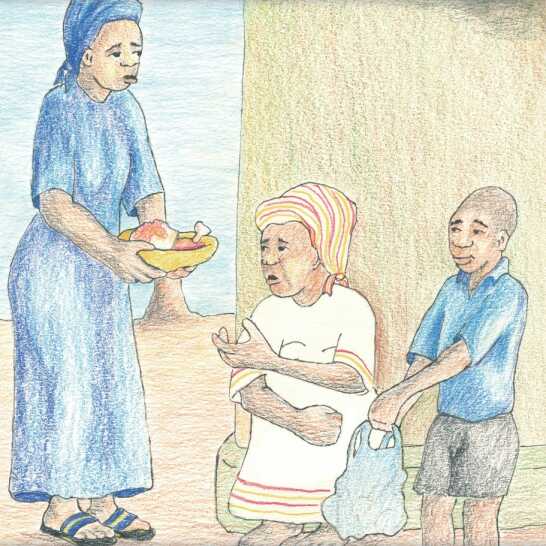
ǃGhs. Nelaos ge ǁkhāti Hilifab ǁanǁare-aon tsîna ge mîba ǁîb ra mamasasa kōǃgâ ǃkhaisa. ǁÎn ge ǁîban nî hui ǃkhaisa ge mîǁgui. Mâ ǃoes hoasa i ge ǀkhara ǁanǁare-ao-e ǀgamsa ǃores ǂû-e ǁîra nî ǂûse gere hā-ūba ra. Hilifab ge hoaǁae ǃhanaba xu ǃhanaǂûna gere mā nî.
Ms. Nelao had also told Hilifa’s neighbours that he was looking after his mother. They had promised to help him. Every night a different neighbour came with hot food for them to eat. Hilifa always gave them some vegetables from the garden.
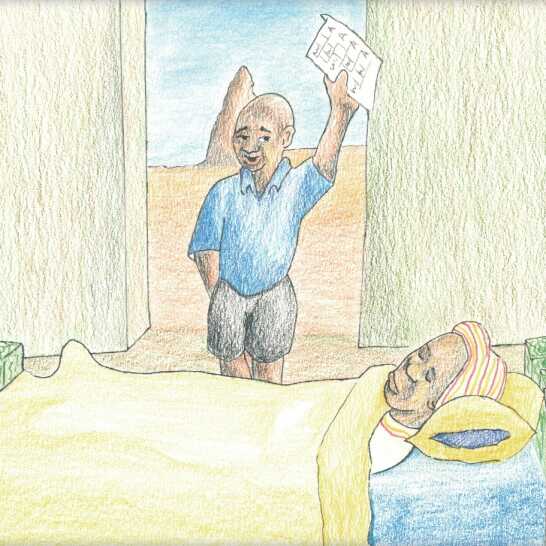
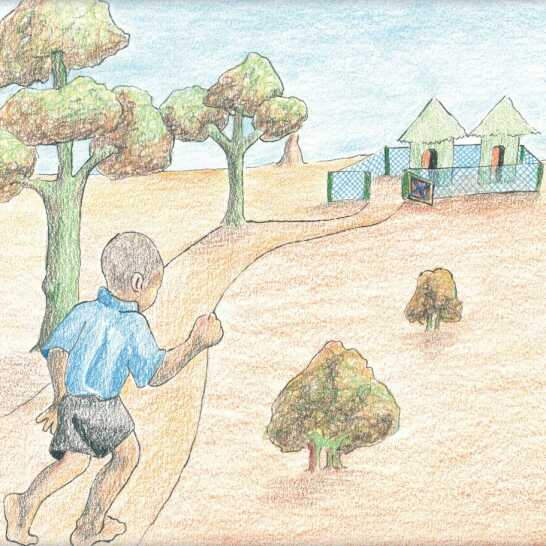
ǀUniga tsēs skoli hakaǁî ǃâs dis aib ge Hilifaba kaise ge ǂkhî i. ǁÎb ge oms ǁga ge ǃkhoe-oa, ǁîb mamasab nî si ǃnuriba ǁgause. ǁÎb ge “Mama, Mama” ti ra ǂgaise jars ǃnâ ge ǃkhoeǂgâ. Ti ǃnuriba kō re. Tita ge “A’s” tsî “A’s” tsî noxopa ǂgui “Ade” go hō.” Hilifab ge ǁîb mamasa kharob ǃnâs ǁgoese ge hō. “Mama!” tib ge ra ǂgai. “Mama! ǂKhai re!” ǁÎs ge ǂkhai tama ge hâ i.
On the last day of the school term Hilifa was very happy. He ran home to show his mother his report card. He ran into the yard calling, “Mum. Mum. Look at my report card. I have got ‘A’, ‘A’, and more ‘A’s’.” Hilifa found his mother lying in bed. “Mum!” he called. “Mum! Wake up!” She didn’t wake up.
Hilifab ge ǁanǁare-aon ǁga ge ǃkhoe. “Ti mamas. Ti mamas ge ǂkhai ǂgao tama hâ,” tib ge ra ā. ǁAnǁare-aon ge Hilifab ǀkha oms tawa sī tsî ǁgûs Ndapandasa ǁîs kharob ǃnâ ge hō. “ǁÎs ge go ǁō, Hilifatse,” tin ge ǃoa hâse ra mî.
Hilifa ran to the neighbours. “My Mum. My Mum. She won’t wake up,” he cried. The neighbours went home with Hilifa and found Meme Ndapanda in her bed. “She is dead, Hilifa,” they said sadly.
ǁGûs Ndapandas di ǁōb ǂhôas ge kaise ǃhaese ge ǃkhoe. Oms ge ǀaokhoen, ǁanǁare-aon tsî ǀhōsan xa ge ǀoa hâ i. ǁÎn ge Hilifab mamasa ǀgoreba tsî amna gere ǁnae. ǁÎn ge ǁîs xan a ǂan ǃgâi xūn xa gere ǃhoa.
Very quickly the news spread that Meme Ndapanda was dead. The house was full of family, neighbours and friends. They prayed for Hilifa’s mother and sang hymns. They talked about all the good things they knew about her.
Aumaro Muzaas ge hoa ǃhaokhoena ge sâiba. Ome Kaveb ge Hilifaba ge mîba, ǁîn ǁkhōs khaoǃgâ Oshakatis ǁga nî ūsao bi ǃkhaisa. ǁÎb ǁnaob ge ǁîba mamasas ge ǀgôaros ge ī, o gere dī xūn xa gere ǁgamba.
Aunt Muzaa cooked for all the visitors. Uncle Kave told Hilifa that they would take him back to Oshakati after the funeral. His Grandfather told him stories about his mother when she was a little girl.
ǁKhōs ǃoabas tawab ge Hilifaba kerkheb ǃnâ ais ai si mâ, tsî ǁîb mamas xa ǂnû hâ ǀhaohâba gere ǁgamba. “Ti mamas ge tita ge ǀnam i, tsîs ge kaise ǃgâise gere ǃûiǃgâ te. ǁÎs ge a ta ǃgarise ǁkhāǁkhāsen, tsî ǃgâi sîsen-e hō, ti gere mîba te. ǁÎs ge ǃgâiaǂgaob ǀkha ta nî hâ ǃkhaisa gere ǁkhoreba te. Tita ge ǃgarise ǁkhāǁkhāsen tsî ǃgarise nî sîsen ǁîsa tita ai ǂnīsase tsâ kais ǃaroma.”
At the funeral Hilifa went to the front of the church and told everyone about his mother. “My mother loved me and looked after me very well. She told me to study hard so that I could get a good job. She wanted me to be happy. I will study hard and work hard so that she can be proud of me.”
ǁKhōs khaoǃgâ ra ge Ome Kaveb tsî Aumaro Muzaas hâra Hilifaba ǁîb sarana ǀhaoǀhaos ǀkha gere hui, Oshakatis ǁga ūsaos ǃaroma. “Kunuub ge ǀasa ǀhōsa-e hōsa gere mûǂui,” ti ra ge ge mîba bi. “Sim di ǂhunuma ǀgôa-i khamim ge nî kōǃgâ tsi.”Hilifab ge omsa tawedeǁnāxū tsî ǃgae-autos ǃnâ ǁîra ǀkha ge ǂoa.
After the funeral Uncle Kave and Aunt Muzaa helped Hilifa to pack his things to take to Oshakati. “Kunuu is looking forward to having a new friend,” they told him. “We will care for you like our own son.” Hilifa said goodbye to the house and got into the taxi with them.
Written by: Kandume Ruusa, Sennobia-Charon Katjiuongua, Eliaser Nghitewa



 Kandume Ruusa, Sennobia-Charon Katjiuongua, Eliaser Nghitewa
 Jamanovandu Urike
 Ngeve Shangombe
 Khoekhoegowab
 Level 5