ǃGāsa sorexa Sontaxtsēkam ǃuiǁae ge is ge. Luseses ǃnâ di ge ǂkham ǀgôade, ǁÎs Kaprivib ǃnâ kai Musikili hais ǃnâga ge ǀhao hâ i.
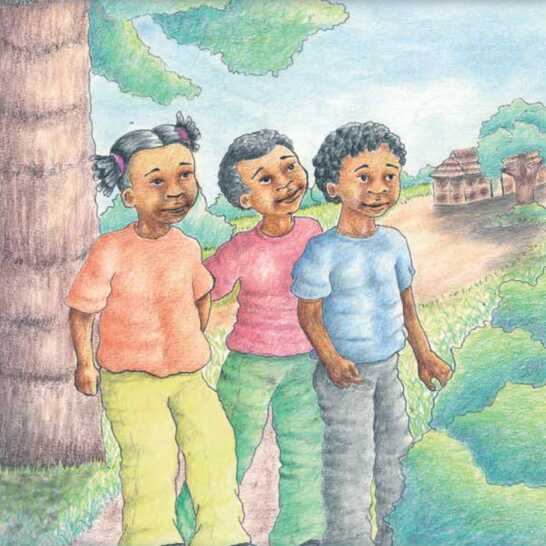
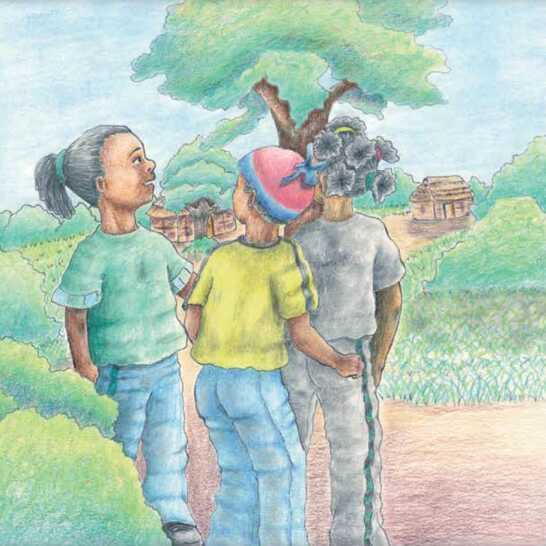
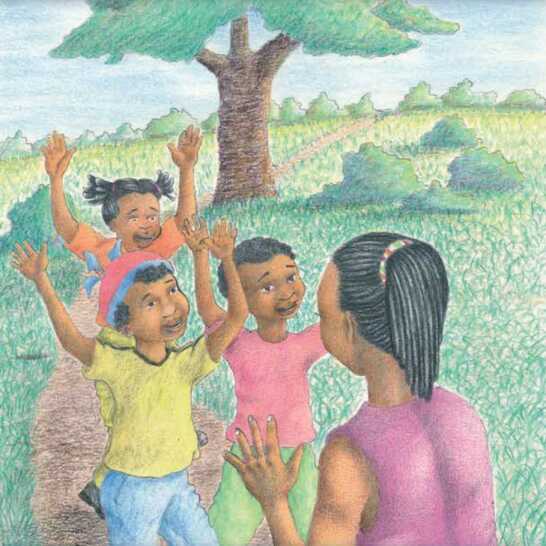
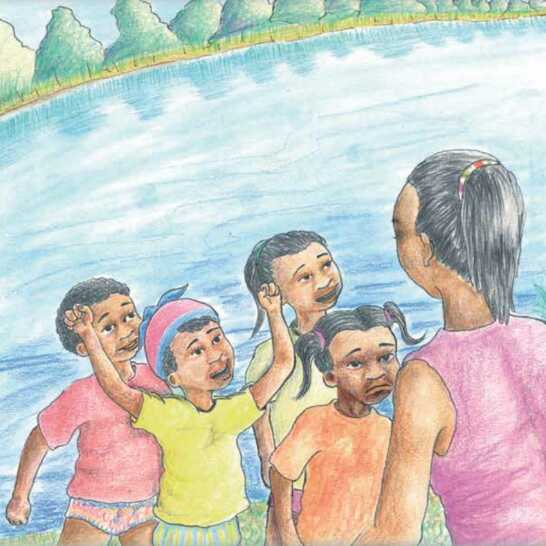
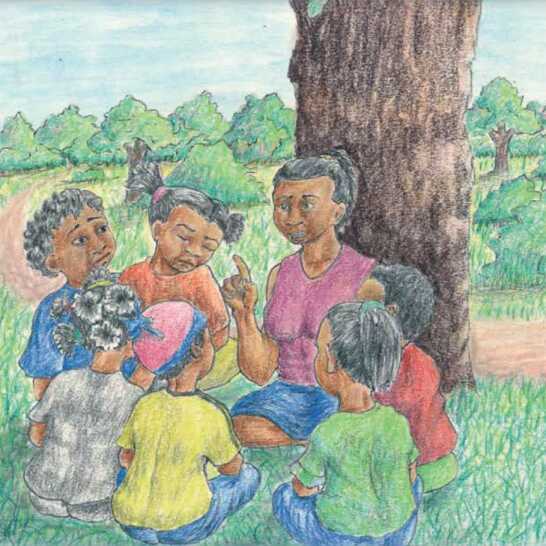
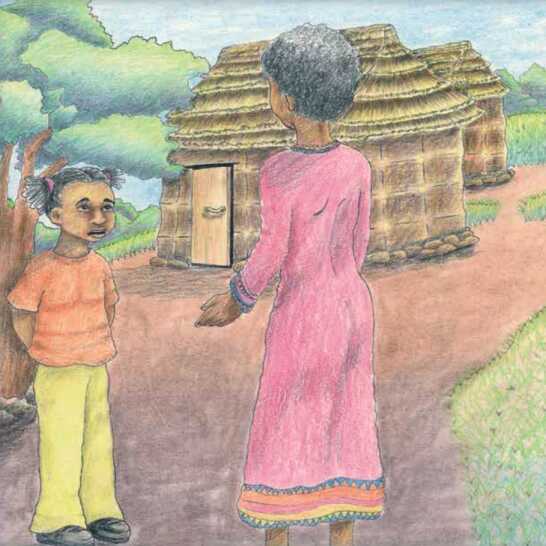
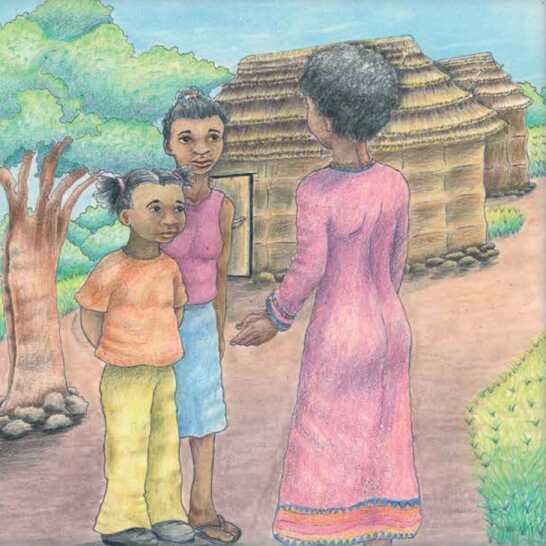
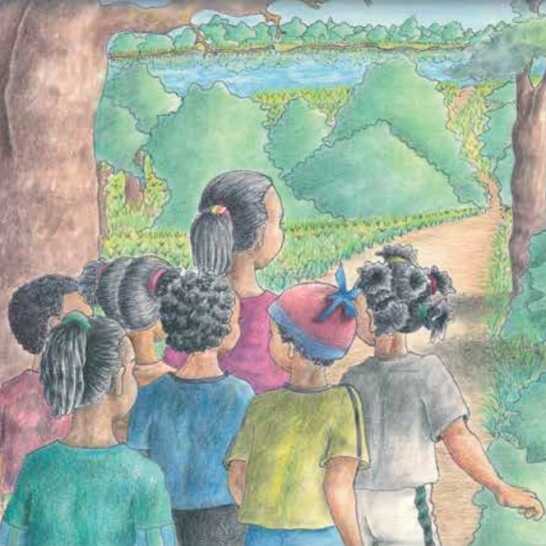
It was a bright sunny Sunday afternoon. The young girls in Lusese were gathering under the branches of the biggest Musikili tree in Caprivi.
ǃGâiaǂgaob ǀkha ra ǃhoa domgu ge nē ǃgaroǃāros ǃnâ ǀganarase gere ǁnâuhe. Nau ǀhōsana di ge gere ǂgai. “Nakamwi, ǃâu si se ge hâ.” “Chaze, ǃhaese dī re.” “Silume! ǀKhī re!”
The excited buzz of their voices was heard all over the village. They called their friends. “Nakamwu, I’m waiting for you.” “Hurry up, Chaze.” “Silume! Come on!”
Marias ge Ntwalasa gere kō ôamâ. ǁÎn ge Ntwalas xa mâ Sontaxtsēs hoasa gere tsâǃgû ūhe. “Ntwalas! Ntwalee! Ntwalaaa! Ntwalloo!” tis ge gere ǂgai.
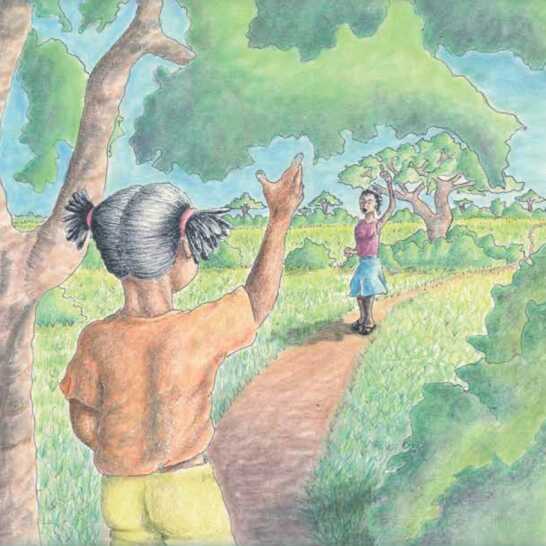
Maria looked around for Ntwala. Ntwala took them swimming every Sunday. “Ntwala! Ntwalee! Ntwalaaa! Ntwaloo!” she called.
Ntwalas ge nau ǀkhab ǃgaroǃāros diba xu gere ǃhao, “Nē ta ge hâ! Saso ta ǃâuhâ.” Hoa ǀgôadi ge ge ǃkhoe, î di ǁîsa si ǀhao-ū.
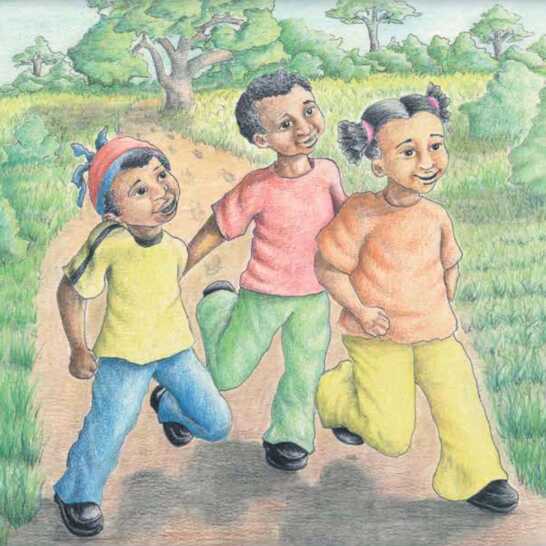
Ntwala shouted from the other side of the village, “I’m here! I’m waiting for you.” All the girls ran to find her.
“Nētsē tsâs ǃaroma so ǂhumisen hâ?” tis ge Ntwalasa ge dîdi. “Δ ti di ge ǃgâiaǂgao rase ǃgarise ge mî, urimâ di ra ǃgâiaǂgaob xase.
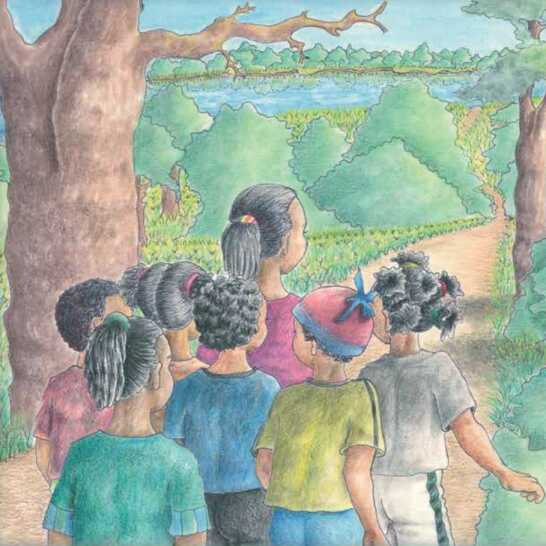
“Are you ready to go swimming today?” Ntwala asked them. “Yes,” they shouted happily as they hopped and jumped with excitement.
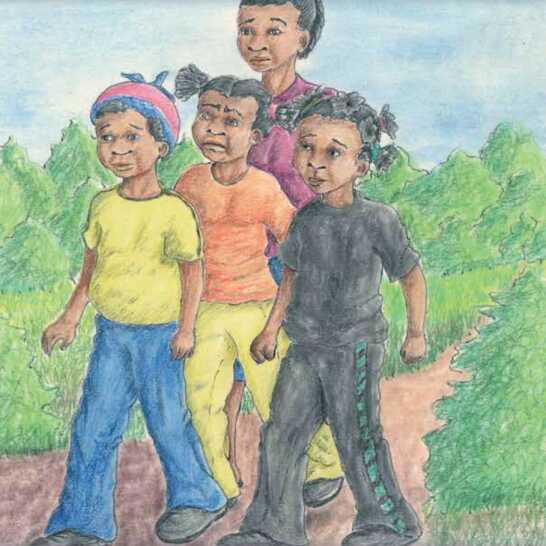
Ntwalas ge ǃāb ǁga di ǁgôagause ǂhôana gere ǁgambadi. “Sada ǃgaroǃās ge dâuǃkhūhe hâ i ǃnaeǃkhais xa ǁgaebase re,” ti di ge ge mî. ǀGirib tsî ǀNorab hâkha xa ǁgaebase re.
As they walked to the river Ntwala told them stories. “Tell us about when our village was flooded,” they called. “Tell us about the Jackal and the Baboon.”
Kaiǃgâ Marula hais ge ǃāb xōǀkhā ge mâ i. ǀGôadi ge Ntwalasa kaiǃgâ Marula ǂûsa gere ôaba.
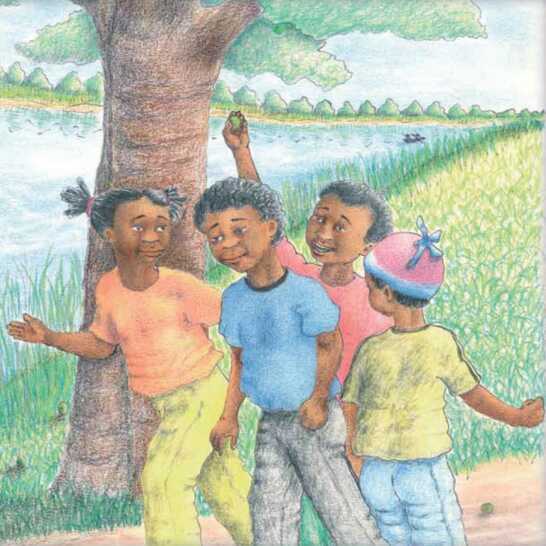
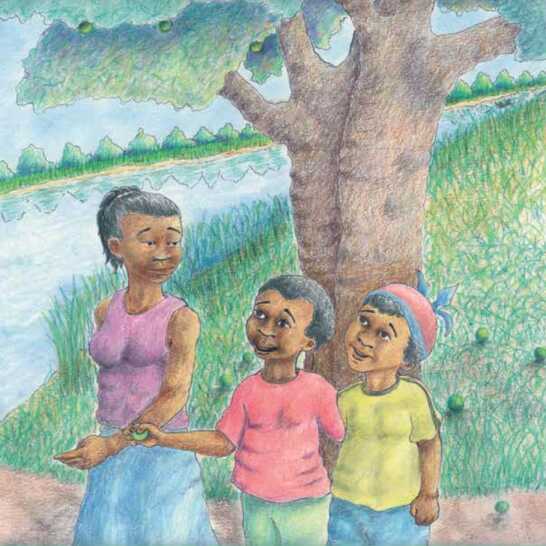
Beside the river there was an enormous marula tree. The girls looked for the biggest marula fruit for Ntwala.
“Tita ge ǁîs hîa kaise kaisa go hō” tis ge Joysa ra ǃhao. ǁÎs ge Ntwalasa nē Marula ǂûsa ge mā.
“I’ve got the biggest,” shouted Joy. She gave her marula fruit to Ntwala.
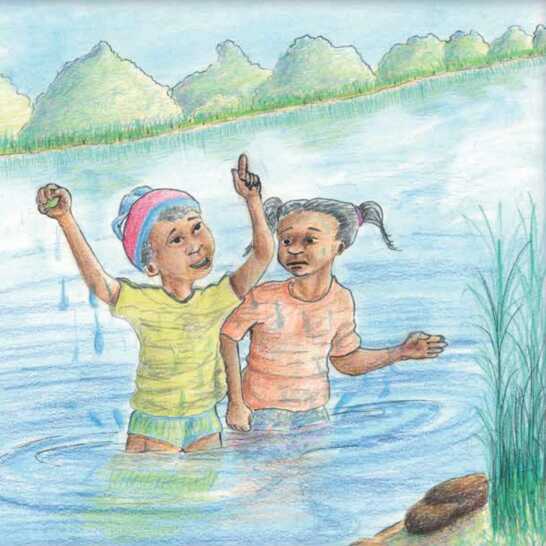
“Tsâso si” tis ge Ntwalasa ǀgôade ge mîba. ǁÎdi ge Zambezi ǃāb di ǃkhai ǁgam-i xa gere ǃause ge ǃkhoeǂgâ.
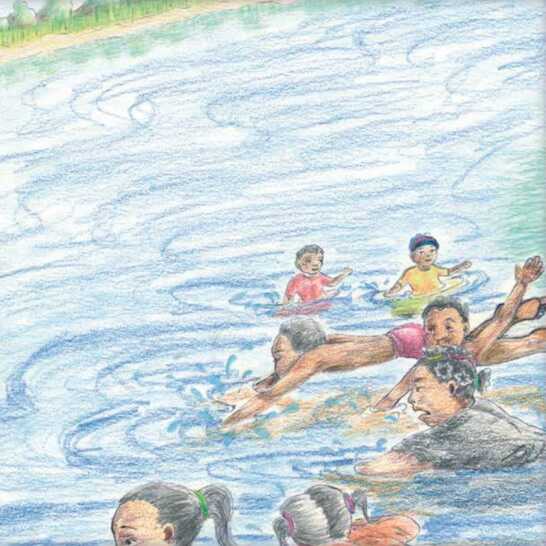
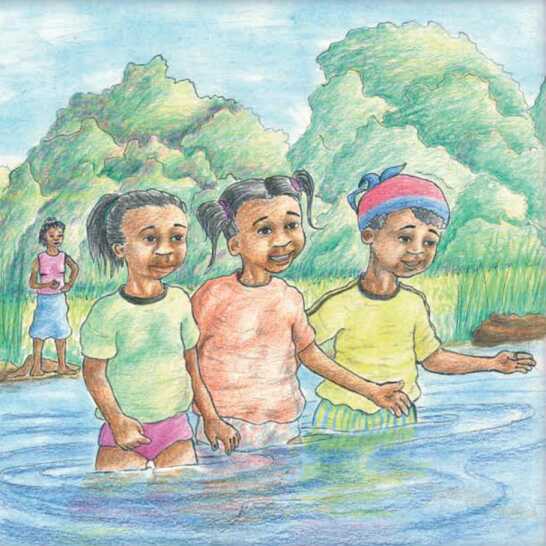
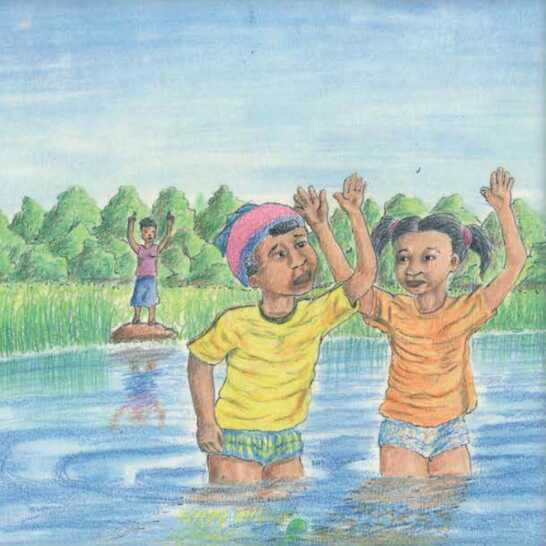
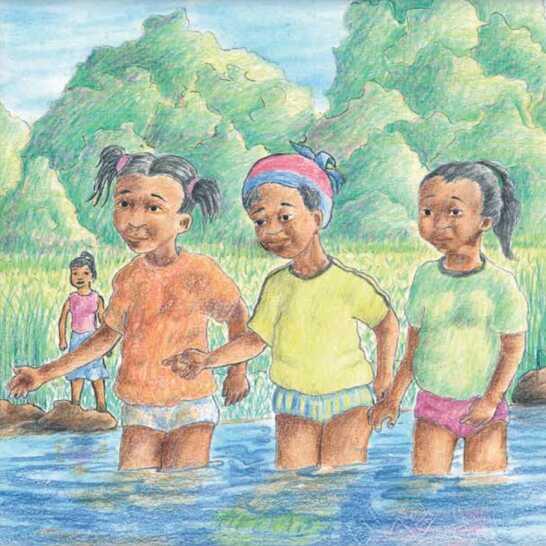
“Off you go and swim,” said Ntwala to the girls. They all ran into the water, shrieking and giggling as they felt the cold water of the Zambezi River.
Ntwalas ge ǃāb xōǀkhā mâ tsî ǁnâsega gere ǃkhēba ǀgôade. ǁÎs ge kai ǀgôadi ra tsâǀnûgu tsî dūǂgâ ǀgausa gere kō, tsî ǂkham ǀgôadi ra ǁgammi ǃnâ ǀhuru tsî tsâ ǁkhāǁkhāsen ǀgaus tsîna.
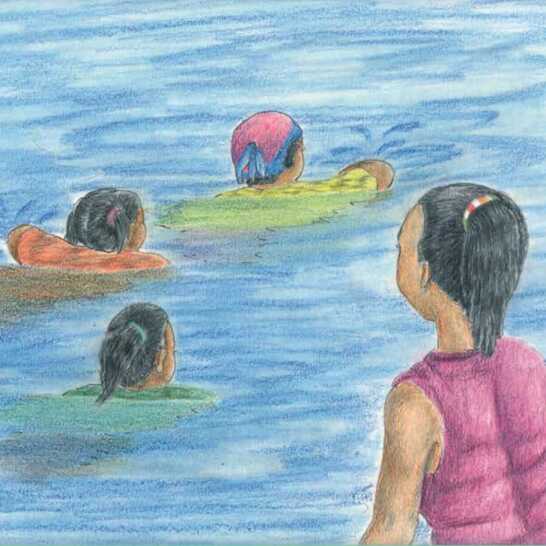
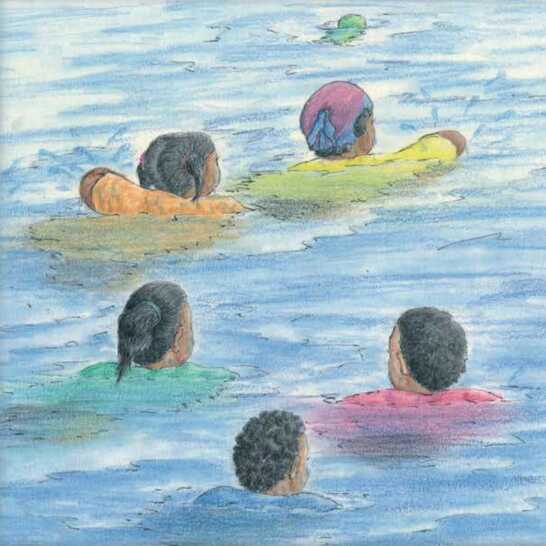
Ntwala stood on the bank. She watched for crocodiles. She watched the older girls racing and diving. She watched the younger girls splashing and learning to swim.
” ǀNûgus ǁaeb” tis ge ge ǃau. “Mâsaogu” Kaise kai Marula ǂûsas ge ge ūkhâi. ǁKhās as kōses ge kaise ǃnūse nē ǂûsa ge aoǂgā ǁgammi ǃnâ.
“Competition time,” she shouted at last. “Stand in a line.” She picked up the biggest marula fruit. She threw it as far as she could into the water.
“ǀGui, ǀgam, ǃnona. Tsâ!” tis ge ge mîmā. ǀGôadi ge ǁgammi ǃnâ ǃkhoeǂgâ tsî nē Marula ǂûs ǁga ge tsâ. Ntwalas ge ge kō di.
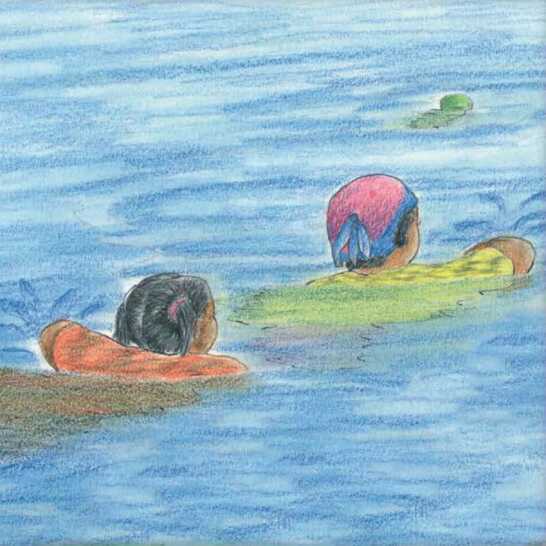
“One, two, three. GO!” she called. The children ran into the water and swam to the marula fruit. Ntwala watched them.
“ǂGuro ta hâ” ti ra ge Marias tsî Chazes tsîra ǀgui ǁaeb ai ge ǃau. “Hoaro ge ǂguro hâ,” tis ge Ntwalasa ge mî.
“I’m first!” shouted Maria and Chaze at the same time. “You are both first,” called Ntwala.
ǁKhawa ta ra ǀnûgu ǂgao,” tis ge Mariasa ge mî. “ǂHanu-a!” tis ge Chazesa ra mî. “Tsâ ǁkhāse a, Ntwala?” ti di ge nau ǀgôade ge dî.
“I want to race again,” said Maria. “OK!” said Chaze. “Can we, Ntwala?” asked the other girls.
ǁKhawa mâsaoguso,” tis ge Ntwalasa ge mîba di. Marula ǂûsa ūkhâi tsîs ge ǁkhās as kōse ǃnūse ge ǁgammi ǃnâ aoǂgā.
“Stand in line again,” Ntwala told them. She picked up a marula fruit and threw it as far as she could.
“ǀGui, ǀGam, ǃNona. Tsâ! tis ge ge mîmā. ǀGôadi ge ǁgammi ǃnâ ǃkhoeǂgâ tsî nē Marula ǂûs ǁga ge tsâ. Ntwalas ge gere kō di.
“One, two, three. GO!” she called. The children ran into the water and swam to the marula fruit. Ntwala watched them.
“ǂGuro ta hâ!” tis ge Chazesa ge ǃau. Marias ge ge tsâǀû. “Chazes ge a danao,” tis ge Ntwalasa ge mî. “Kaise ǃgâi, Chaze.” Ase nēsi oms ǁga ǁaru re.
“I’m first!” shouted Chaze. Maria stopped swimming. “Chaze is the winner,” said Ntwala. “Well done, Chaze. Let’s go home now.”
ǀGôadi ge Ntwalas ǀkha oms ǁga ge ǃgû. “ǁGaeǂhôaro-e ǁgambase Ntwala,” ti di ge ge ǂgan. ǁÎdi ge Ntwalas ǁgaeǂhôade ǃgâs xa ge ǃgâibahe-i.
The children walked home with Ntwala. “Tell us a story, Ntwala,” they asked. They loved to listen to her stories.
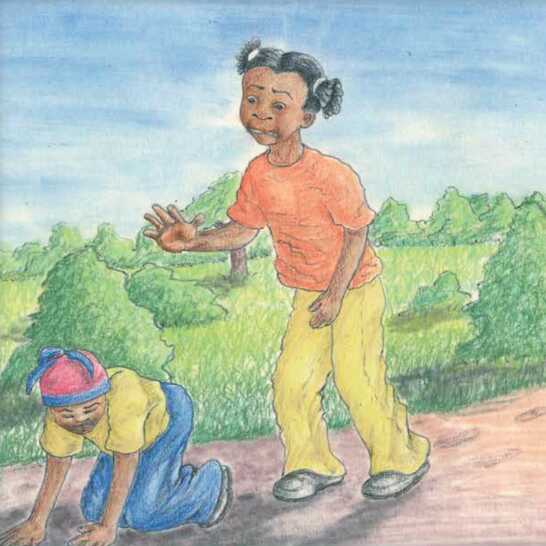
Marias ge Chazes ǃgâb ai ǀkhuri si, tsî ǃhūb ai ge ǂhāǁguisi. Chazes ge ge ā tsoatsoa. “Chazes mamas xas nî ǂnauhe,” tis ge Joysa, Mariasa ra mîba.
Maria crept up behind Chaze and pushed her to the ground. Chaze started to cry. “Chaze’s mother will beat you,” said Joy to Maria.
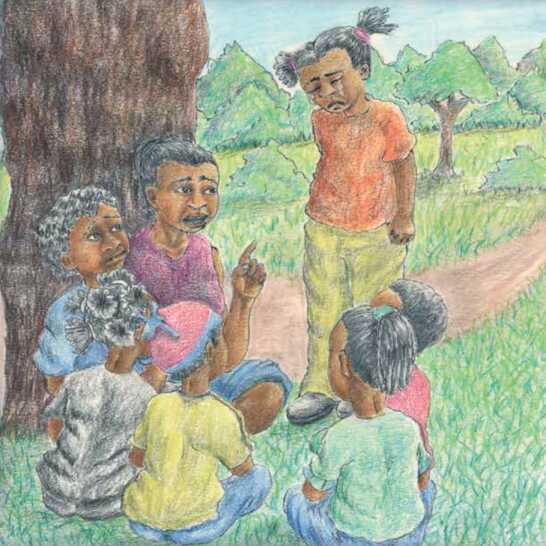
“Marias! Tare-i ǃaromas go ǂnauba Chazesa?” tis ge Ntwalasa ge dî. “ǁÎs ge tsâs ǃnâ go dan. ǂHauǃnâ tama,” tis ge Mariasa ge mî.
“Maria! Why did you hit Chaze?” asked Ntwala. “She won at swimming. It’s not fair,” Maria said.
Ntwalas ge ǀgôade ǂgaeǂnamis ǃnâ ge ǂnû kai. “Skoldanaba tare-e ge mîba se,” tis ge ge dî. ǃKhams ge a tsū. ǃKham ra khoen ge nî ǁkharahe,” tis ge Nakamwusa ra mî.
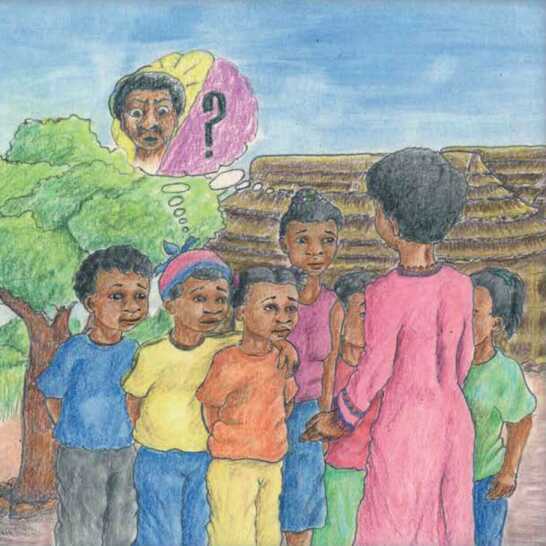
Ntwala asked all the girls to sit in a circle. “What did the principal tell us?” she asked. “It’s bad to fight. People who fight must be punished,” said Nakamwu.
“Marias ge ǀûbasa nî ǂgan,” tis ge Namasikusa ge mî. “Chazes tsîn ge ǁâb ai nî ǂnausi,” tis ge Joysa ge mî. “Hî-i, ǂhanu tama i ge a, ǂnaugusa” tis ge Ntwalasa ge mî.
“Maria must say sorry,” said Namasiku. “Chaze must hit her back,” said Joy. “No, it is wrong to hit each other,” said Ntwala.
“Tita ge ra ǂâi, Marias ge ǃgoaxa Sontaxtsē tsâsao tide ti,” tis ge Ntwalasa ge mî. Marias ge kai ǁgamroga ge ā. “Tita… Tita… ǀÛbate Chaze. ǀÛba te re llkhawa ta ge khoe-e ǂnau tide,” tis ge ge ǀûbaǂgan.
Ntwala said, “I think Maria should miss swimming next Sunday.” Maria cried a flood of tears. “I… I… I’m sorry Chaze. I’m sorry I hit you. I’ll never hit anyone again,” she apologised.
“ǀÛbasi ta ge go,” tis ge Chazesa mî tsî Mariasa ge ǁnamǂgā.” Maria ham ge sas ǀkha nî ǁaru,” Marias ge sa mamas ais tsîna nî si ǀûbaba ǂgan.”
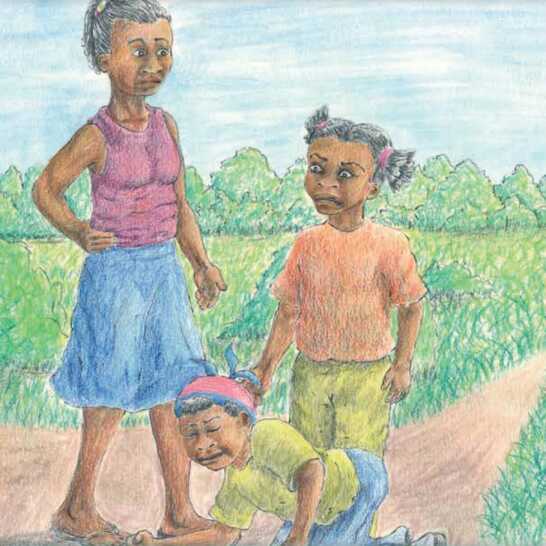
“I forgive you,” said Chaze and put her arm around Maria. “Maria and I will come home with you,” said Ntwala to Chaze. “Maria will apologise to your mother too.”
“Tita ge Chazesa tsâǀnûgusas go dan ǃkhais ǃaroma go ǂnau,” tis ge Mariasa Chazes mamasa ge mîba. “ǀÛba” tere. Chazes ge a ti ǀhōsa tsî i ge go ǂhanu tama hâ i ǁîsa ǂnausa.
Maria told Chaze’s mother, “I hit Chaze because she won the race. I’m sorry. Chaze is my friend, it was bad to hit her.”
ǃGhs Sibungos ge Mariasa ge ǃgâ. ǁNās ge go ǂhanu tama hâ i Maria, khoena ǂnaus ge a ǁgai. Gangans tita ais go ǀûbaǂgan ǃkhaisa. ǀÛba si ta ra. Sas ge ǃgâi ǂgaeǂgui-aosa,” tis ge ǃGhs. Sibungosa Ntwalasa ge mîba.
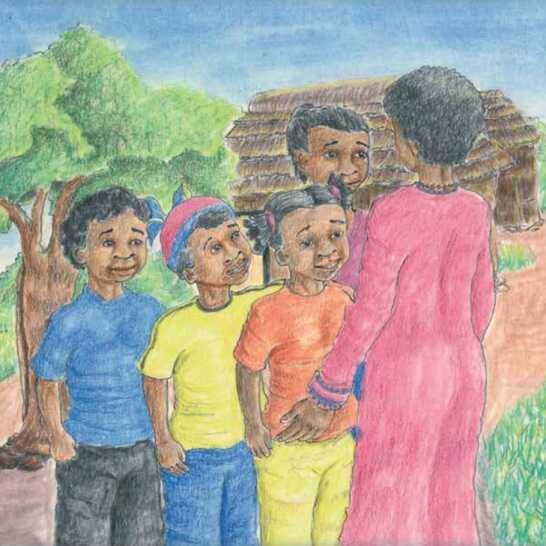
Mrs. Sibungo listened to Maria. “That was wrong Maria, it is bad to hit people. Thank you for apologising to me. I forgive you.” Mrs. Sibungo told Ntwala, “You are a good leader.”
ǃGhs Sibungos ge hoa ǀgôadi ǀkha ge ǃhoa. “Ntwalas ge ǃgâi ǁkhara-i xa Marias ǃaroma go ǂâi. ǁÎs ge Chazesa go ǂnau tsâǀnûgusas go ǂoaǃnâ ǃkhais ǃaroma, xui-aos ge ǁîsa tsâǀnûgus ǃnâ ǁhao tite.
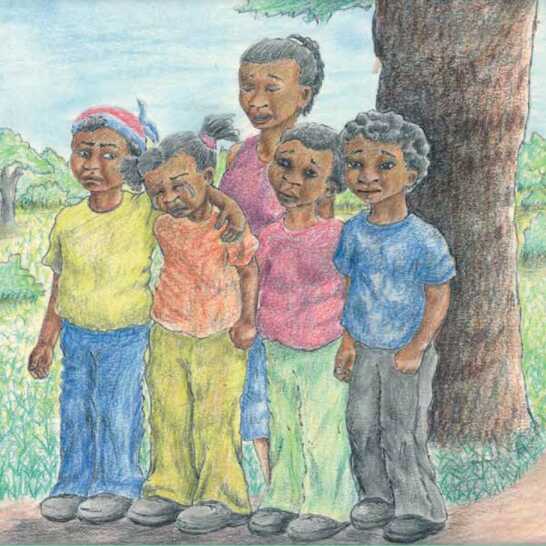
Mrs. Sibungo spoke to all the children. “Ntwala thought of a good punishment for Maria. She hit Chaze because she lost the swimming race. Now she will not be able to race.”
“Xawe ti ma,” ti mîs ge Chazesa gere ǀnom. “Tita ge Marias nîǃgoaxa Sontaxtsē oms tawa hâ ǃkhaisa ǂgao tama hâ. ǃGoaxa wekhes tsîna ta ge ǁîs ǀkha ra tsâǀnûgu ǂgao!”
“But Mum,” Chaze smiled, “I don’t want Maria to stay at home next Sunday. I want to race her at the swimming next week too!”
Written by: Imelda Lyamine, Albius Chunga Mulisa, Maria Simasiku, Florence Habayemi Shitaa


 Imelda Lyamine, Albius Chunga Mulisa, Maria Simasiku, Florence Habayemi Shitaa
 Kleopas Jambeinge
 Ivan Petrus Josob
 Khoekhoegowab
 Level 4