Satertaxtsēs ge tsîb ge Ricoba ǁîb mamasas ǀkha ǂharuguǃkhaib ǁga ra ī. ǁÎb ge ǂharuguǃkhaib ǁga ǃgûs xa ǃgâibahe. ǂHaruguǃkhaib ge a ǁkhoaxa! ǂGui xūnats ge ra mû.
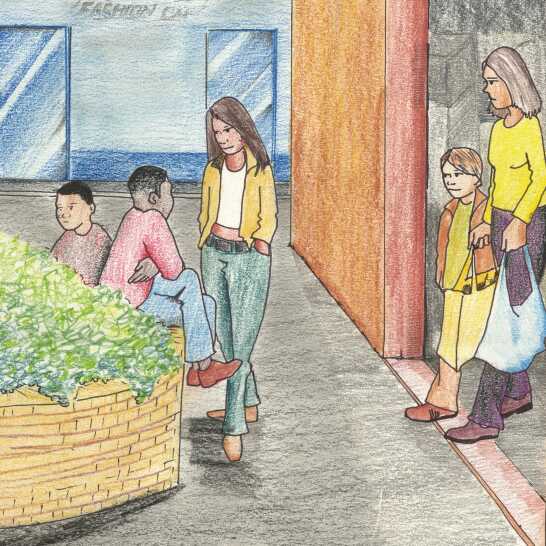
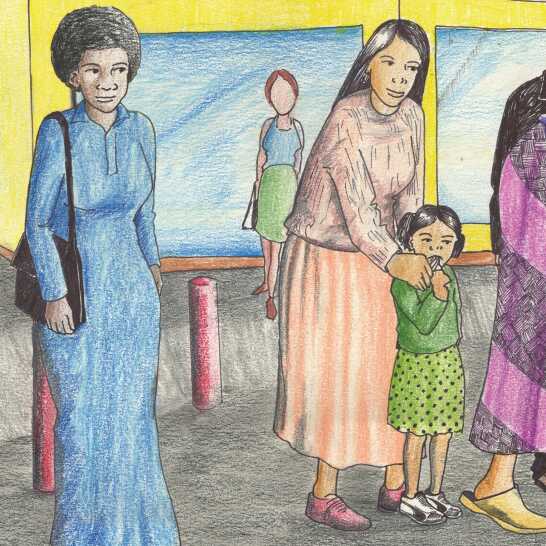
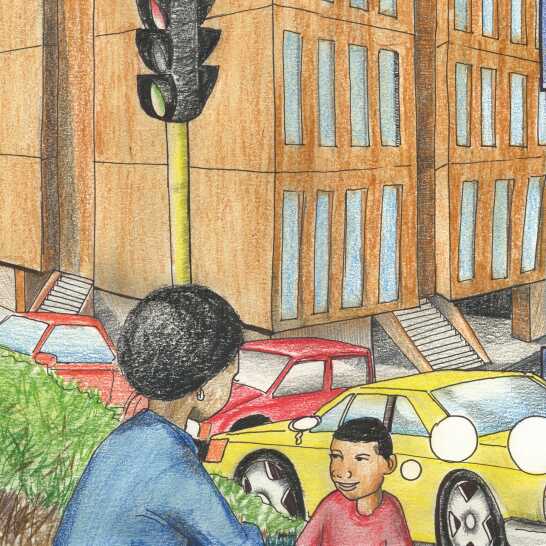
It’s Saturday and Rico is going to town with his mother. He likes going to town. Town is exciting! There are lots of things to see.
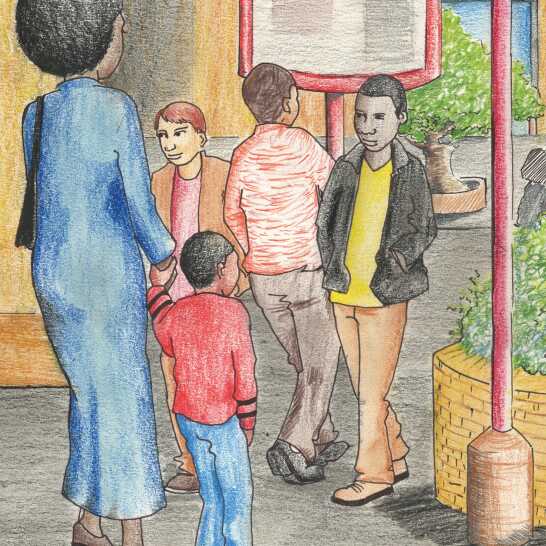
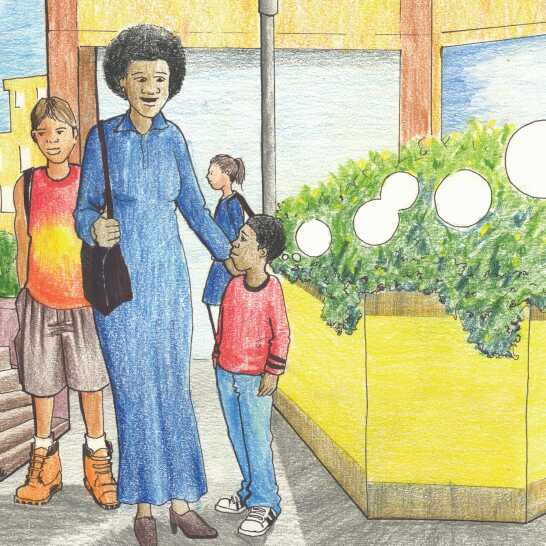
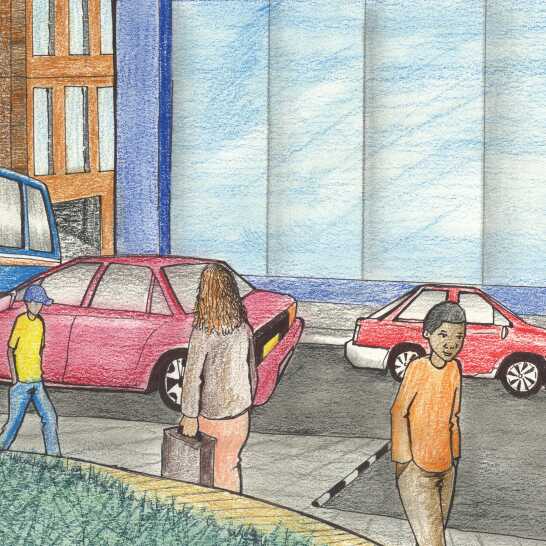
Ricob ge mamasas di ǃomsa ǀgaisase ra ǃkhō. ǀHaes di khoen ge ǁîra xōǀkhā ra ǃgûǃkharu.
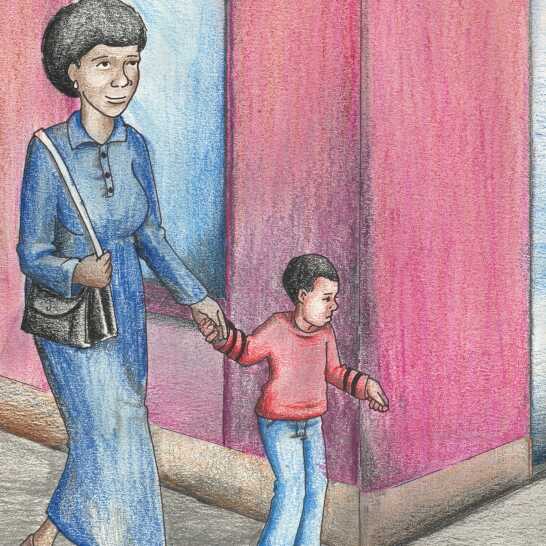
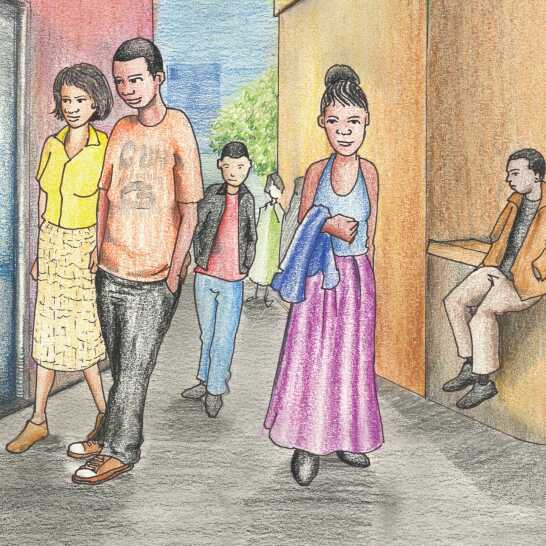
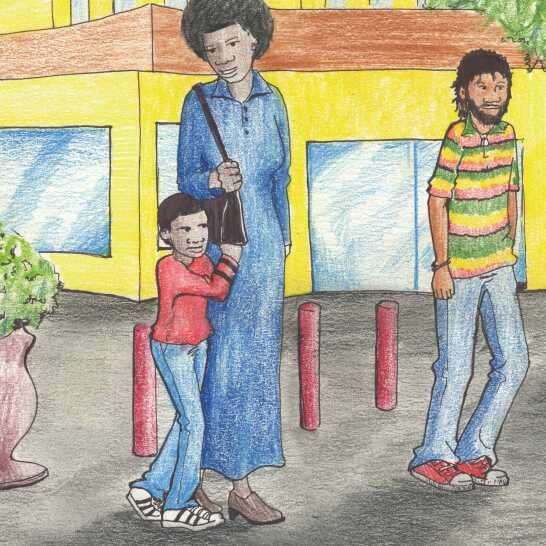
Rico holds his mother’s hand very tightly. Streams of people are passing by.
ǂGui ǁamaxuǁhôadi hîa îxa ǃomkurusa xūna ra ǁamaxū di ge ǀoa hâ.
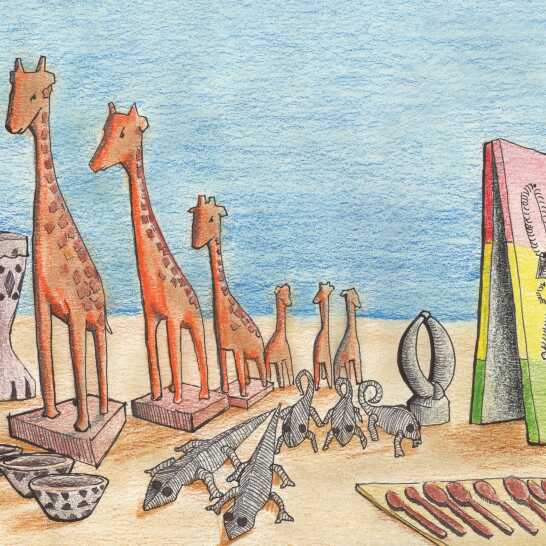
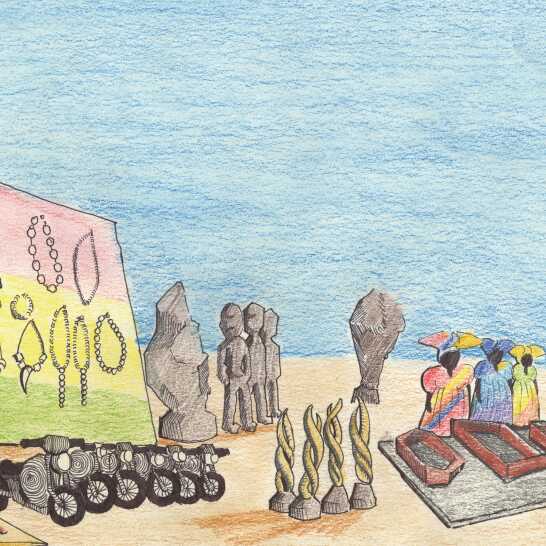
There are stalls selling beautiful handmade crafts.
There are small giraffes carved out of wood, chameleons and lizards made out of wire and coloured beads, and jewellery made from ostrich egg shell.
Ob ge ra ǁnâu! Khoe-i ra îxase “Amazing Grace” amsa ǂnuni ǃkhaisa. ǁÎb ge ǁūse mâ tsî ra ǃgâ. Mâ ǀkhāba xu i ra ǀkhī?
Then he hears it! Someone is whistling the sweet melody of ‘Amazing Grace.’ He stops to listen. Where is it coming from?
“Tita ge noxopa ǁnāti kōse îxase ra ǂnuni khoe-e ǁnâu tama hâ,” tib ge ra ǂâi.
“I’ve never heard anyone whistle so beautifully before,” he thinks to himself.
ǁÎb ge khoen ǁaegu ra ǃgû. ǁNātimîb ge ǂnam ra aoba ra mû. Khoen ge maride ǂkhari ǀui dōrob hîa ǁîb ais ai mâb ǃnâ gere aoǂgā. Xawe … i ge xū-e ǃgâi tama hâ.
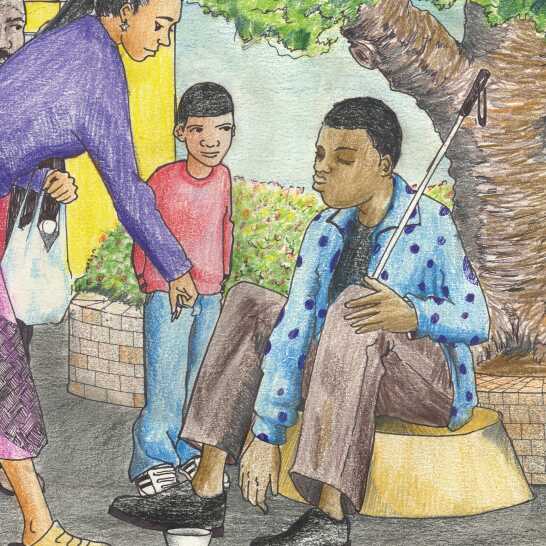
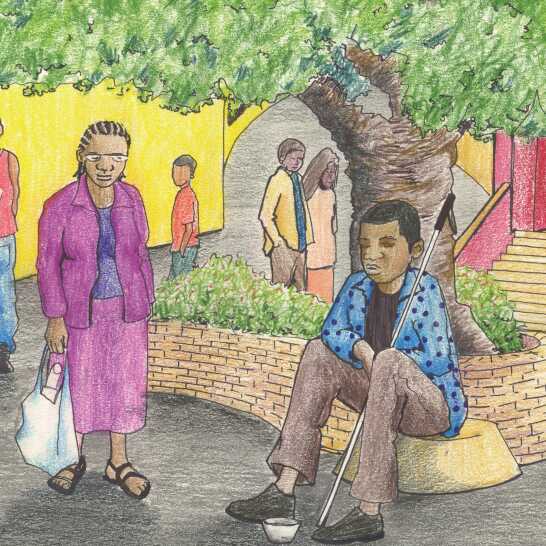
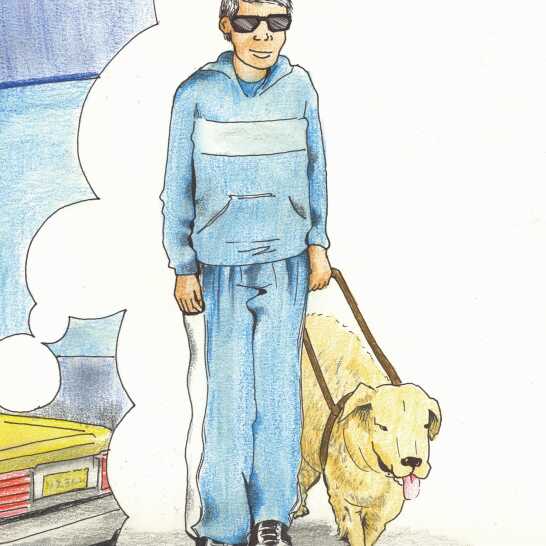
He makes his way through the people. Then he sees the man who is whistling. People are putting coins into a small tin in front of him.
But … something is wrong …
ǂNam ra aob ge khoena ǃoa kō tama hâ. ǁÎb ge mari-e kō tama hâ. ǁÎb ge ǀguis khami ī xū-i tsîna kō tama hâ. ǁÎb ge maride dōb ǃnâ tsanana tsî ǁîb ǁhōs ǃnâ ra ǂgā.
The whistling man is not looking at the people. He is not looking at the money. He is not looking at anything. He’s searching for the coins in the tin and putting them into his pocket.
Ricob ge ǂnam ra aoba kō tsî ra ǂâi, “ǁîb ge ǀnîsi a ǂgī.” Ricob ge noxopa ǂgī khoe-e mû tsâ tama hâ. ǁÎb ge ra ǃao. ǁÎb ge mamasas di rokhoes ai ǃkhōbasen tsî tsaurase ra dî “Mama, ǁnā aoba a ǂgī?”
Rico stares at the whistling man and thinks, “Maybe he’s blind.”
Rico has never seen a blind person before. He feels scared. He grabs his mother’s dress and asks softly, “Mommy, is that man blind?”
ǁÎs ge ǁîb di ǃomsa ū, tsî “Î,” ti ge ǃeream, “î, ǁîb ge a ǂgī. Kō re, ǁîb ge ǃuri haiba ūhâ. ǂGui ǂgī khoen ge ǃuri haiga ra tani. ǁÎb ge haiba ra sîsenū îb ān tsî doab ǃnâ hâ xūna hōǃâ.
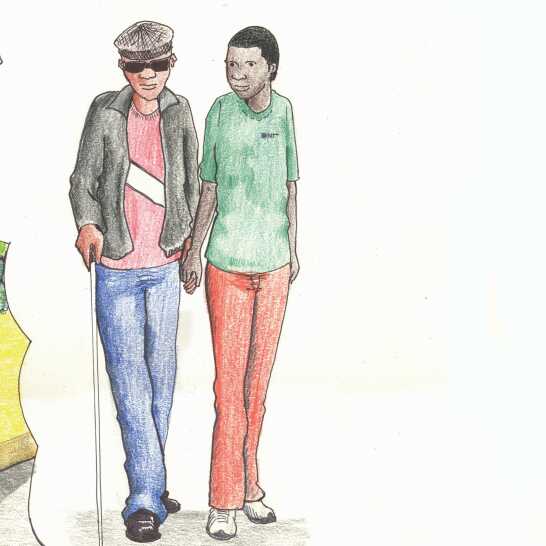
She takes his hand. “Yes,” she answers, “yes, he’s blind. Look, he has a white stick. Many blind people carry a white stick. He uses this stick to feel for holes and other obstacles.”
“Xawe, mâtib ge ǁamaxuǃkhaib tawa ǀkhī? Mâtib ge ǁîb daoba nē ǂgui khoen ǁaegu hō?” tib ge Ricoba ra dî.
“But how did he come to town? How did he find his way through all the people?” Rico asks.
ǁÎb mamas ge ra mî, ǀnîsi go ǁîba a ǂan khoe-i xa huihe. ǁNāti ra hui khoe-e da ge daoǁgau-ao-i ti ra ǂgai.”
His mother tells him, “Maybe he has someone who helps him to find his way around. We call that person a guide.”
ǁÎra ge ǀguruǃhanaba ǃoa ge ǃgû. Daob ǃnâdi ra ǃam, o di audode ra mâ, tsîn ge ǀnūǃgû-aona daoba ra ǃgâu.
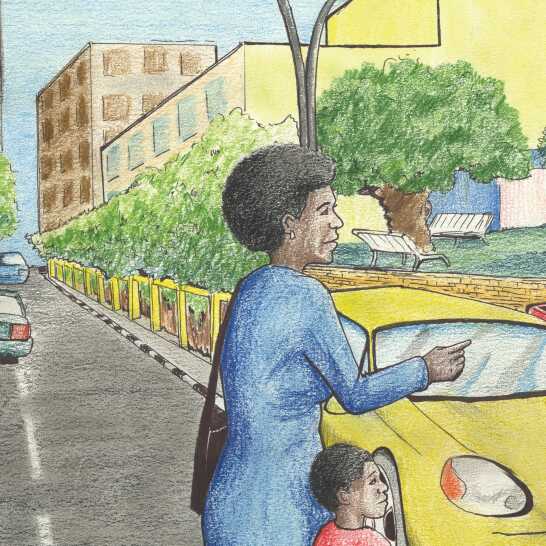
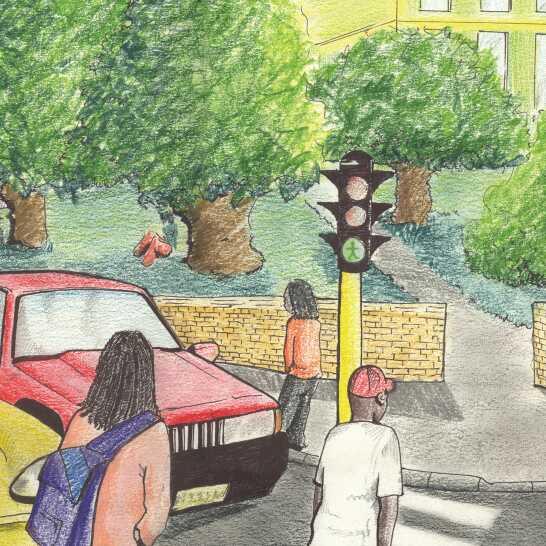
They walk to the zoopark. The traffic lights change to green, the cars stop and the pedestrians cross the street.
“Kō re ǃam ǃnâsa. ǃAm i ra, o i ge a ǃnorasa daoba ǃgâusa. ǀNî ǃhūgu ǃnâb ge bib ǀōba ra ǀō,” tis ge Ricob mamasa ra mî. “ǂGī khoen ga bib ǀōba a ǁnâu on ge a ǂan ǃnorasa i a daoba ǃgâus ǃaroma ǃkhaisa.”
“Look at the green light. When it is green we can see it is safe to cross the road. In some countries there is also a beeping sound,” Rico’s mother says. “When blind people hear the beeping, they know it is safe to cross the road.”
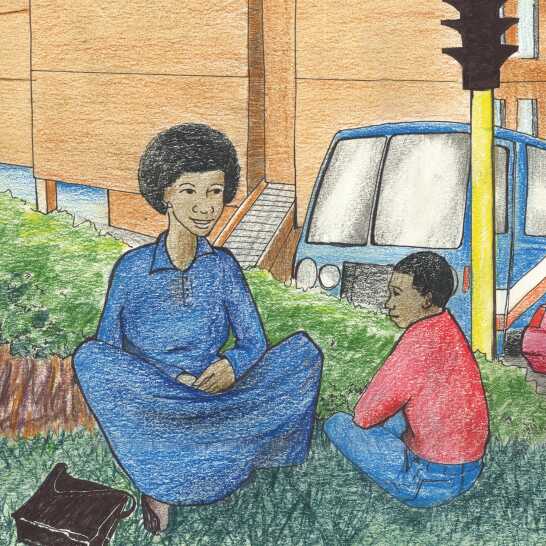
ǁÎra ge ǃam ǀgarib ǀguruǃhanab dib ai ǂnû tsî ǃgû ǃkharu ra khoena ra kō. “ǀNî ǂgī khoen ge ari-i xa ra daoǁgauhe,” tis ge ǁîb mamasa ra mî. “ǁNā arin ge a ǁkhāǁkhāsa în ǁîn ǀhonkhoena daoǁgau, xawe kaise ǀgaisase ra ǂgan. ǁNāpan ge ǀoro arina Namibiab ǃnâ hâ daoǁgausa ǁkhāǁkhāhe hâna.”
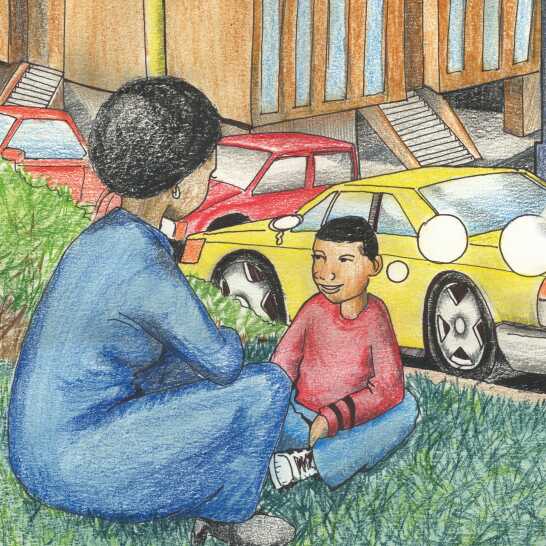
They sit on the green grass of the zoopark and watch the people walking by.
“Some blind people have a guide dog,” his mother says. “These dogs are trained to guide their owner, but they are very expensive. There are very few guide dogs in Namibia.”
“ǂGī aob ge ai-īsiǂhôaǂgaresa a kō ǁoa,” tib ge Ricoba ge mî. “ǁÎb ge ai-īsiǂhôaǂgares tsî ǂhôaǂgares tsîna a ǁnâu ǁkhā,” tis ge Ricob mamasa ra mîba bi. “ǂGī khoen ge ǁnaetisase mû ra khoen xa ǃgâise ra ǁnâu.”
“The blind man can’t watch TV,” Rico says.
“He can hear the TV and radio,” Rico’s mother tells him. “Blind people can often hear things much better than people who can see.”
“Xaweb ge ǁîba ǂkhanin tamas ka io ǂhôaǂkhanina a khomai ǁoa,” tib ge Ricoba ge mî. “ǂKhanin ge hâ ǂgī khoen ǃaroma xoasana. ǁÎn ge mîdi ǃâs ǃnâ ǂnaorodi ǀkha ra xoahe hîa ǃkharaga xoamûde ra ǂâibasende. ǁÎdi ge kodedi khami ra sîsen.”
“But he can’t read books or newspapers,” says Rico.
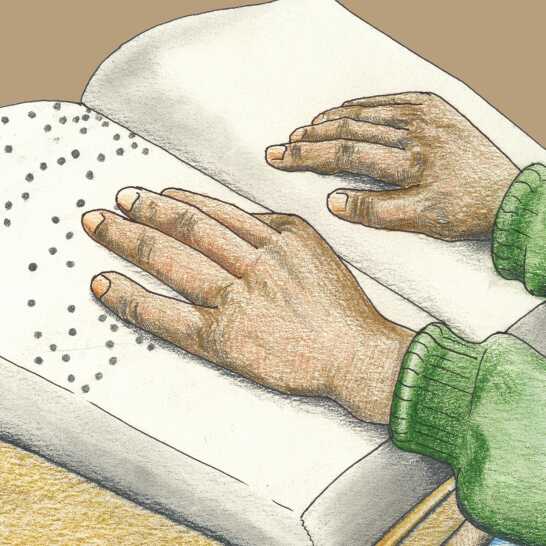
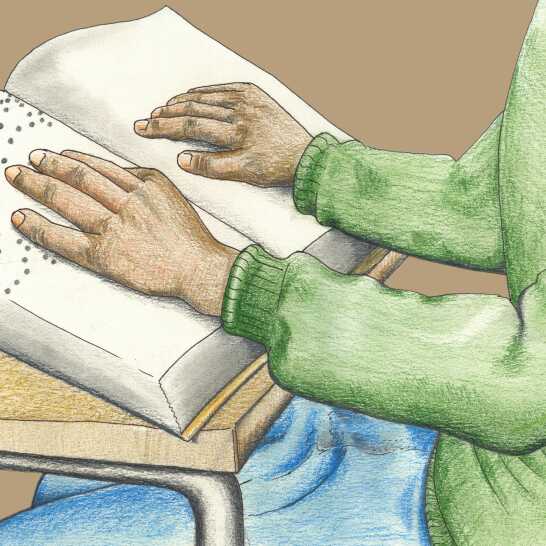
“There are books written in Braille. Instead of words printed with ink, there are raised dots which make letters. It’s like a code.”
“ǁîba mû tamab hâ hîa mâti a khomai ǁkhā?” “ǁÎb ge ǀkhunugu ǀkha ra khomai. ǁÎb ge ǂnaorode ǁîb di ǀkhunuǂaodi ǀkha ra tsânanase, xoamûde ra ǂanǂui, sats sa mûra ǀkha ra dīs khami.”
“How can he read if he can’t see?”
“He reads with his hands. He feels the raised dots with his fingers, just like you see the letters with your eyes.”
Ricob ge gere buru ǂgī khoen tsēkorope xūna a dī ǁkhā ǃkhais xa; ǃās ǃnâ ǃgûmâs, amde ǂnams, tsî khomais tsîna.
Rico is amazed to think that people who are blind can do everyday things; things like walking around in town, like whistling songs, like reading.
ǁÎb mamasas ge ge mî, “Hoarahūs ǃkharagagusib sats tsî ǂgī khoen ǁaegu hâb ge sats ge mûǁkhā, tsî ǁîn ge a mû ǁoa.” “Tita ge a mû ǁkhā, xawe ta ge a ǂnam ǁoa,” tib ge Ricoba ra ǀnom.
His mother tells him, “The only difference between you and a blind person is that you can see and a blind person can’t see.”
“I can see, but I can’t whistle as beautifully as that blind man,” Rico smiles.